
How youth and staff inside a juvenile detention center celebrate Thanksgiving

Youths eat slices of pie during a Thanksgiving meal Thursday, Nov. 22, 2018, at the Slate Canyon Youth Center in Provo. Isaac Hale, Daily Herald

Joyce Fuga, a counselor, and youths ready platters of turkey before a Thanksgiving meal Thursday, Nov. 22, 2018, at the Slate Canyon Youth Center in Provo. Isaac Hale, Daily Herald
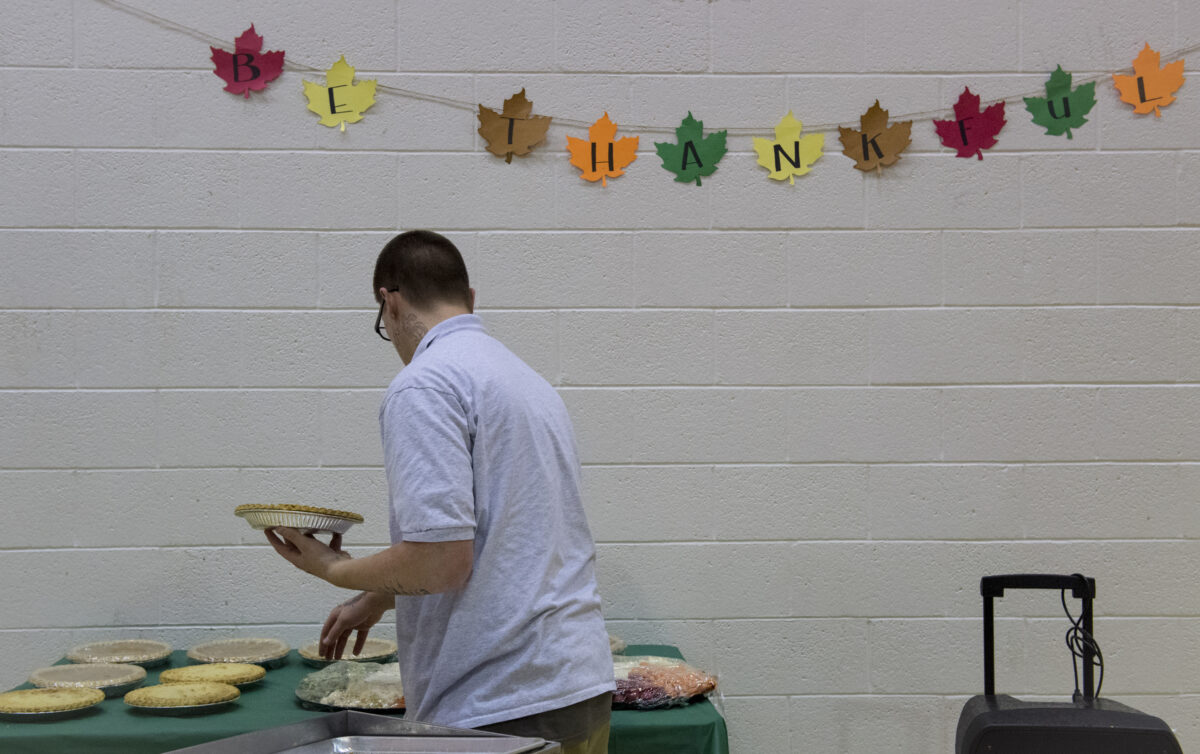
A youth lays out pies before a Thanksgiving meal Thursday, Nov. 22, 2018, at the Slate Canyon Youth Center in Provo. Isaac Hale, Daily Herald

A youth prepares to pass the ball during a game of flag football Thursday, Nov. 22, 2018, at the Slate Canyon Youth Center in Provo. Isaac Hale, Daily Herald
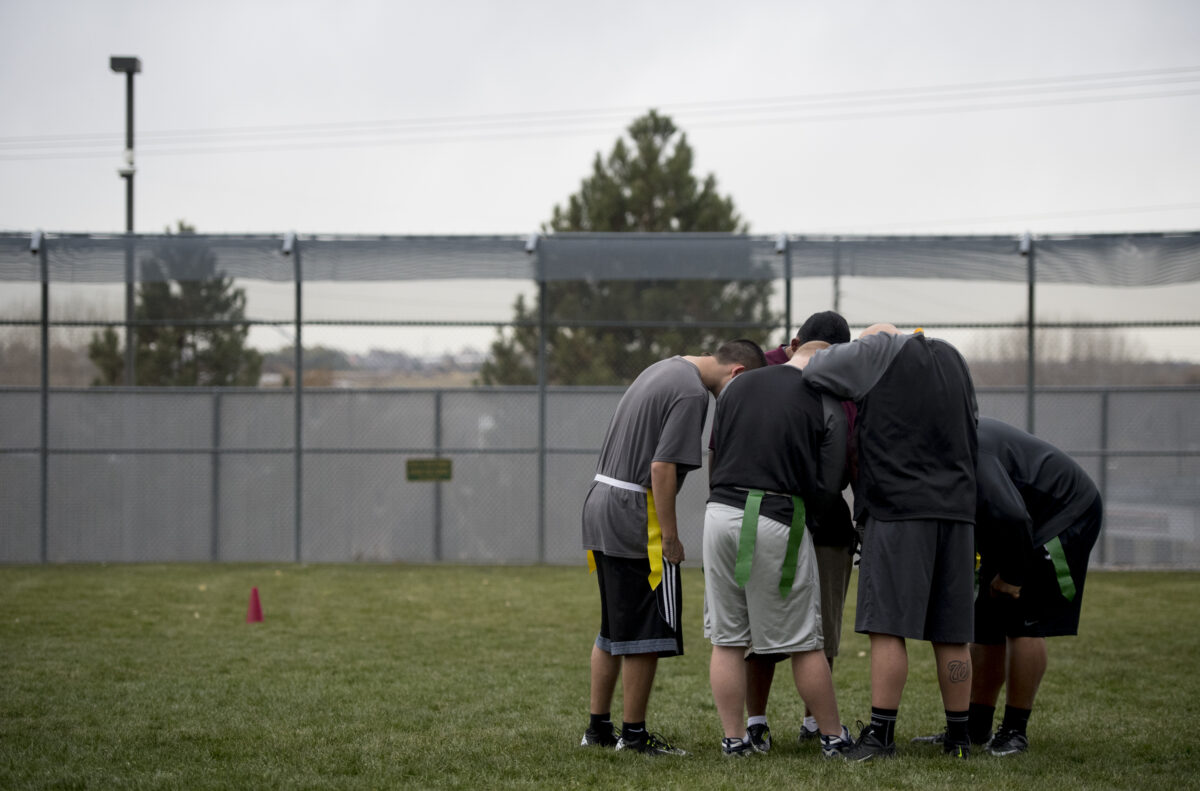
Youths huddle together and debate their next play during a game of flag football Thursday, Nov. 22, 2018, at the Slate Canyon Youth Center in Provo. Isaac Hale, Daily Herald
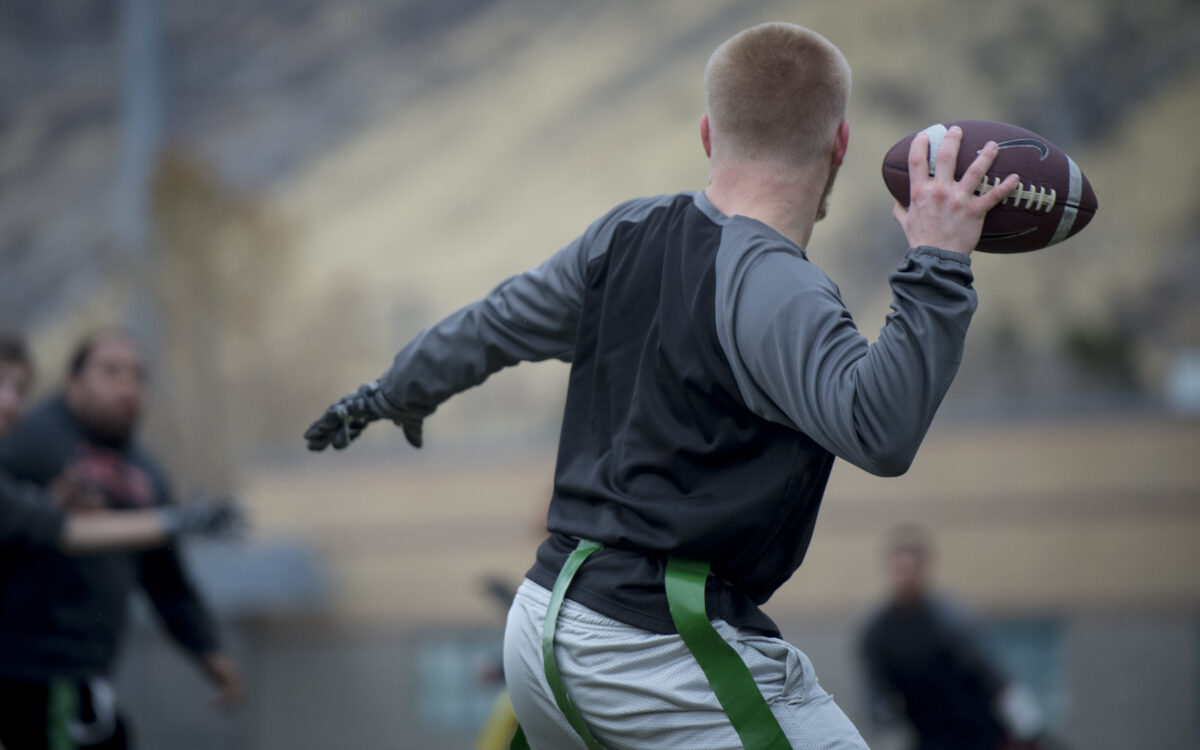
A youth looks to pass as he and others play a game of flag football Thursday, Nov. 22, 2018, at the Slate Canyon Youth Center in Provo. Isaac Hale, Daily Herald
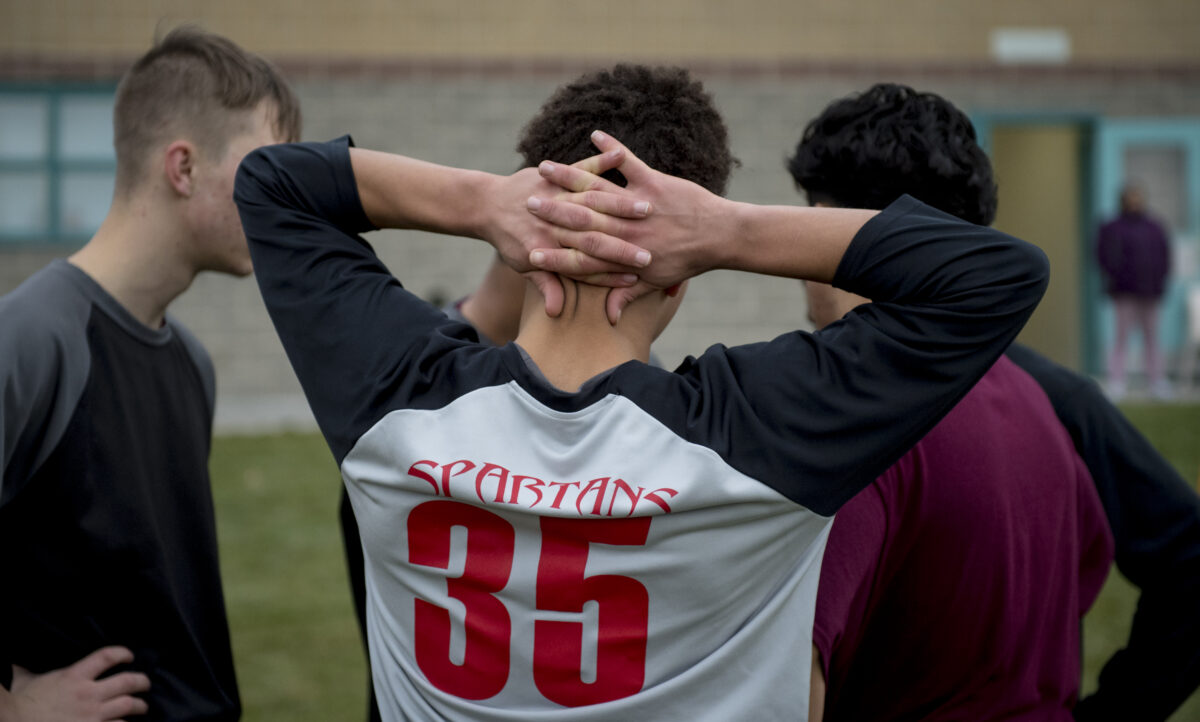
Youths huddle and debate their next play during a game of flag football Thursday, Nov. 22, 2018, at the Slate Canyon Youth Center in Provo. Isaac Hale, Daily Herald
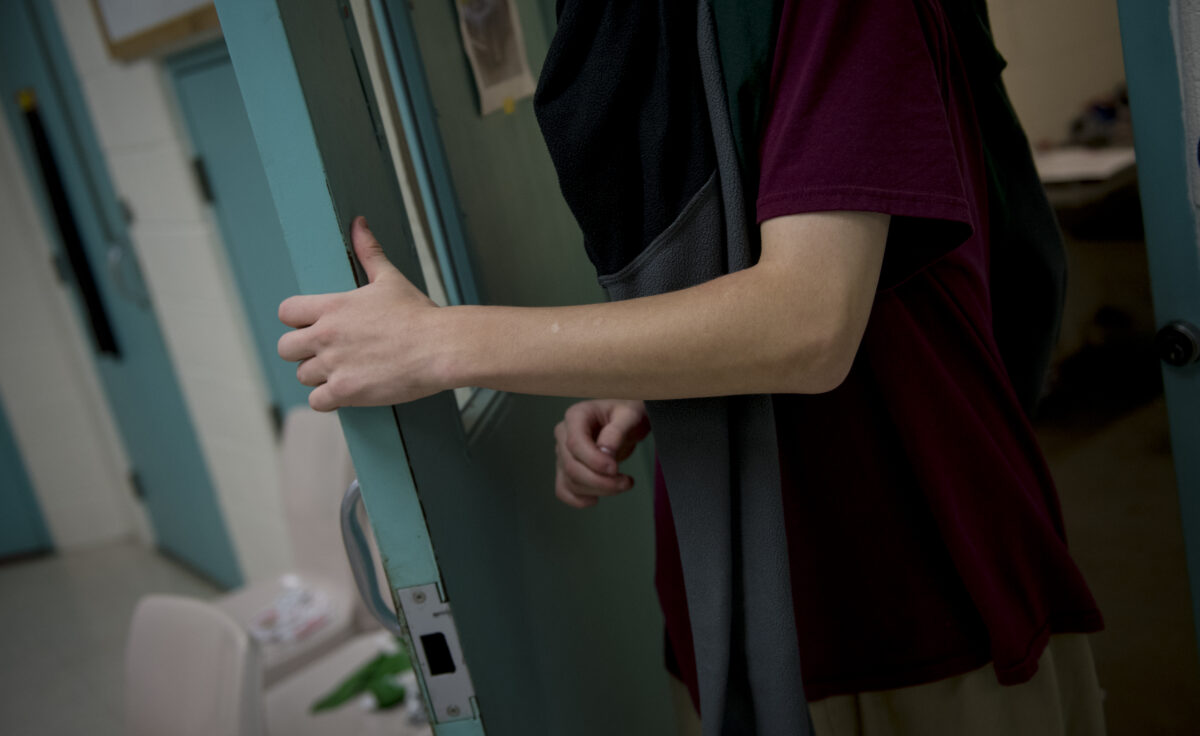
A youth leaves his room before a Thanksgiving meal Thursday, Nov. 22, 2018, at the Slate Canyon Youth Center in Provo. Isaac Hale, Daily Herald
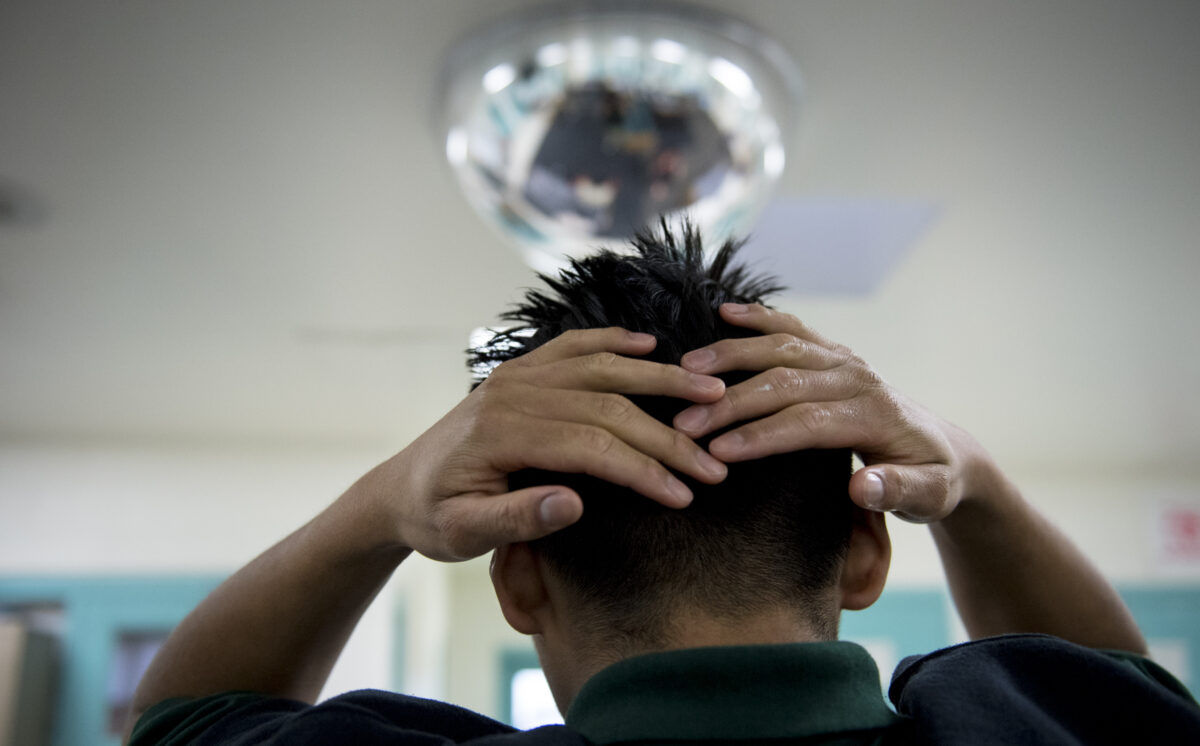
A youth styles his hair before a Thanksgiving meal Thursday, Nov. 22, 2018, at the Slate Canyon Youth Center in Provo. Isaac Hale, Daily Herald
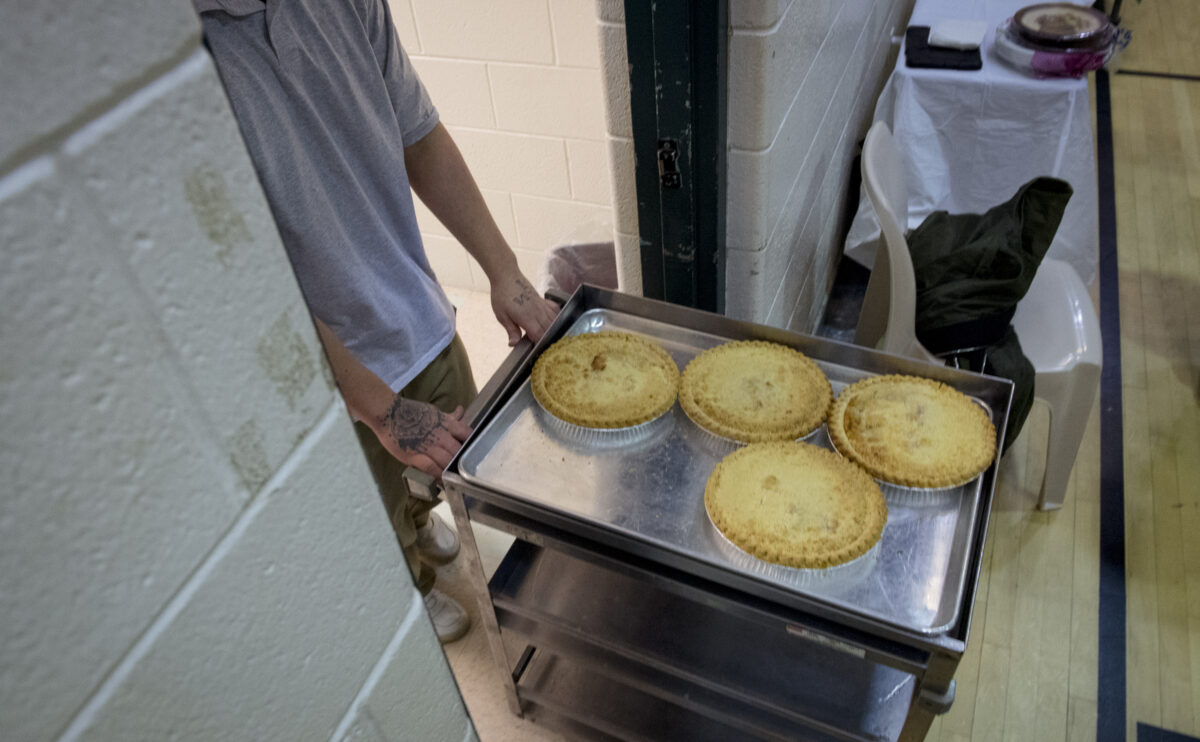
A youth wheels in pies before a Thanksgiving meal Thursday, Nov. 22, 2018, at the Slate Canyon Youth Center in Provo. Isaac Hale, Daily Herald
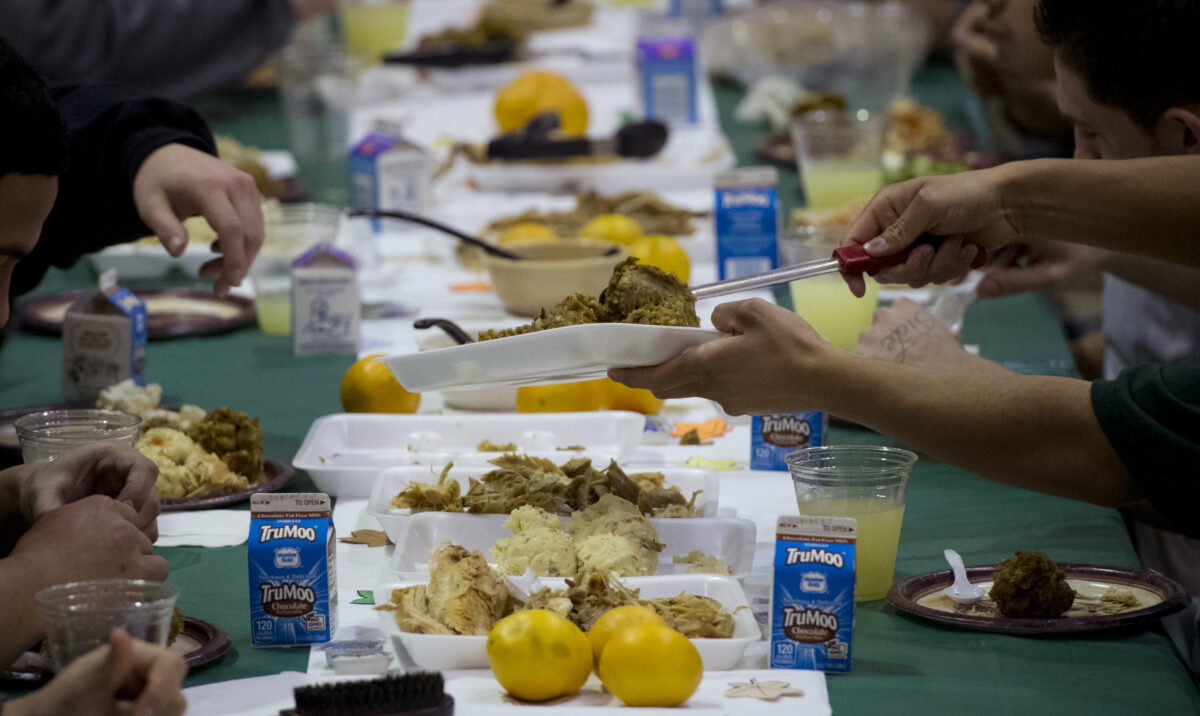
Youths scoop food and eat Thursday, Nov. 22, 2018, at the Slate Canyon Youth Center in Provo. Isaac Hale, Daily Herald

Joyce Fuga, a counselor, squeezes whipped topping onto a youth's pie Thursday, Nov. 22, 2018, at the Slate Canyon Youth Center in Provo. Isaac Hale, Daily Herald
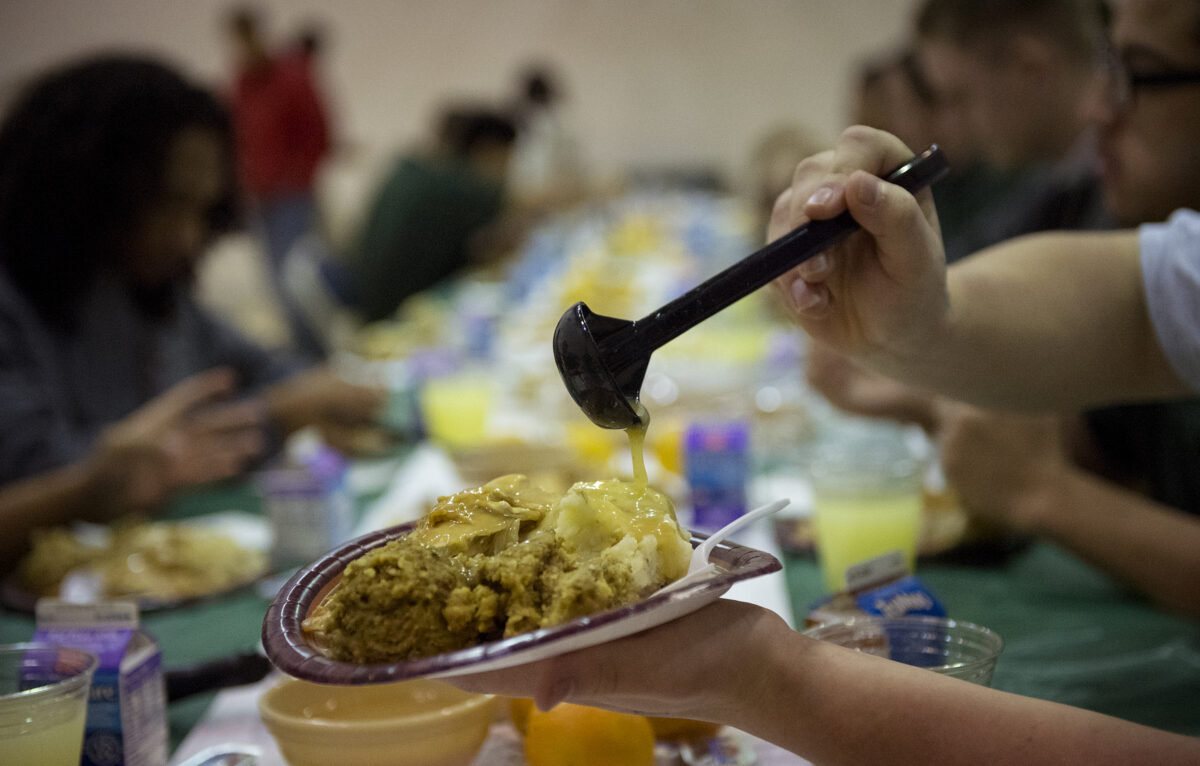
A youth pours gravy on his potatoes during a Thanksgiving meal Thursday, Nov. 22, 2018, at the Slate Canyon Youth Center in Provo. Isaac Hale, Daily Herald
Thanksgiving at Slate Canyon Youth Detention could easily be miserable and lonesome for the youth locked up inside.
That’s why the staff members work hard during the holiday season to give detained kids a sense of normalcy while at the juvenile detention center in Provo.
“It’s one of my favorite times of the year to get to be with the youth,” said program coordinator Justin Seely. “A lot of the kids haven’t really had that opportunity to have what we would consider a normal Thanksgiving meal.”
Inside the juvenile detention center are whitewashed walls, securely locked doors and dozens of security cameras. The youth are held in four separate units: two for short-term detention and two for long-term secure holding.
On Thanksgiving, the cooks at the center prepare traditional holiday food and staff are allowed to eat a family-style meal with the youth inside each unit.
“Sometimes, our youth tend to be takers. To teach them to be givers is a very important lesson,” said facility director Sam Sherrow, “to hopefully show them by example that these things are important to give back to others.”
In the spirit of giving back, detention staff and community members have donated pies to the facility for nearly a decade. It’s not unusual for the community to bring in 20 pies for the holiday, Sherrow said.
“The youth will have pie from Thursday to about Sunday,” he said with a smile.
At the beginning of the holiday week, a total of 40 youth were being held at the detention center, with 16 youth in the short-term units and 24 youth in the long-term units.
But the number of youth in short-term detention will decrease as the detention center aims to have short-term cases viewed by judges before the holiday.
The 4th District Juvenile Court judges decide whether those youth are a danger to the community and need to be held at the detention center or can be released under watchfulness from the probation department.
“The judges are really good about trying to get the detention kids home, to get them out for Thanksgiving,” Sherrow explained.
Family members are encouraged to visit on the holiday, and can even arrange to bring a meal to the facility. For families who are unable to bring food, the cooks at the detention center can provide a meal for the youth and any visiting family members.
“We realize the importance of family with it being this time of year,” Sherrow said. “The involvement of the family makes such a difference in the overall outcome of the youth’s progress.”
Youth who come from tight-knit families tend to behave better in groups and progress quicker than youth who go without the same support. Other youth may have estranged parents or parents who are both in prison.
As a caseworker, Seely remembers visiting homes where families were grateful to have a few cans of beans and hot dogs on Thanksgiving.
“That was just heartbreaking for me to see,” he said. “For some kids, it is very difficult to be away from their families during this time. There’s a lot of emotion that is attached to that, so working through those emotions is probably the biggest challenge we see.”
Youth at the short-term detention can range from 10 to 21, including kids charged with a felony, assaults against people, weapons-related offenses, DUI, sexual offenses or have run away from a different state.
Those in the long-term units have been convicted of serious crimes and are serving sentences at the detention center.
In the end, both populations will go hopefully go home to their families, Sherrow explained.
The detention center has changed over the years to include families in treatment plans for the youth. The number of family participation has continued to increase over the past few years.
“That’s the unit we need to spend the time and focus our energy on if we really want to make a lasting change,” Sherrow said.
Thanksgiving is an important time for family members to strengthen their relationships with the youth by visiting and eating together, he added.
The kids also look forward to not attending school on Thanksgiving and competing in the annual football game against staff members. The game begins before the Thanksgiving meal and usually ends with the youth claiming victory and bragging rights for the rest of the year.
“We count it a win for the staff if there are no injuries,” Sherrow said, laughing. “That’s why we do the things we do. To make it easier, to make it more comfortable for them, to help the youth out.”
Local News

BYU: Rare ‘Gates of Paradise’ replica restored and on display at BYU museum

Around Utah: Utah Transit Authority offers free FAREPAY Cards to qualified customers as part of system modernization
