Sakievich builds strong lead for empty Utah County Commission seat
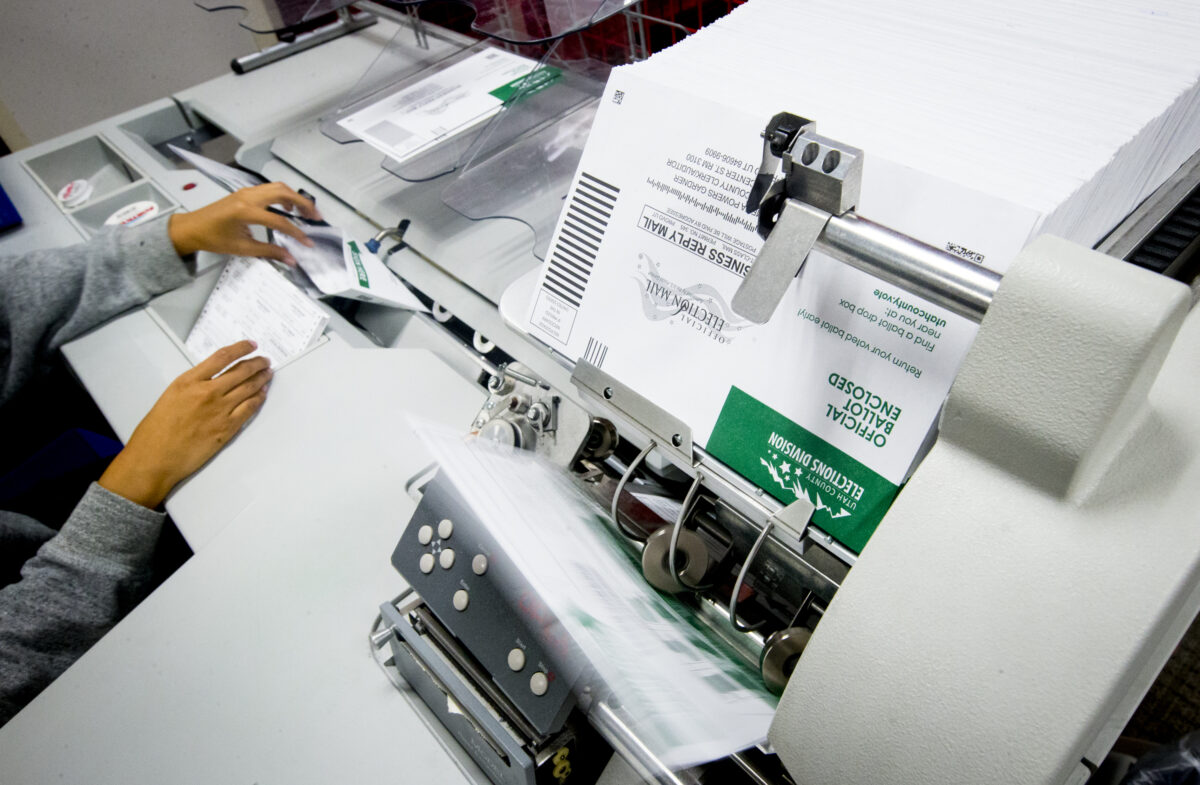
Clerk/auditor Himni Palacios extracts ballots from envelopes with the help of a machine at the Utah County Administrative Building in Provo on Monday, Nov. 2, 2020. Isaac Hale, Daily Herald
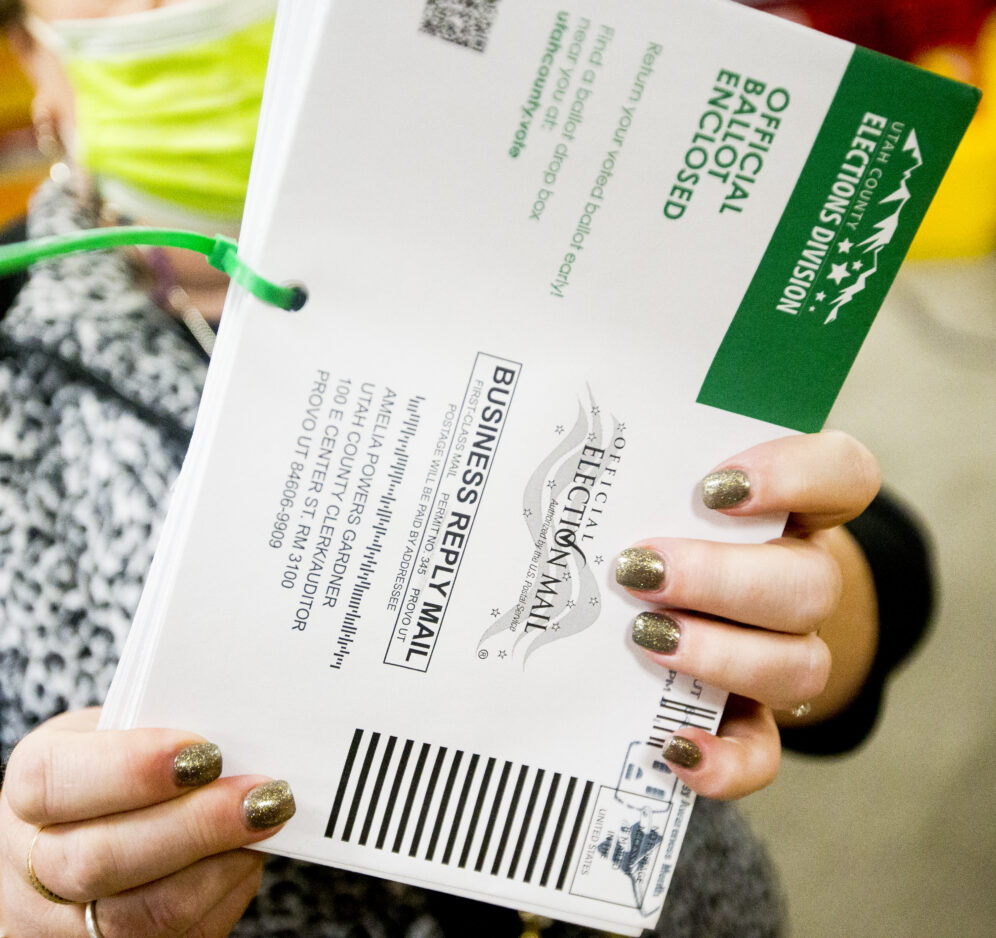
A collection of empty ballot envelops are zip-tied together to ensure there’s not a ballot in any of them at the Utah County Administrative Building in Provo on Monday, Nov. 2, 2020. Isaac Hale, Daily Herald

Utah County residents are casting their ballots for more than the presidential and gubernatorial elections.
As the polls closed at 8 p.m. on Tuesday, Republican candidate Tom Sakievich is leading the race for the open county commission seat ahead with 126,136 individual ballots — or 71.5% of the vote — over competitor and Democratic candidate Jeanne Bowen — who holds 50,214 individual ballots and 28.5% of the vote.
The morning following Election Day, Sakievich had maintained his lead with 147,181 individual ballots and 72.7% of the vote. At that same time, Bowen held 55,349 individual votes and 27.3% of the vote.
Of the roughly 625,000 people who reside within Utah County, about 617,000 live inside city boundaries; these residents are represented by their city councils and mayors. The remaining residents in unincorporated areas are represented by the Utah County Commissioners, who provide infrastructure support through roads, power and sewer.
After beating incumbent Nathan Ivie during the Utah County Republican Party Convention in June, Brigham Young University alumnus Sakievich is vying for a single open seat on the Utah County Commission against Bowen.
Sakievich inched above Ivie with 50,425 individual ballots and 60% of the vote by 8 a.m. on the day after ballots were cast.
Sakievich ran for a seat on the commission in 2017 and lost in the primary, saying in June that he made the decision to run again in an attempt to help Utah County residents.
Having served in the U.S. Marine Corps for about 30 years, in the reserves and active duty, Sakievich said he is experienced in making large budgets run more efficiently, which is incredibly useful to Utah County, which is growing exponentially.
Sakievich is hoping to regain access to tourism funding that the county lost when its population surpassed a mandated milestone. With this funding, Sakievich said he wants to improve or construct structures that are commonly used by tourists and residents — such as playgrounds, amphitheaters and convention centers.
Additionally, he said he wants to use tourism funding to aid the Utah County Attorney’s Office, jails and Utah County Sheriff’s Deputies, who spend about 70% of their resources in parks and canyons.
“We should be able to get access to those funds to take care of our sheriff and county attorney,” he said in a June interview. “I think that was a weakness that I saw, and that’s one of the reasons I am running.”
Bowen also graduated from BYU with a Bachelor of Arts in English secondary education. Born and raised in Provo, Bowen currently serves in the Utah County Treasurer’s Office.
According to Bowen’s campaign site, if elected, she is planning to prioritize the Utah Foundation’s list of issues, which was formed from a statewide survey conducted in 2016. The list includes water supply and quality, air quality, crime, healthcare, jobs and the economy, homelessness and poverty, K-12 education, taxes, the environment, and partisan politics.
“Utah County has experienced incredible growth, and we need a leader ready to face these infrastructure challenges,” Bowen wrote in a statement published to her campaign site. “We have an incredible business environment with citizens that are actively engaged in improving our community. I would like to improve communication between the different departments in the county. I also see need for improved communication between the county and the cities within the county. I believe in people, and I want to do what I can to serve our community.”
Whether she earns the seat or not, Bowen said she is awestruck at the turnout of voters.
Four other county positions were included on the November ballot and each elected position was run uncontested. The positions were Kris Poulson for County Assessor, Andrea Allen for County Recorder, Anthony Canto for County Surveyor and Kim Jackson for County Treasurer.
The Utah County Commission is also the subject of Proposition 9, which is also included on the Nov. 3 ballot.
The proposal is based on recommendations from the Utah County Good Governance Advisory Board and would transform Utah County’s three-member commission to a mayor-council form of government. The county mayor would be “vested with all executive powers, duties and functions not otherwise provided for in state statute, the Utah County Code, or this plan.”