Orem City Council hears outside assessment on fire, police department needs

Utah Valley University’s RCA Program receives a yellow fire engine donation from Orem City Fire Department at the Emergency Services building at Utah Valley University on Friday, May 22, 2020.
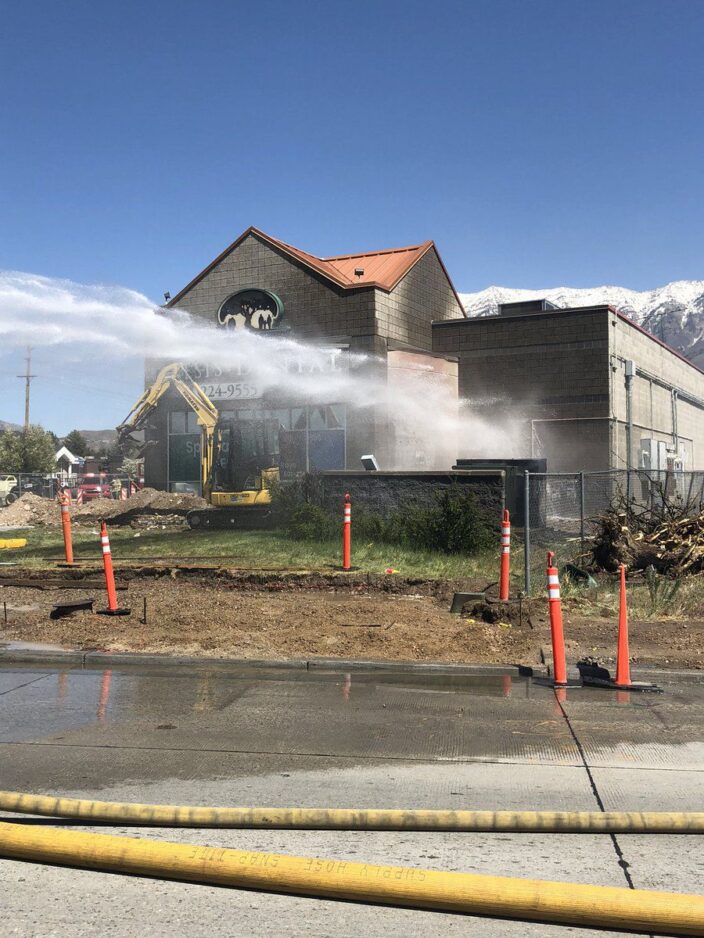
Fire crews work to mitigate a gas leak near 800 S. State St. in Orem.
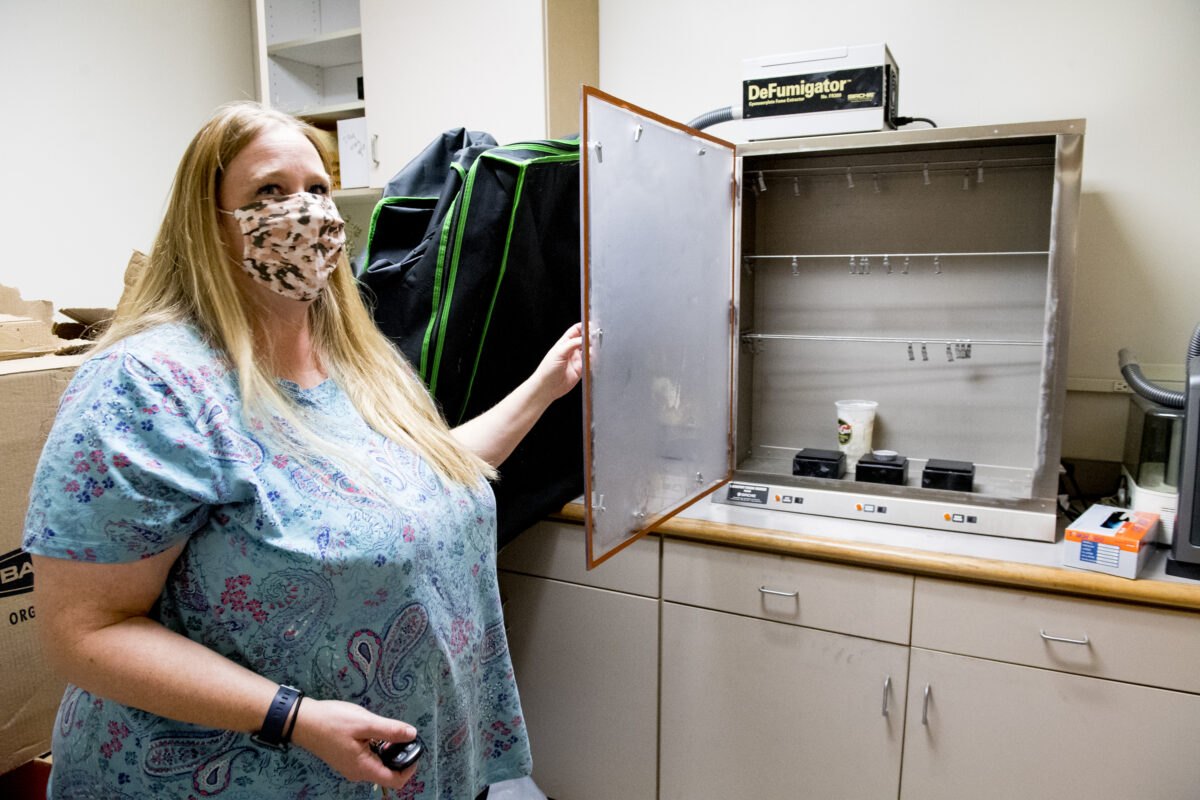
Evidence technician Tara Calancea shows a laboratory fuming chamber, which is used to extract fingerprints from evidence, in the Orem Police Department’s evidence room Thursday, Sept. 17, 2020. Isaac Hale, Daily Herald
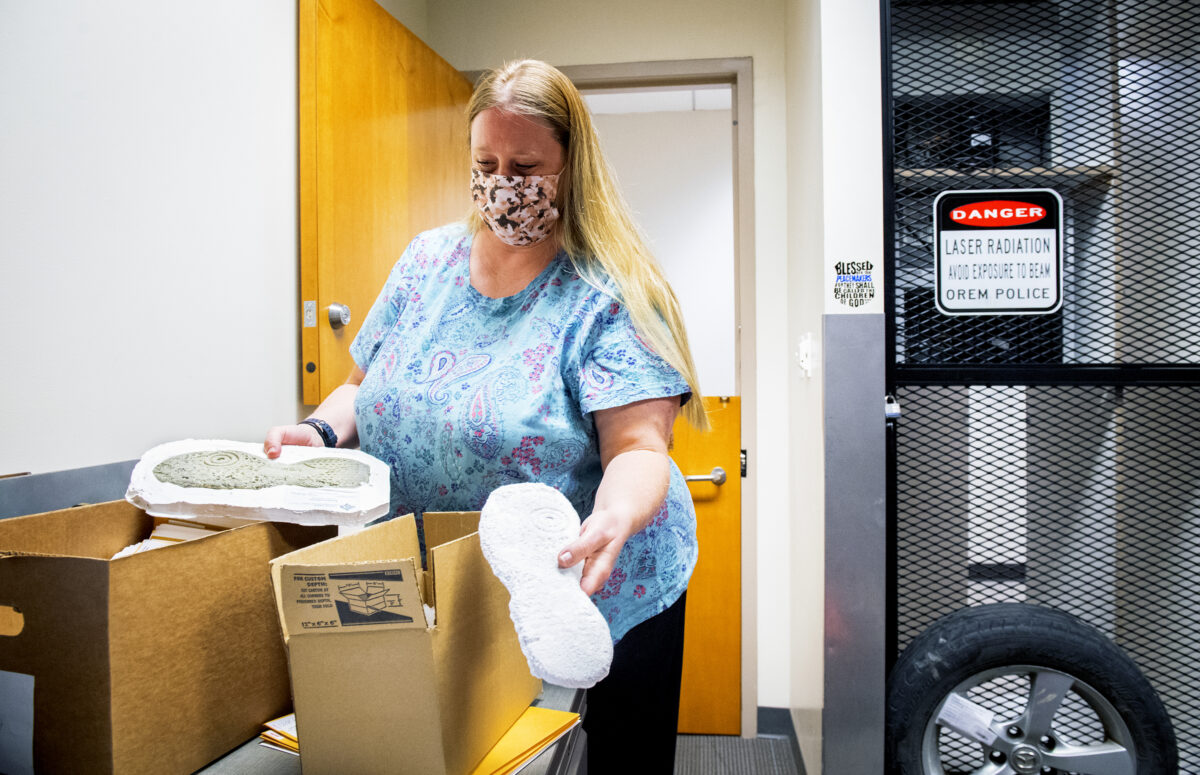
Evidence technician Tara Calancea sifts through shoeprint molds in the Orem Police Department’s evidence room Thursday, Sept. 17, 2020. Isaac Hale, Daily Herald
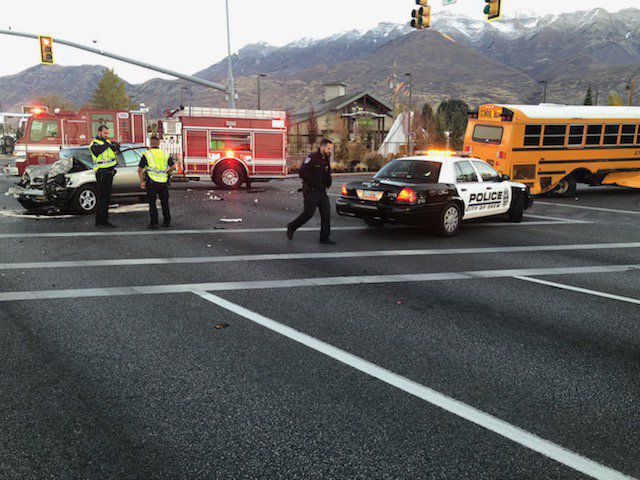
A school bus and a car collided in Orem on Wednesday, October 31, 2018.

From left, Officer Tom Cook, Officer Logan O'Brien, and Sgt. John Arnoldsen, of Orem Police Department, greet the Crockett family at Build-A-Bear at University Place on Thursday, July 19, 2018, in Orem.
In 2019, Orem Police Chief Gary Giles and Fire Chief Scott Gurney noted that many of the city departments had master plans. They approached the city and said it was time the city’s public safety departments had one too.
On Tuesday, the Orem City Council received detailed analysis of both departments through professional Operations Assessments by Citygate Associates LLC.
Citygate is a public sector consultancy dedicated to “the business of better government.” The company’s focus is on policing, fire, all public safety and support staffs and emergency preparedness, among other things.
The bottom line is both departments are working as best they can with what they have. And in some cases a bit better, in other cases a bit worse.
Police Department
When Chief Josh Adams took over the Police Department in November, the preliminary draft of the assessment had already been received by the department. Since that time, Adams has been able to address a portion of the issues in the assessment.
“Momentum is rolling in the right direction,” Adams said. Meaning, they are happy to have the assessment and are tackling what they can.
What is a harder pill to swallow is the need for personnel staffing, particularly with dispatch operators.
The assessment shows the need for more dispatchers and an on-site crime analyst, of which Orem is presently without.
A patrol supervisor is critical, according to Gary Elliott with Citygate. The department also needs to develop a field training officer and re-establish a traffic enforcement unit.
Other ways to get to best practices and to cover critical times more efficiently include adjusting shift schedules based on demand and reasonable response times.
“Orem response time is not outside of what we’ve seen in other studies,” Elliott said. However, it is not at its best.
From the dispatch taking a call to the officer arriving on the scene is about 11.5 minutes or less about 90% of the time. The average should be about 7 to 8 minutes.
With shifting of current personnel into other areas, the city can increase their best practices and response.
It was also recommended that the Neighborhood Watch unit and the Mental Health unit be combined as some of what they do is overlapped.
These are just a few of the suggestions that would bring Orem’s police department up to best practices levels.
In all, Citygate had 30 recommendations for the police department, some of which have already been implemented.
One of the key factors also was training in areas such as bias. The department is very young with the average officer having been on the force five years or less.
“We are thrilled with the recommendations for the future as well as long-term strategies,” Adams said. “Officer development is key now more than ever. We see bringing in more civilian help with our mental health unit.”
Fire department
Like the police department the fire and EMS crews have already implemented some of the suggestions made by the Fire Department’s Operations Assessment.
There are no state or federal mandatory regulations when it comes to staffing fire departments.
However, according to Stewart Gary, with Citygate, all indications show that the Orem Fire Department is stretched thin.
The response time demands show the department needs staffing. There are four firefighters on-shift at any given time in each of the fire stations. EMS are counted in that.
Gary said that if lightning struck, with data that they have showing and the distance between stations, personnel and response times, if 2 or 3 fire stations had ambulances out on either emergency or non-emergency transports that would leave only one station for a fire call.
It takes about 2 minutes and 30 seconds from getting a call to turning out in fire gear and from 4 to 8 minutes travel time. The total response time could be as high as nearly 12 minutes to a fire.
The Citygate representatives noted in both presentations that street layout in north neighborhoods, particularly on the northeast bench area slow that travel time down even more.
“Dispatch is slow, crew turnout is slow and the first unit travel time response is 7 minutes 44 seconds and it should be 4 minutes,” Gary said.
Gary also noted that the city is in a constant state of growth and where a fire station was built in the 1990s may not be where it should be in 2021. Fire insurance underwriters want the distance to be 1.5 miles. “Real world travel doesn’t happen,” Gary said. “We may never be able to achieve the ideal target.”
The assessment suggests adding two firefighters.
“The staff are all overworked and severely lacking in clerical support staff,” Gary said.
The assessment also said there needs to be an update to the city’s emergency plan.
The city must also take care of its equipment and vehicles. Fire engines are about $500,000 which means intentional savings each year for purchases are important.
Next step
Elliott and Gary told the city council the next steps are to absorb the entire summary assessment, adopt revised responses and direct the departments to implement what they can and plan for the future.
City manager Jamie Davidson said he was pleased with the assessments and said he believes the city can incrementally grow and improve.
“It is reassuring we have capacity to do this,” Davidson said.
Gary said Citygate did not find either agency broken or in ill repair. It recommended the council be mindful of financial needs and to budget accordingly and not just go for the current hot item.
For now the assessments have given the city and both departments a way to start building a public safety master plan and that is what they were hoping for.
Interested residents can read the complete detailed assessments at http://orem.org.