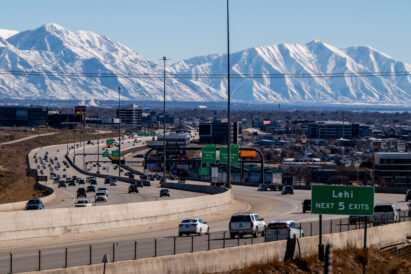
IPP coal-fired units are no longer operating as state government searches for buyers
The state had 14 responses to a request for information, but a purchase negotiation isn’t near yet
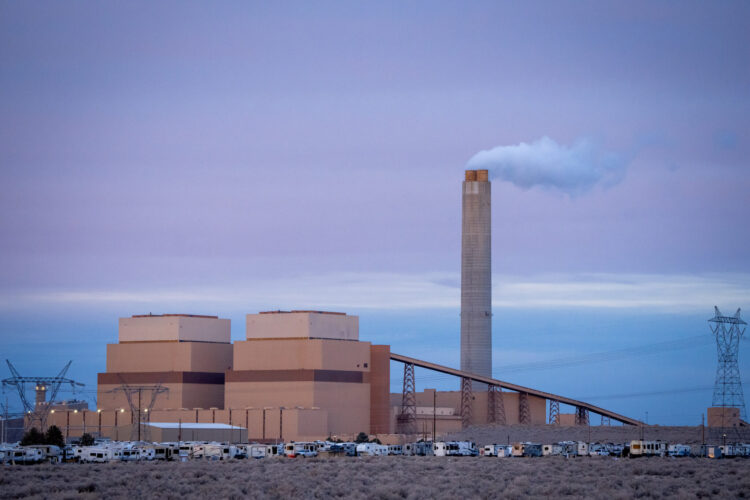
Photo by Spenser Heaps for Utah News Dispatch
The coal-fired Intermountain Power Plant near Delta is pictured on Monday, Feb. 3, 2025.Coal-fired generators at the Intermountain Power Plant, located in Delta, stopped producing energy the day before Thanksgiving as its owners move to cleaner resources and Utah leaders search for buyers to avoid what they deem an early retirement of dispatchable energy.
The plant owned by 23 Utah municipalities has been the subject of legislative action for years amid an effort to retire its coal-fueled operations in favor of a multibillion-dollar natural gas project known as IPP Renewed — meant to keep serving its main client, California, as it takes aggressive steps away from fossil fuels.
“The coal units have been laid up in an operable condition while the state of Utah conducts its search for new customers for the coal-generated power,” said John Ward, spokesperson for Intermountain Power Agency. “But there they are no longer operating.”
That’s because of a law the Utah Legislature passed this year that forbade the Intermountain Power Agency from disconnecting switchyard equipment from its coal-powered facilities. Aiming to comply with that legislation, the agency kept one of the coal units connected to the switchyard, so if the coal unit is restarted it could immediately be connected to the grid, Ward said.
There aren’t any decommission activities in place for the units, which have a joint 1,900 megawatt-capacity — state law would also prohibit that.
However, the state’s plans to secure buyers for the plant’s coal power aren’t ripe yet. Emy Lesofski, director of the Utah Office of Energy Development, said the Utah Energy Council that the Legislature created this year received 14 responses to an initial request for information process to gather data on companies to keep the coal units going.
But, there’s still a long way to go before negotiations with potential buyers start.
Advocates from the Sierra Club highlighted in a news release that shutting down the units had no impact on customers, and questioned who should “shoulder the cost of keeping an obsolete coal facility on standby.”
“On one of the biggest holidays of the year, people’s lights stayed on and no one noticed that these coal units went offline. That silence speaks volumes: we don’t need to keep our communities tethered to outdated, dirty coal plants to maintain reliable power,” Zack Waterman, western manager for the Sierra Club’s Beyond Coal Campaign in Utah and California said in a statement.
Before ceasing operations, the coal units had been working at low capacities for several years because the agency’s users hadn’t been calling on the power, Ward said.
The plant was built to deliver most of its energy to California, which pledged to eliminate coal from its power supply.
“We were allowed to continue operating these plants under the existing power purchase agreements up until now,” Ward said, “but we were not able to continue to sell power to California after those agreements expired.”
In the meantime, the Intermountain Power Agency’s natural gas project is still under development, with one of the two planned units starting commercial operations last October, and the second scheduled to do the same later this month, Ward said.
The new facilities will also be able to use hydrogen to produce 840 megawatts and store the resource in underground caverns, which would allow them through its natural gas turbines anytime.
“So it works like a battery, except batteries are good for hours. This can last for months or years, and it’s also much, much larger in scale,” Ward said.
The original power purchase agreement with California was scheduled to expire in 2027. With this new project, and without coal, they have been extended through 2077, according to Ward.