
Rule reversed: Access open to all through previously restricted areas of Bonneville Shoreline Trail in Utah County
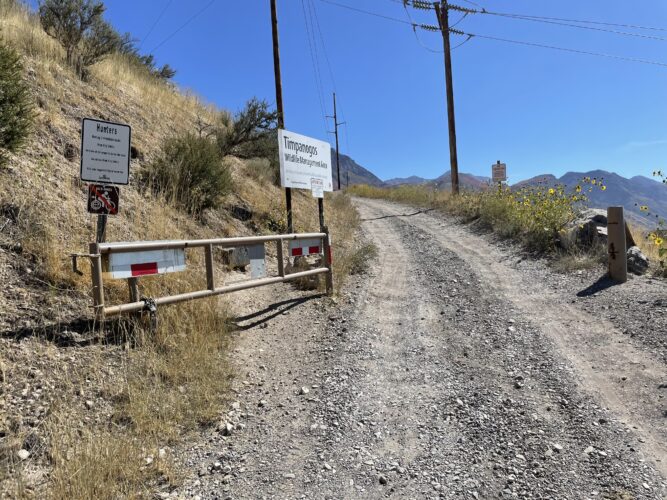
Courtesy Utah Division of Wildlife Resources
The Bonneville Shoreline Trail inside the Timpanogos Wildlife Management Area in Orem is photographed in an undated photo.Access to one of Utah’s most popular trails for outdoor enthusiasts is once again open to all after state lawmakers recently reversed a controversial requirement.
For a brief time, people accessing the Bonneville Shoreline Trail in designated wildlife management areas, or WMAs, including several in Utah County, were required to have a hunting or fishing license.
The rule was in alignment with the passage of House Bill 309 earlier this year, which went into effect in May.
The state law required anyone 18 years or older to have a valid Utah hunting, fishing or combination license to access a WMA in counties that are designated as “class one” or “class two” counties, according to DWR’s website.
But the rule became problematic for trail runners, hikers and bikers using the trails within wildlife management areas, specifically in areas such as the Provo Peak WMA near Bridal Veil Falls and the Timpanogos WMA in Orem.
One man told KSL TV earlier this month that he had reportedly been stopped while out for a jog on the trail in Orem by a Division of Natural Resources officer, who said he needed to have one of the aforementioned licenses to be on the part of land on the trail.
However, on July 17, DWR and the Utah Division of Outdoor Recreation entered into a “special use permit” agreement that allows users to enjoy the trail again without needing a hunting or fishing license, according to state wildlife officials.
“The special use permit allows the Utah Division of Outdoor Recreation to maintain and update the Bonneville Shoreline Trail and the Great Western Trail — which run through a portion of the Timpanogos WMA — and to allow non-motorized access to the public who have utilized the trail prior to the passage of HB309,” the agreement reads.
Essentially, the agreement means “those recreating on the Bonneville Shoreline Trail and the Great Western Trail will not be required to have a hunting, fishing or combination license, so long as they stay on the designated trail,” said Faith Heaton Jolly, spokesperson for the Utah Division of Wildlife Resources.
Though the legislation was only enacted for a short time, organizations like Conserve Utah Valley praised the collaboration between DWR and the Division of Outdoor Recreation in addressing unintentional consequences of the brief requirements.
“I see this as being a really good course correction and two agencies that have really taken public reaction into consideration and come up with a good plan that supports the best use of that,” said Carol-Lyn Jardine, director at Conserve Utah Valley.
She feels that citizens should have unrestricted access to natural spaces, while also being good stewards of the land.
“We do think that one of the things that creates a real sense of community in Utah is the access to the outdoors,” Jardine told the Daily Herald. “And it’s one of the things that creates a real sense of love. And, maybe that sense of stewardship here is having access to it. So we encourage people to get out, but we also encourage people to understand what our responsibility is.”
As advocates of land preservation and connectivity, Conserve Utah Valley is gearing up for its annual hike in September to raise awareness about trail access issues.
“I think one of the things that can help us preserve our more pristine areas of wilderness is to make sure that the trails and places that have been designated for (public) recreation use are accessible and that it’s well-maintained, and that people understand what the access is and how they can use it,” Jardine said.
Jolley said the Bonneville Shoreline Trail does not have a public easement where it passes through the Timpanogos WMA. The land is owned by DWR, which controls who can use the land and how.
“As in the past, portions of the Timpanogos WMA are closed each year between Dec. 1 to April 15 to protect wintering wildlife,” she added. “No permitted activities may take place on the WMA during this period.”

