Provo residents to vote on RAP tax renewal on November ballot
Jacob Nielson, Daily Herald
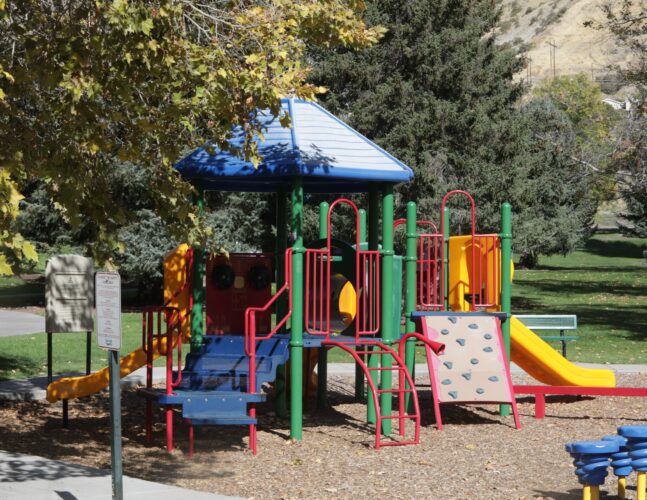
Bicentennial Park is pictured Thursday, Oct. 9, 2025, in Provo.Provo’s 10-year Recreation, Arts and Parks tax will expire at the end of the year, and voters will decide during November’s municipal general election whether to renew it.
If Provo residents choose to opt in, the RAP tax rate would remain at one-tenth of 1% of sales tax — or one penny for every $10 spent — as set by state law. The tax applies to all taxable purchases made in Provo.
Provo Parks and Recreation Director Doug Robins said the first decade of the RAP tax raised $15 million, which helped fund several capital improvement projects, including:
- 21 new public restrooms in parks
- 10 playgrounds replaced
- 10 new playgrounds
- Upgraded Covey Center infrastructure
- Six tennis courts replaced or renovated
- 16 new pickleball courts
- Epic Sports Park multipurpose fields
- Nine miles of paved trails
- Trailhead enhancements at Rock Canyon
Robins said the RAP tax has become “an important part” of the department’s funding mechanism.
“We utilize the RAP that we have, and once we have the funding plan for each project, we go out and see what outside grants or other funding opportunities are available to stretch those dollars as far as we possibly can,” he said.
A public hearing on the RAP tax was held during the Provo City Council meeting Tuesday. No one spoke against the tax, though a handful of people voiced support for it, including former City Councilman Gary Winterton.
Winterton, who has been canvassing neighborhood meetings in support of the tax, told the Daily Herald there are two things he wants residents to know about the RAP tax.
“It’s not a new tax; it’s a rollover on a tax that we’re already paying,” he said. “It’s a sales tax that is paid by everyone. It’s not a property tax; it’s not just on the residents that own property here — it’s for everybody, and everybody uses our parks and our rec centers.”
Winterton said that during his time in city government, he saw how the RAP tax was used as seed money to secure grants and fund park improvements that otherwise would not have been possible.
He said that last year the city received nearly $2 million in RAP tax revenue, and because of how it was spent, the city was able to secure $10 million worth of grants or benefits.
“It is so important for our capital improvement for our parks and rec. That’s where our money comes from. There’s very little budgeted from the city for capital improvements,” Winterton said.