
Tech Innovations in Gaming: What Utah Entrepreneurs Can Borrow From European Models
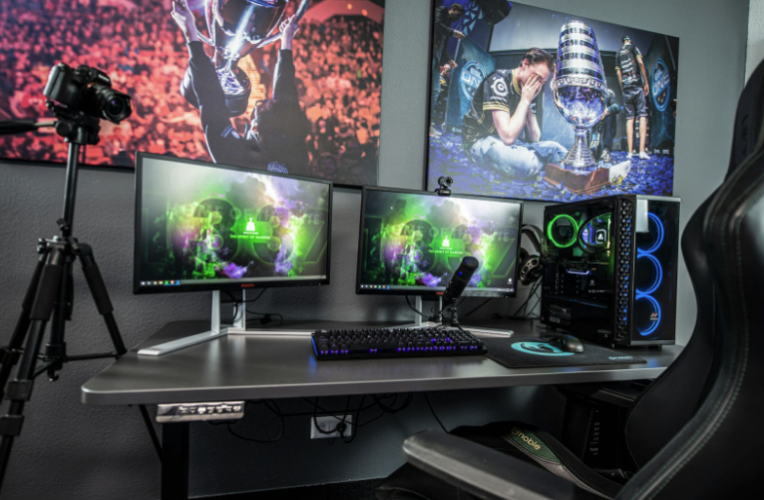
Utah may be a state that’s become stereotyped for choosing tradition over modern living but that’s not completely true. The state does indeed have a well-documented history preserving its national parks and providing a home to its large Mormon population. However, it’s also a state that has become renowned for its tech innovations and booming industry. While it’s easy to look from the outside and believe this state prefers to stay under developed, in reality, Utah actually has a booming tech industry.
However, other better known tech hubs like Silicon Valley have become notorious for a winner-takes-all attitude to market share in the gaming world. Meanwhile, the Utah gaming industry prides itself on trying to be an incubator for ideas without necessarily needing to sacrifice principles or morality to achieve it. In that sense, it’s actually more akin to European gaming companies.
Across the pond, tech companies are also seeking to create the next big thing. From biotech to fintech, Europe has developed its own strong ideologies of how to boost the tech sector. There’s much that places like Utah can learn from it too. However, cultural differences have to be factored in and accounted for in order to achieve a viable coalescence between the two. The gaming industry offers some good examples.
America’s gaming market is known to be cutthroat at times, focusing more on what sells more rather than what provides a better experience. In that sense, Europe’s gaming ecosystem has expanded by tapping into consumer demand for variety and freedom. Companies offer players choices that stretch beyond traditional formats, creating ecosystems where flexibility is central. This shift reflects wider digital habits, where entertainment is expected to be available at all times and without unnecessary restrictions.
For instance, among Swedish license-free casinos online, some choices have skyrocketed and now provide an expansive range of offerings to players. To locals there, these platforms aren’t just geared to their needs, they represent a complete shift in thinking. By using options that favor fewer restrictions and less stringent regulations, the philosophy of iGaming has changed in Europe. Players gravitate toward platforms that champion individual choice and privacy-conscious payment methods.
Convenience also plays its part. If regulations require players to undergo long, drawn out registration processes where personal info and documents are shared, this can result in excluding a large part of the market. Not every person is comfortable doing this, nor does every player envision being a regular, long-term player. Some just want a casual game now and then but tedious and long-winded registration processes can push such players away.
Another difference in culture comes from Europe’s willingness to indulge in hybrid forms of gaming. Online and console play is preferred in US states. However, even though online play can encompass a social aspect, both are usually just enjoyed at home. Players, and even people in general, are becoming more accustomed to staying indoors in the US. However, in places like Copenhagen, there’s an entire substratum of the gaming community that loves gaming at specialized cafes.
Places like these blend gaming with going out and physically interacting with others. While such options are available in US cities too, the culture around it isn’t yet as pronounced or popular as it is in parts of Europe. However, as the adage goes, ‘build it and they will come’. Much of marketing now depends on analytics and reacting to market data that local gaming companies. As a result, less of them are inclined to experiment with innovation or try ideas in a bold way that creates new trends rather than milking existing ones.
Esports is booming across Europe with a focus that’s now looking to build this industry from grassroots. Cities such as Katowice in Poland have become global destinations for tournaments, with infrastructure built specifically to host massive gaming events. These spectacles generate income not only through ticket sales but also via broadcasting rights, sponsorships, and tourism.
Utah has potential to follow this model. The state already has strong sporting traditions and facilities that could be adapted to esports. By supporting local tournaments and creating pathways for young players to participate, entrepreneurs and officials can foster a new kind of cultural identity tied to competitive gaming. The success of European esports demonstrates that local investment can yield global recognition.
European success in digital gaming is not simply about content. It relies on infrastructure. Countries have invested heavily in high-speed broadband and mobile access, making it possible for games to run smoothly across devices. Without this foundation, streaming and online competitions would be impossible.
Utah must continue to improve its digital backbone if it wants to compete. Affordable, fast, and reliable internet access is critical for any startup seeking to launch in the gaming space. Entrepreneurs should push for partnerships with telecom companies and public initiatives to strengthen local connectivity. Without equal access, growth risks being concentrated in urban areas while rural communities are left behind.
Cloud services are another area where Europe has set an example. Cloud gaming has reduced the need for expensive hardware by shifting heavy processing to servers. This allows players with modest devices to enjoy high-end experiences. For Utah companies, adopting cloud solutions could reduce barriers for entry, expand audiences, and keep costs manageable for users.
Europe has also shown that growth must be balanced with sustainability. Energy consumption in gaming is rising, and many companies are under pressure to find greener solutions. Some have invested in renewable energy for data centres, while others are designing games with lower energy requirements. These practices resonate with environmentally conscious audiences and give companies an edge in regions where sustainability is a priority.
Utah, with its natural zones and active environmental movements, is well-positioned to adopt similar strategies. Entrepreneurs can differentiate themselves by committing to clean energy in their operations and communicating this commitment to players. Doing so aligns with broader social values and creates trust that extends beyond entertainment.
Utah’s entrepreneurial spirit is strong, and the gaming sector presents one of the most exciting opportunities for growth. By observing European models, businesses in the state can learn valuable lessons about flexibility, community integration, esports development, infrastructure, and sustainability.
Swedish platforms highlight how freedom and responsiveness attract players. European cities demonstrate how community and digital services can thrive together. Esports across the continent proves that investment in competitive gaming can deliver cultural and financial returns. Strong infrastructure and sustainable practices form the foundation for long-term success.
For Utah, the path forward lies in adapting these lessons to local strengths. By combining its talent pool, tech hubs, and cultural energy with insights gained from Europe, the state can build a gaming industry that is not only competitive but also meaningful. The opportunity is present, and with the right approach, Utah can turn inspiration into achievement.