Prosecutors oppose Tyler Robinson’s request to delay preliminary hearing
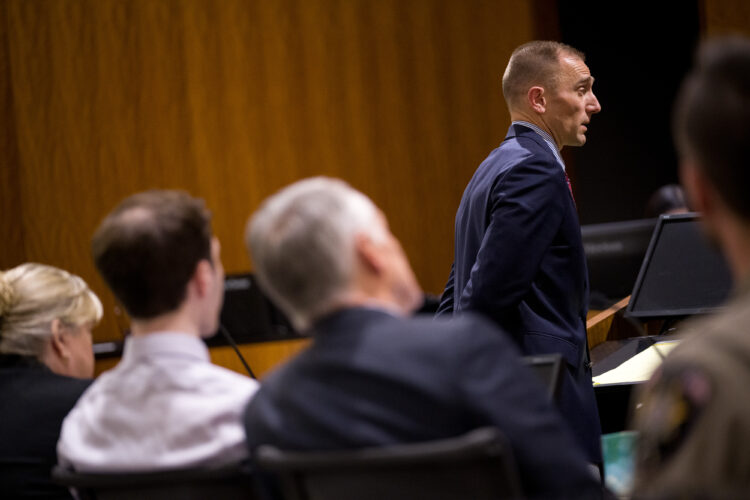
Trent Nelson, The Salt Lake Tribune
Deputy Utah County Attorney Ryan McBride in 4th District Court in Provo on Tuesday, Feb. 3, 2026, during a hearing for Tyler Robinson, accused in the fatal shooting of Charlie Kirk.The Utah County Attorney’s Office filed a memorandum Friday requesting the court deny a motion from Tyler Robinson’s defense team to delay the May 18 preliminary hearing, arguing there is sufficient evidence to move forward.
Robinson, 22, of Washington, Utah, faces seven criminal charges, including aggravated murder, after he allegedly shot and killed conservative activist Charlie Kirk at a Sept. 10 event at Utah Valley University in Orem.
Judge Tony F. Graf scheduled a preliminary hearing date for May 18-20. However, a March 27 motion filed by the defense requested the court delay or vacate the hearing, claiming the state had not completed its discovery obligations and that a large amount of evidence remains to be reviewed, including an ongoing bullet analysis.
“Neither defense counsel nor their experts can discharge their obligations without full and complete discovery of all information underlying any forensic analysis,” the defense said.
The attorney’s office countered on Friday that all available evidence has been disclosed to the defense team as of April 1 and argued the majority of the evidence it will use in the preliminary hearing has been known by the defense for at least six months.
“The State is ready to proceed with evidence establishing probable cause,” the motion said.
The prosecution team added that Robinson’s team “puts the cart before the horse” by requesting that full discovery of forensic analysis be provided before the preliminary hearing begins, arguing expert discovery is only due before trial.
“Contrary to Defendant’s contention for expansive preliminary hearing rights, the Constitution limits the preliminary hearing to only one purpose: the determination of probable case,” the prosecutors said. “The extent to which discovery and due process rights apply at the preliminary hearing must be viewed in light of this very narrow purpose.”
Local News
Paying attention: State law enforcement launches distracted driving blitz in Utah, Salt Lake counties
Prosecutors oppose Tyler Robinson’s request to delay preliminary hearing