A heroic act: Spanish Fork man recounts rescuing woman from water during tragic shark attack
-
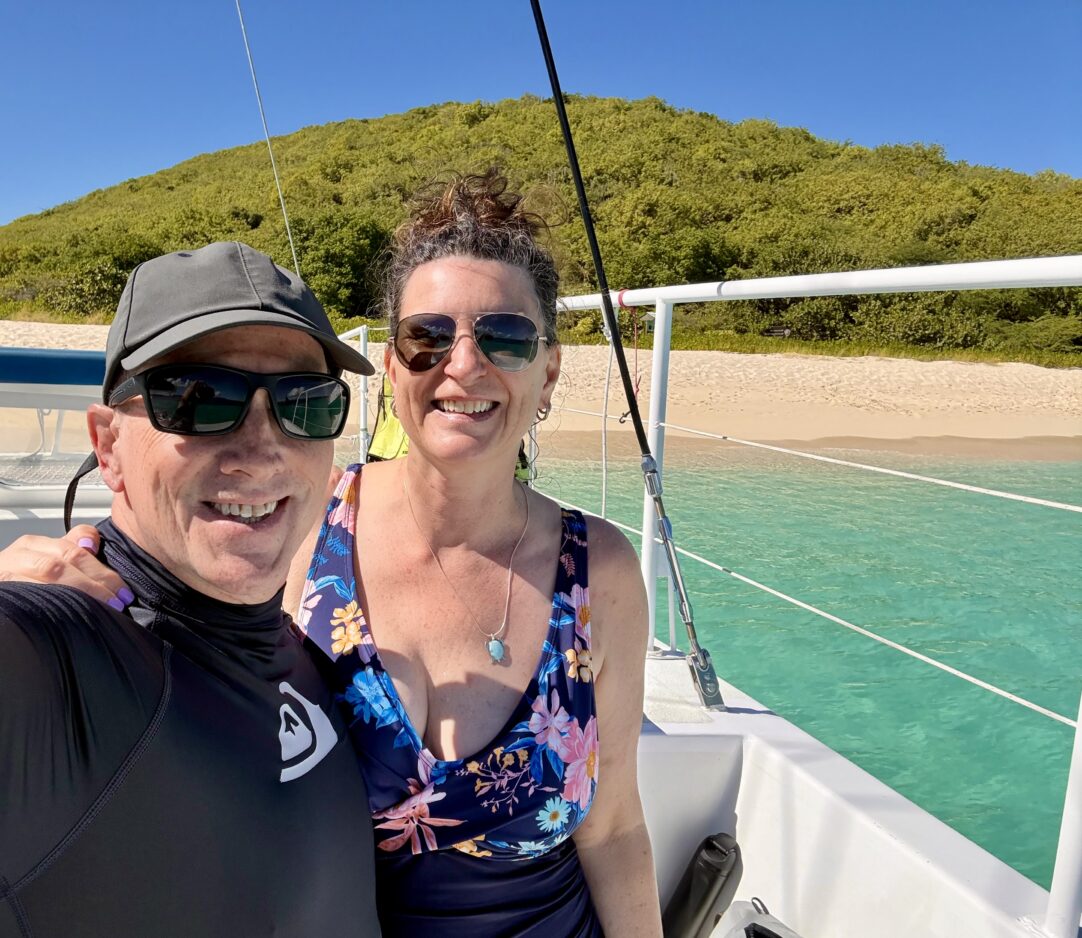
- Chris Carroll and his wife are pictured on vacation in St. Croix.
-
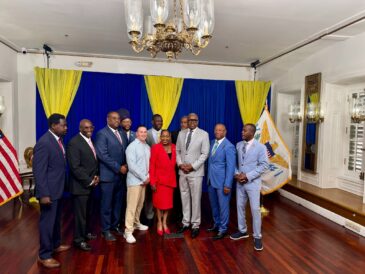
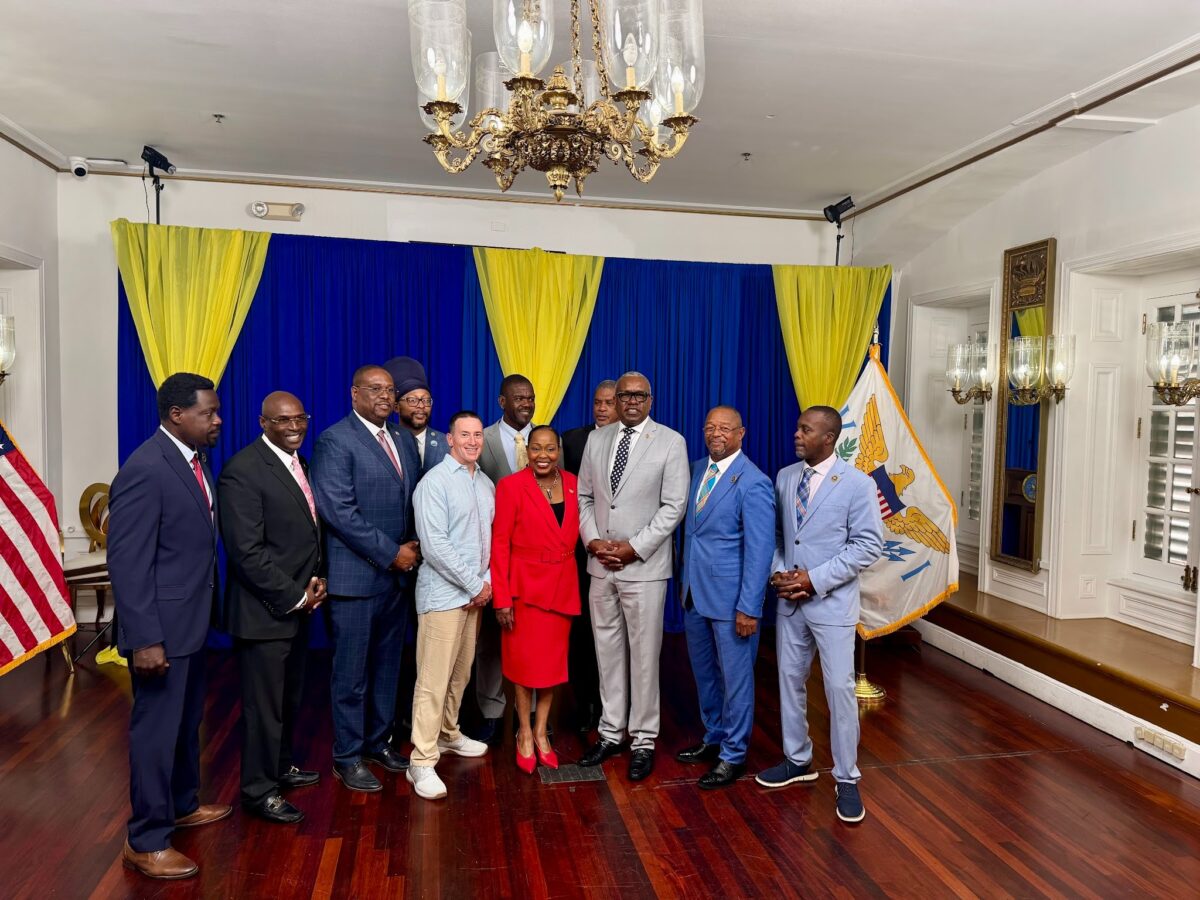
- Chris Carroll is pictured at the US Virgin Island Government House being recognized by territorial leaders for his act of heroism.
Chris Carroll did not realize it was a shark attack at first.
The Spanish Fork resident was on vacation with his wife on Jan. 8 in St. Croix, U.S. Virgin Islands, sitting on his hotel balcony when he heard commotion coming from the beach below.
He rushed down the stairs and ran toward the shore when he suddenly heard high-pitched screaming — telling him something was seriously wrong.
Carroll, a registered nurse and director of surgical services at Lehi’s Holy Cross Hospital-Mountain Point, noticed a woman about 50 yards offshore struggling to stay afloat. As people rushed out of the water, he rushed in, unaware of the danger.
It wasn’t until he was 6 to 10 feet away from the woman that he stopped to assess the situation, saw blood in the water and realized her left arm was gone.
“That’s when my brain registered like, ‘This is a shark attack. This is a big aggressive shark.’ So I hesitated then, because that’s at the point where I knew I was in big trouble, and fight or flight kicked in,” Carroll said.
The former teenage lifeguard suddenly had a pivotal choice to make: With the shark likely still lurking close by, would he protect himself or risk his life to help the woman?
“I just decided I wasn’t going to leave her out there,” Carroll said.
He grabbed Arlene Lillis, 56, of Detroit Lakes, Minnesota, in a tow position and started swimming her the long journey back to shore, terrified that at any time the shark would come back and attack them.
“It felt like 10 years, all the way to that beach,” he said.
Once Carroll got closer to the beach, others helped him get her over the sand and rocks and she was taken by EMS to the hospital, where she died from her injuries.
Though Lillis was a stranger, Carroll said he got to know her through her husband and daughter, who he called “incredibly graceful” people who reached out to console him, despite grieving their own loss. He also learned he and Lillis shared the same birthday, June 28, which he does not consider a coincidence.
“Arlene obviously had this horrible encounter with the shark, and she was alone in the water,” Carroll said. “To not have her be left alone out there, to not die alone, to not have to drown, and for her family to have her back so they could at least bury her, that was some of the good that came out of it.
“I will always think of her. And my heart goes out to her family.”
Prepared for the moment
Carroll learned following the incident that the commotion was prompted by people seeing shark fins, and that the loud screeching came when people saw the shark attack Lillis.
He doesn’t blame those who exited the water upon seeing the shark. He said if you’re not trained, you could easily become the next victim. But his experiences made him the right man to help.
Born and raised in Philadelphia, Carroll said he grew up surfing on the Jersey Shore, was a lifeguard as a teenager and always loved being in the water. When he was 28, he took a position at a transplant program in Hawaii, where he lived for the next decade, spending his free time diving, spearfishing and participating in open-ocean swimming races.
Carroll, who moved his family to Utah in 2008, said his medical experience was also useful. His work as a nurse and in surgery made him used to seeing major injuries and serious bodily trauma.
“My whole life has been about trying to alleviate suffering and help other people,” he said. “I’ve been a waterman my whole life. I love surfing, diving, free diving and swimming.”
And if that wasn’t enough, a more recent experience reinforced Carroll’s ability to respond. When Spanish Fork’s new recreation center opened in December, Carroll’s son decided to try out for a lifeguard position, and Carroll helped him prepare.
He was in the pool with his son swimming, practicing rescue drills and showing him how to approach and tow.
“A month later, on Jan. 8, here I am using all that stuff I haven’t thought about in probably more than 30 years,” Carroll said. “I don’t think that was an accident.”
An improbable occurrence
A conversation after the attack helped Carroll put into perspective what had occurred.
He was contacted by a Ph.D shark researcher from the International Shark Attack Foundation, who asked him to perform a questionnaire about the experience. He was asked a handful of questions — some peculiar, such as “Was the victim wearing a one-piece or two-piece swimsuit?,” and “What color was it?”
Upon completion, the researcher offered to answer some of Carroll’s questions. Carroll first asked whether he thought the shark was still there when he reached the victim.
“And he said, ‘Oh, I guarantee you that shark was still there. They almost never leave, because they’ve invested the energy in the attack,'” Carroll said.
By choosing to help, Carroll was in immediate danger. The researcher said the chances of being bitten while rescuing a person from a shark attack are 4% to 5%.
“Way higher than I want it to be,” Carroll said.
And substantially higher than the typical risk.
According to Carroll, the researcher said the chances of going into the ocean and getting attacked by a shark is one in 4.3 million, and the chances of a fatal attack is one in 11.6 million.
“Statistically, the chances are so close to zero, they’re functionally zero,” Carroll said. “You’re in more danger from a sunburn or driving to the beach.”
If there’s any good that comes out of the tragic, improbable occurrence, Carroll hopes that people will be more willing to assist others.
“We’re called to love our neighbor and we need to care for one another and be a little more gentle with one another,” he said. “And just demonstrate that care any way we can. You don’t have to swim out into the ocean where there’s a shark, but you can help somebody take care of their elderly mom or give somebody a ride when they need it.”
Local News
A heroic act: Spanish Fork man recounts rescuing woman from water during tragic shark attack

Asylum seekers in Utah try to fight deportation to countries where they have no ties