Asylum seekers in Utah try to fight deportation to countries where they have no ties
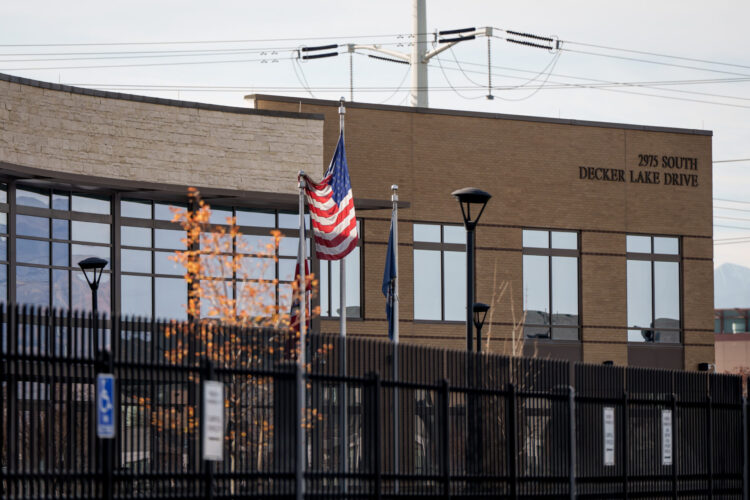
Photo by Spenser Heaps for Utah News Dispatch
A building that houses the Salt Lake City Immigration Court and the Immigrations and Custom Enforcement field office in Salt Lake City is pictured on Saturday, Nov. 15, 2025.After years of waiting, several immigrants in Utah were just days or moments away from making their case for asylum in the United States.
But before judges considered their arguments earlier this month, their cases were dealt a major blow, their attorneys said.
The U.S. Department of Homeland Security filed motions to “pretermit” their cases, or dismiss them before the long-anticipated hearing and deport them to a “safe third country” where they don’t have ties to seek asylum there instead.
“It’s a complete nightmare,” said South Jordan immigration attorney Carlos Trujillo.
Trujillo noted that in October, an immigration appeals board effectively ruled the burden is on immigrants to prove they are likely to be persecuted or tortured in the third country and therefore should be allowed to stay in the U.S.
“There is no way to save the case, because there is no way to demonstrate that you will be persecuted in a country that you have never been in,” Trujillo said.
But he will try anyway at upcoming hearings where he said he will have 15 minutes to make such a case on behalf of clients originally from Venezuela.
It comes as the Trump administration carries out mass deportations and seeks to clear a backlog of asylum cases. More than 2 million immigrants are awaiting asylum hearings, according to Syracuse University’s TRAC database.
The Department of Homeland Security did not respond to email requests for comment from Utah News Dispatch. It has previously said it is “using every lawful tool available to address the backlog and abuse of the asylum system.” It has also referred to “lawful bilateral arrangements” allowing unauthorized immigrants to seek legal protection in other nations that have agreed to adjudicate their claims.
The United States has a longstanding third-country agreement with Canada but signed more recent agreements with countries including Ecuador, Guatemala and Honduras.
“They’re saying, ‘Hey, because we have the agreements with these countries, they’re not even eligible to apply for asylum here. Let’s ship them to Honduras or Ecuador and see if they’ll grant them asylum instead,'” said Utah immigration attorney Nicholle Pitt White.
The government’s practice of filing “pretermission motions” intensified nationally in November after the appeals decision, with thousands filed. Use of the legal strategy seems to have started growing in Utah in recent weeks, according to Trujillo and Pitt White.
The attorneys can count the number of cases in their offices on one or two hands, but suspect more are being filed.
“It’s very possible they’ve done it in other cases where people don’t have attorneys, and we just wouldn’t hear those stories,” Pitt White said.
In and outside of Utah, lawyers are trying to get creative in how they fight against the maneuver. One argument, Pitt White said: The United States’ third-country agreement with Ecuador isn’t in full force because specific criteria for who will and will not be accepted under the accord hasn’t been set.
Pitt White noted Ecuador has one of the highest homicide rates in South America and Honduras has in recent years had the highest rate of people fleeing and seeking asylum in the U.S.
She believes one of her clients who’s currently being held in a detention center had a strong case before the change in the government’s strategy.
“But because of the timing when this policy came out, the motion being filed, we got stuck in a bad spot for our client,” Pitt White said. “It feels kind of hopeless.”