
Why Utah Never Joined the Western Casino Boom
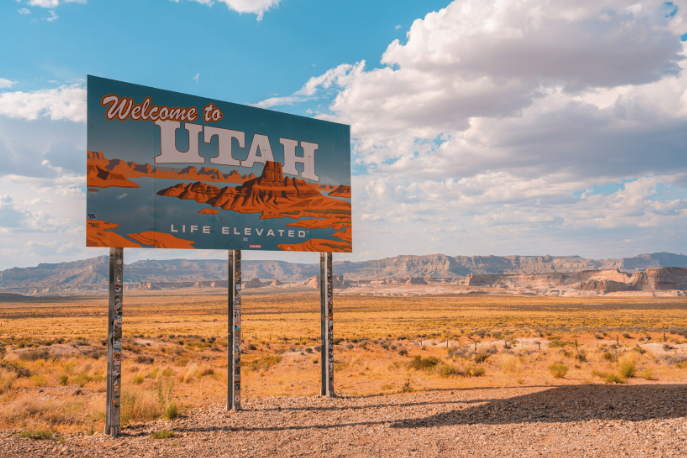
Most Western states embraced casino gambling as another way to attract visitors and grow local economies. With the expansion of regulated markets, online slots became one of their biggest attractions. Utah made a different choice and has defended it for more than a century, even as new forms of wagering continue to emerge.
Drive west from Salt Lake City and you can be in a Nevada casino within a couple of hours. Head south into Arizona or east into Colorado and legal casino gaming forms part of the landscape there too. Those regulated markets have also created growing demand for online slots, giving players another way to enjoy casino games where state law allows. Utah stands apart. For generations, state leaders have held the line against casino gambling, creating one of the clearest policy differences anywhere in the American West.
Utah Chose a Different Path
Utah’s approach to gambling was established long before online slots, casinos, and sports betting entered the conversation. When the state adopted its Constitution in 1896, Article VI, Section 27 prohibited the Legislature from authorising games of chance, lotteries or gift enterprises. That decision still shapes public policy today, giving Utah one of the most restrictive gambling frameworks in the country.
The result is unusual in modern America. Utah and Hawaii remain the only two states without commercial casinos, tribal casinos or state lotteries, yet the reasons differ. Utah’s position reflects decades of political and cultural continuity, supported by lawmakers from both major parties. Residents can still travel to neighbouring states if they choose, but casino gambling has never become part of Utah’s economy or tourism strategy.
Casino Gaming Across the Beehive State’s Borders
Cross Utah’s borders and the picture changes quickly. Nevada built an international tourism industry around casino gaming, while Arizona, Colorado and Idaho each adopted their own regulated approach. Tribal gaming has also become an important source of employment and revenue for many Native American communities following the Indian Gaming Regulatory Act of 1988.
Those neighbouring states reached different conclusions about the role casinos and online slots could play in economic development. Colorado permits commercial casinos in Black Hawk, Central City and Cripple Creek, Arizona’s tribal casinos attract visitors from across the Southwest, and Idaho allows tribal gaming alongside a state lottery. Utah has consistently decided that those benefits do not outweigh its long-standing policy objectives.
Looking Beyond Utah’s Borders
Utah’s gambling laws prohibit the casino experience people encounter in neighbouring states, including slot machines that remain the main attraction on most casino floors. Anyone curious about how modern slot games work, what separates one operator from another or what features different casinos provide has to look beyond Utah’s borders, whether that means travelling to another state or researching the market before making the trip.
Looking beyond advertising also gives you a clearer picture of what different operators actually provide. Practical details such as withdrawal methods, available slot providers, welcome promotions, player complaints and independent safety assessments can influence your decision far more than a headline bonus.
Spending a few extra minutes comparing those details usually leads to a much better-informed choice.
Utah’s prohibition means many residents who are curious about slot games look beyond state borders for information rather than simply searching for a casino. Casino Guru approaches that decision from an editorial perspective, combining Safety Index ratings, detailed operator reviews, payment information, welcome offers, game libraries and responsible gambling guidance because in a saturated marked finding the best online slots depends on far more than a large game catalogue.
New Technologies Test Long-Standing Laws
Utah’s gambling laws face new questions even without casinos operating inside the state. Prediction markets have become the latest point of debate, prompting lawmakers and regulators to consider where financial products end and gambling begins. That discussion has brought companies, including the big prediction market brands, into the spotlight as Utah maintains its constitutional position.
The issue is different from the debates that surrounded casinos or state lotteries because prediction markets are presented as financial exchanges rather than traditional gambling products. Utah argues that distinction does not change the practical outcome, while supporters contend these platforms fall under a different regulatory framework. The disagreement is now playing out through legal and regulatory channels instead of legislative proposals to introduce casinos.
That approach is consistent with Utah’s broader history. Rather than reconsidering the constitutional ban each time a new form of wagering appears, lawmakers have generally chosen to examine whether the new product fits within existing gambling laws. The technology may change, yet the state’s underlying policy has remained remarkably consistent for well over a century.
Regional Differences Reflect Different Priorities
Every Western state has reached its own conclusion about casino gambling. Nevada built a global entertainment industry around it, while Arizona, Colorado and Idaho developed regulated markets that reflect their own priorities. Utah has consistently followed a different path, and current statistics underline the contrast between neighbouring states, with Nevada ranked as America’s most gambling-addicted state and Utah at the opposite end of the list. Different policies have produced different outcomes, and that contrast remains one of the most distinctive features of the American West.
Living next to states with thriving casino industries has never persuaded Utah to change course. Instead, each new development has reinforced a conversation that has defined the state for well over a century: what role, if any, gambling should play within Utah’s own borders.