US Trade Rep., lawmakers praise Provo-based company’s critical minerals discovery

-
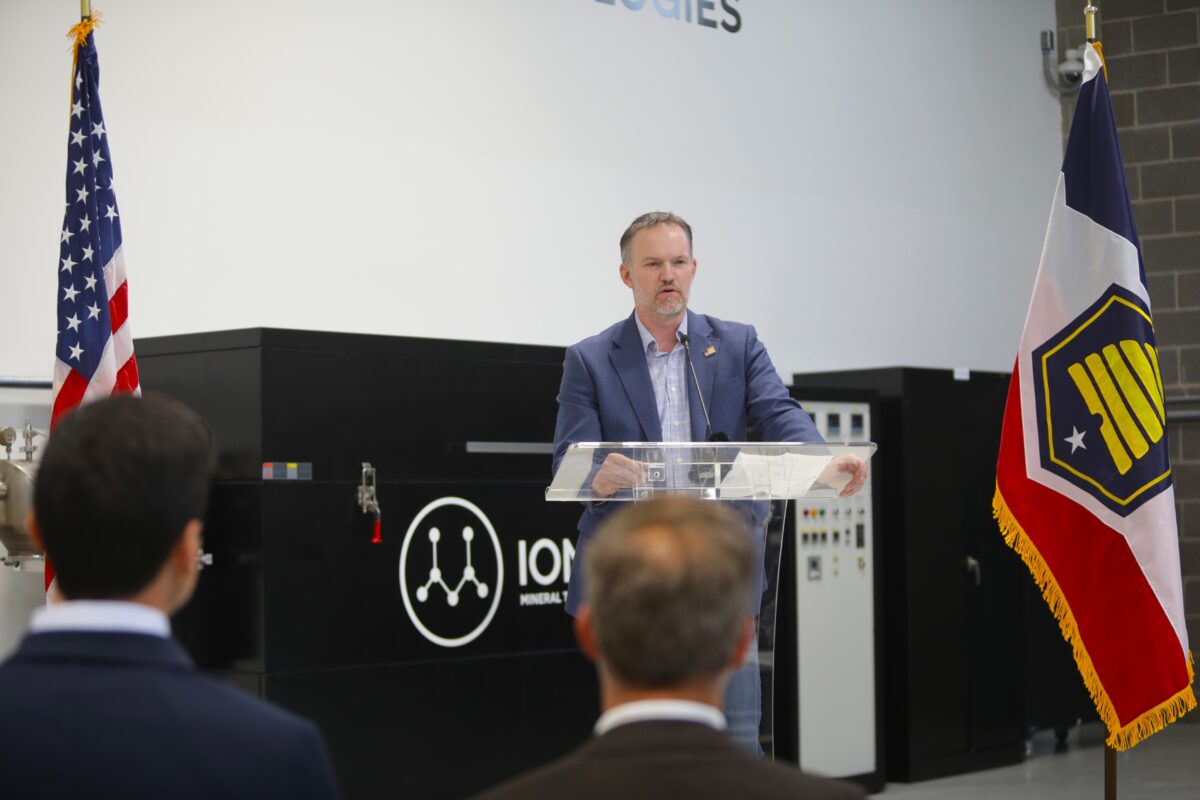
- U.S. Trade Representative Jamieson Greer speaks Friday, July 17, 2026, at the Ionic MT processing plant in Provo.
-

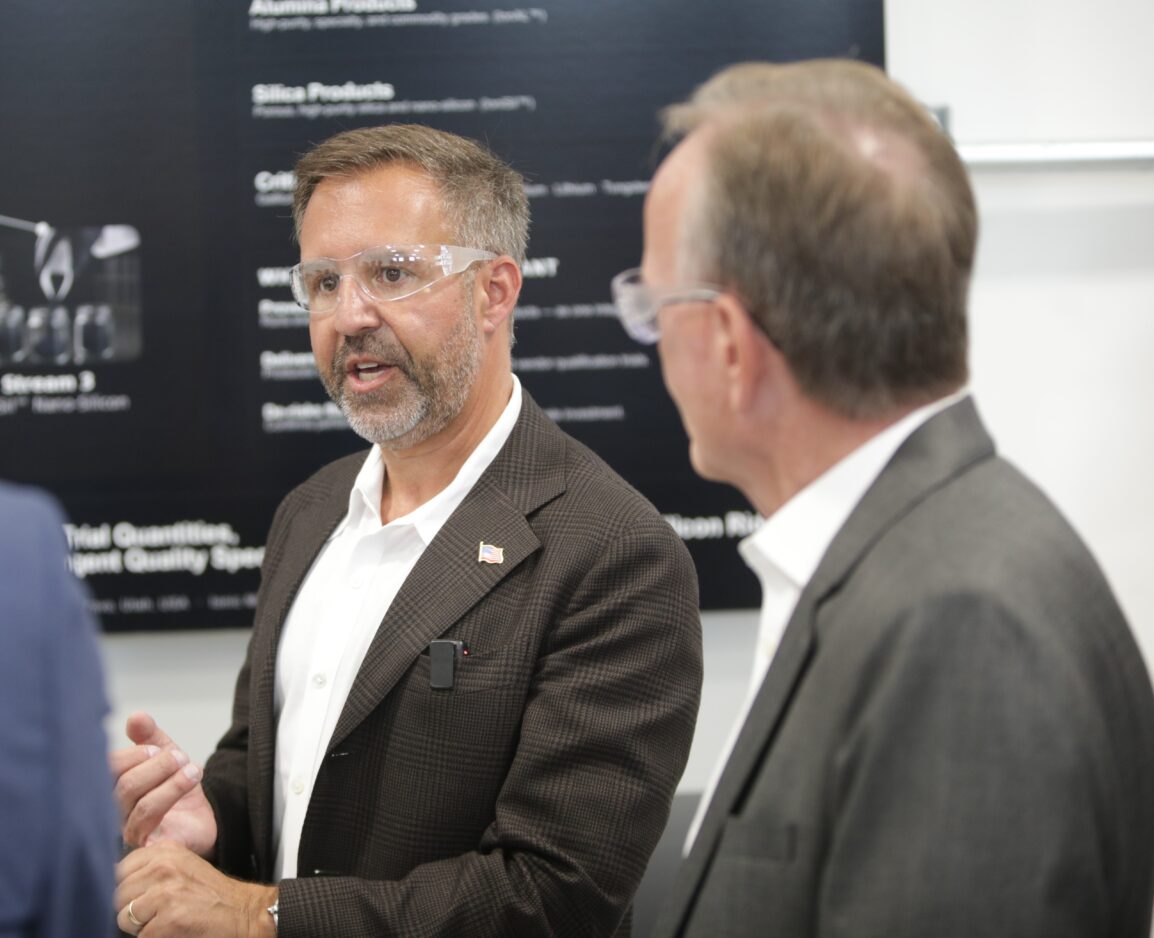
- Ionic MT CEO Andre Zeitoun speaks to government leaders at its Provo processing plant Friday, July 17, 2026.
-

- Rep Mike Kennedy is pictured Friday, July 17, 2026, at the Ionic MT processing plant in Provo.
A recent discovery of 19 critical minerals at a halloysite deposit in Utah County’s Lake Mountains could assist the United States’ efforts to increase domestic production of critical minerals, government officials say.
The United States imports more than 80% of its rare earth minerals, with most coming from China. These materials are used in aerospace, national defense industries, semiconductors and other technologies.
Last year, Provo-based Ionic Mineral Technologies announced it found 19 critical minerals in the halloysite deposit at Silicon Ridge in the Lake Mountains, and began small-scale extraction and a processing operation, with plans of building an on-site processing plant.
State and federal lawmakers and U.S. Trade Representative Jamieson Greer visited the company’s demonstration processing plant in Provo last week to get an up-close glance at the production.
“This should be one of the top stories today,” Greer said. “You just released here an assessment showing the resources that are available here to help the United States achieve the economic security that it needs as we currently are in and continue to proceed through a period of geopolitical difficulty and economic uncertainty.”
Added Rep. Mike Kennedy: “We’re currently dependent entirely on China or mostly on China for these materials for national defense and our computer infrastructure, and so the idea that we can distance ourselves from China and its supply chains is really important.”
Ionic MT CEO Andre Zeitoun said they used the leased land at Silicon Ridge to process the clay deposit for alumina and discovered the critical minerals in the process. The results of an independent preliminary economic assessment for the Silicon Ridge Project found the minerals could be worth an after-tax net value of $12.1 billion.
Some of the 19 minerals include rubidium, which is used in defense, timing and electronics; cesium, used in atomic clocks, drilling and GPS; gallium, used in semiconductors, radar and GaN Chips; germanium, used in fiber optics night vision and solar applications; and scandium, used for aerospace alloys and fuel cells, according to Ionic MT.
While sample materials are being processed at the Provo facility, the processing plant is planned to be built at Silicon Ridge. Ionic MT leaders said the facility will have a closed-loop water system, chemical reagent recycling and no toxic tailings.
“You’ve made a commitment to establish the nation’s first sovereign shovel-ready supply chain for the materials that power our defense, our energy, our technology, and this is America first in that work with this fully permitted mining site,” Greer said.
Expected to generate what Kennedy called a “remarkable” profit margin, the critical minerals will also benefit the state, the Alpine lawmaker said, because the mining land falls on trust land managed by the School and Institutional Trust Lands Administration.
“Every dime that comes out of that is going to profit the schools in the state of Utah,” Kennedy said.
Local News

Armed suspect shot and killed by Provo officers, police say

Payson High assistant wrestling coach arrested on suspicion of sexually abusing multiple students