Transforming the mall: Provo Towne Centre redevelopment plan goes through the legislative process
-
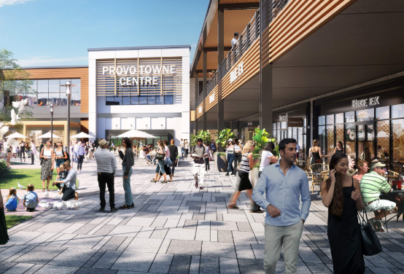
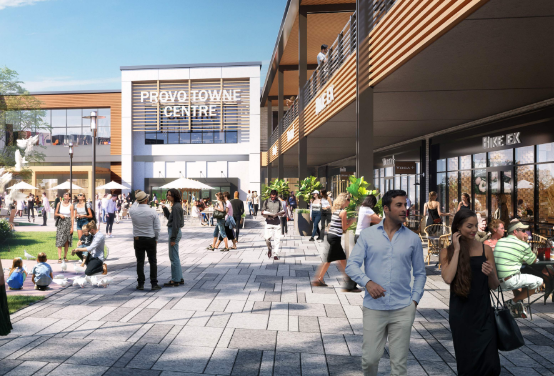
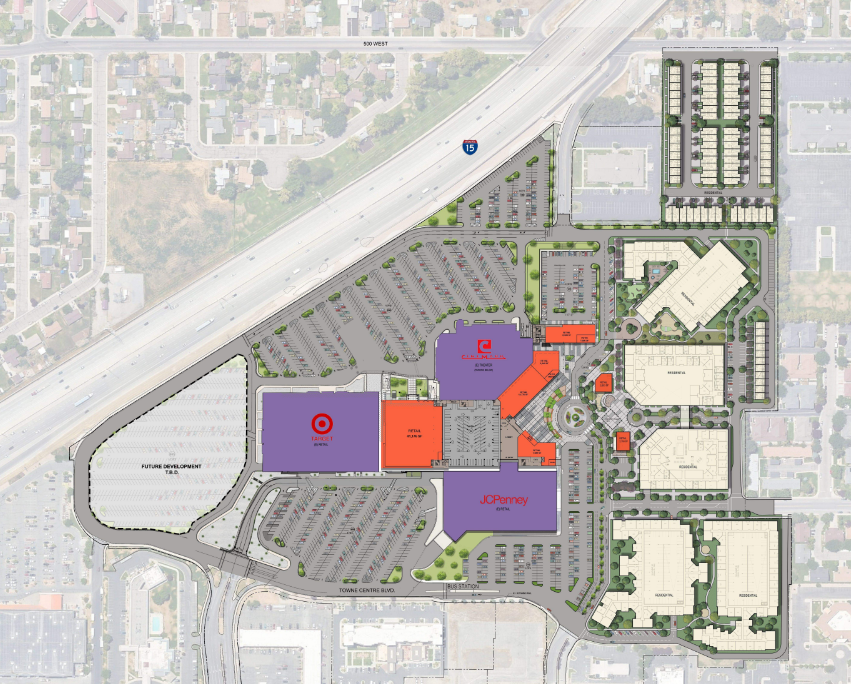
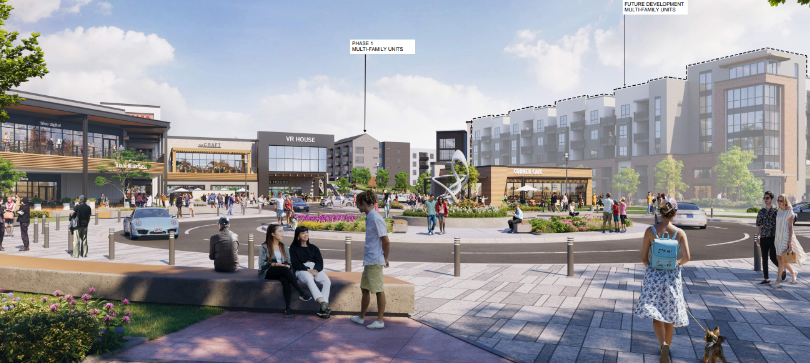
- A rendering of the proposed redevelopment to the Provo Towne Centre is pictured.
-
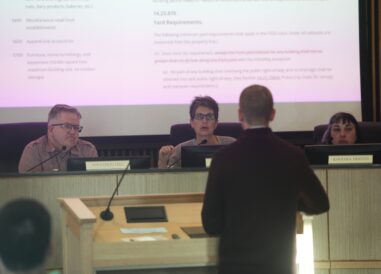
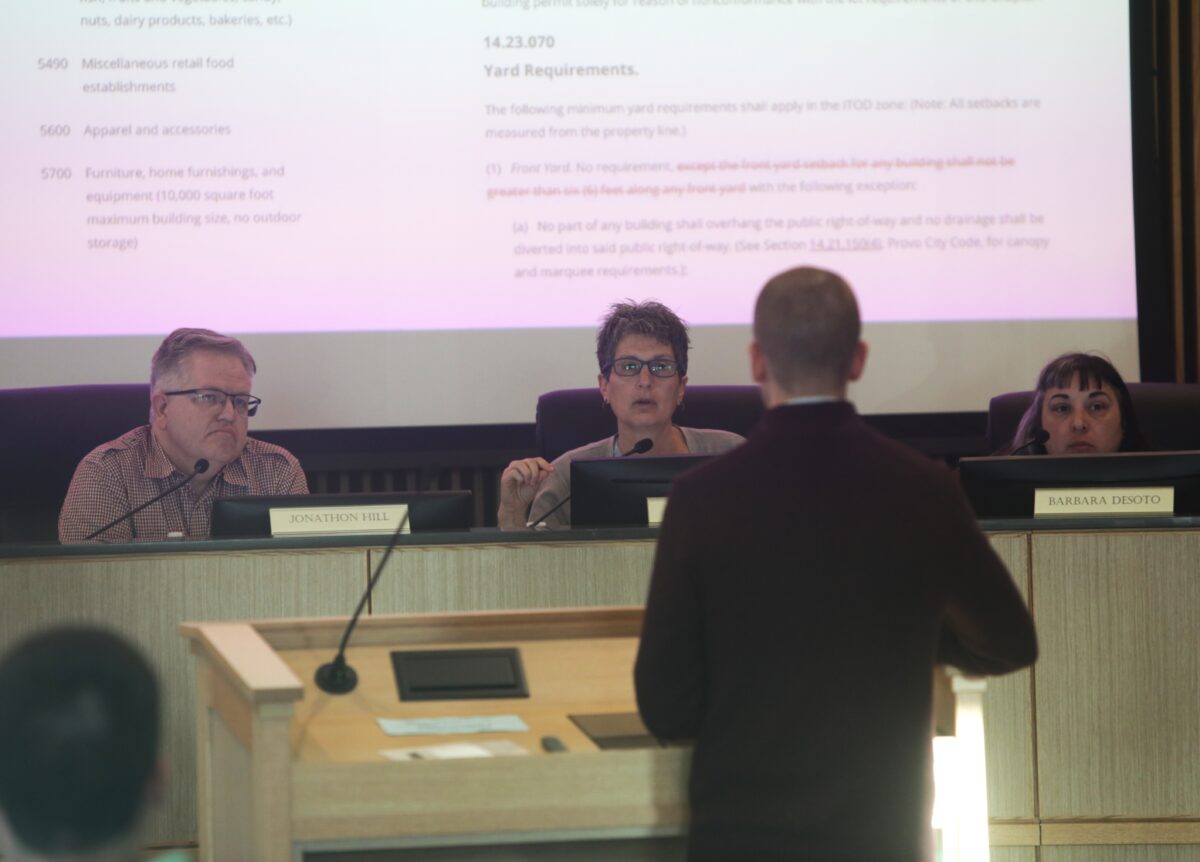
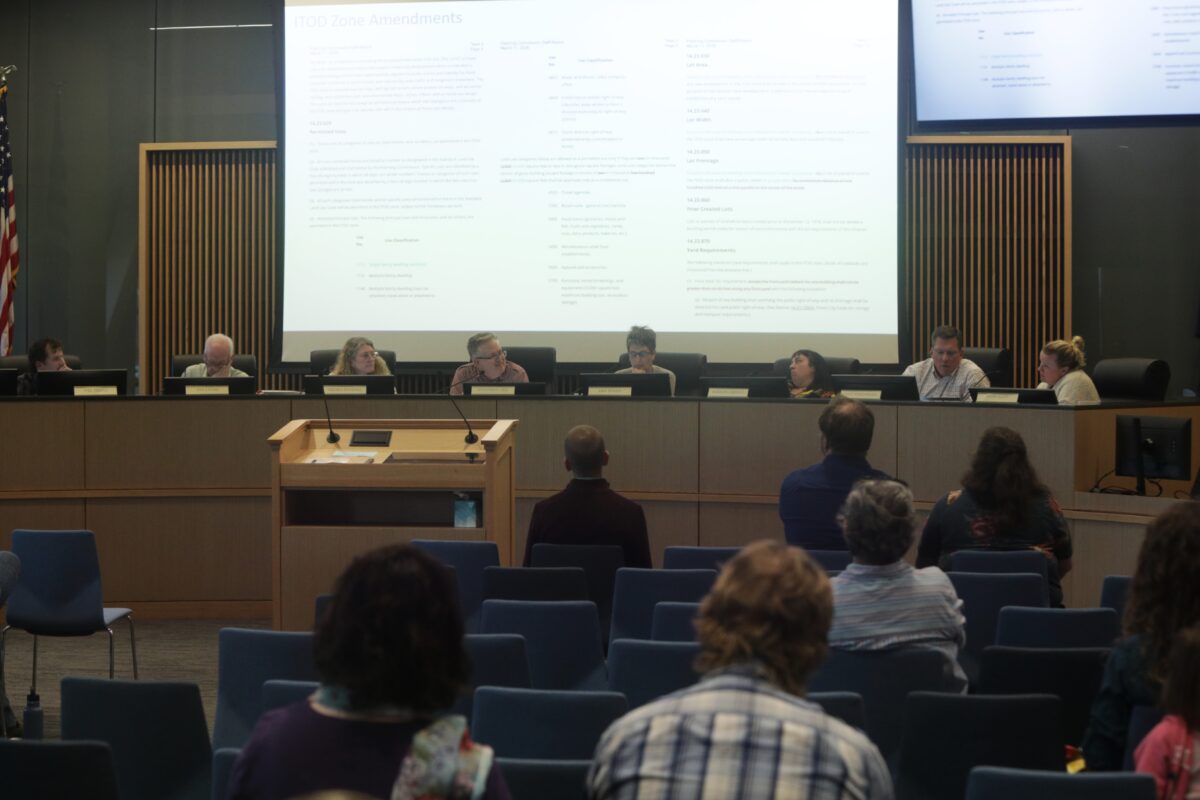
- The Provo Planning Commission discusses the request to redevelop the Provo Towne Centre on Wednesday, March 11, 2026.
-
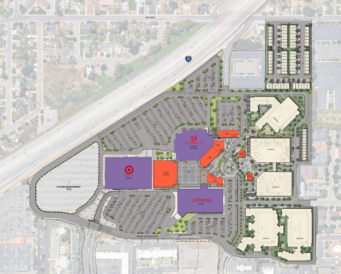
- A rendering of the proposed redevelopment to the Provo Towne Centre is pictured.
-
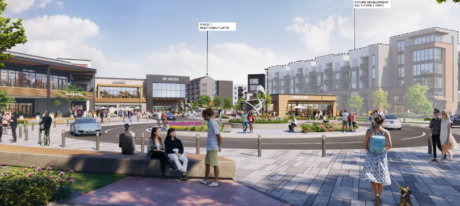
- A rendering of the proposed redevelopment to the Provo Towne Centre is pictured.
-
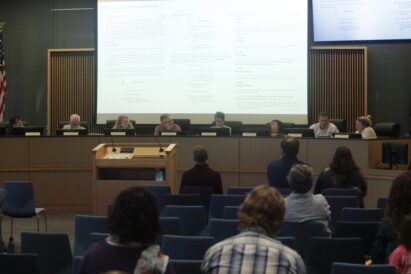
- The Provo Planning Commission discusses the request to redevelop the Provo Towne Centre on Wednesday, March 11, 2026.
A massive redevelopment plan for the Provo Towne Centre is going through the city legislative process, though much remains to be determined before the project is greenlit.
Brixton Capital, a real estate investment company based in California, intends to redevelop 23 acres of property it owns in East Bay, including the Provo Towne Centre and the Shady Acres Mobile Home Park, into a mix of commercial and residential uses. The project is in partnership with Provo-based PEG Companies.
On Wednesday, the Provo Planning Commission recommended approval of a general plan update and the rezoning of the property to an interim transit-oriented development zone, or ITOD, with a suggestion that the mobile home section of the project not be considered under the same zoning. The City Council is scheduled to consider the general plan and zoning change requests on April 14.
The commission did not, however, make a determination on the concept plan, which it has final approval over, continuing it in a 6-2 vote because many commissioners said there were too many unresolved issues. The commission will revisit the concept plan at an undetermined date.
In its formal project request, Brixton Capital said traditional shopping malls must adapt to changes in consumer behavior to remain economically viable. Developers added during the Planning Commission meeting that, according to data, the Provo Towne Centre is in the bottom 20% of malls in terms of foot traffic.
The data reflects what a passerby can see by driving by the mall’s empty parking lots or walking through its typically quiet hallways.
“I like the idea of reinvesting in this mall,” Planning Commission member Matt Wheelwright said. “It’s very unfortunate that Orem has kind of sucked all the energy that way, as far as malls go, and our city is in very much need of this sales tax revenue, the business revenue, and the jobs that it provides, etc., if we could revitalize this area.”
“It’s a zombie mall right now,” added member Lisa Jensen. “And I mean that in the sense that it’s not making money.”
The plan calls for turning the indoor mall into an indoor-outdoor space built around three key existing tenants: Target, Cinemark and J.C. Penney.
The center of the current mall, an indoor rotunda, would be replaced with an outdoor plaza. Five residential buildings holding 1,300 apartments are planned north of the mall, where a parking garage and open-air parking spots currently sit, and 83 townhomes would be built at the existing mobile home park northwest of the mall.
The commission placed the consideration to rezone the mobile home park section separately because it determined the section did not meet the intent of an ITOD zone. Many commissioners felt it was not integrated with the rest of the mall.
“When you go there and you stand at the mobile home park and try to walk to the mall, now they’re not the same,” member Jon Lyons said. “They’re different. They’re completely physically different. And I don’t feel like they’re related at all.”
While many commissioners were in favor of the overall plan, there were specific concerns that kept the group from approving the concept plan.
A major issue was uncertainty surrounding the mobile home park. Wheelwright acknowledged the developer owns the park but said he hadn’t heard enough to feel comfortable with displacing the residents.
Joel Temple inquired whether the city could provide the developer incentives in exchange for community benefits.
“You set aside 35 homes for people being displaced, you get an extra floor,” he suggested. “I wish we had tools to ensure that the community, commercial and residential aspects are being protected. And right now, I don’t feel like a whole lot of that is happening here.”
Other concerns were raised that the project is not a true mixed-use facility, with apartments to the north and retail to the south, the two not intertwined. Some commissioners questioned whether the plan was too auto-oriented, citing, among other things, a roundabout between the residential space and retail that accommodates single-lane vehicle traffic, and suggesting it be moved.
There was also hesitancy from the commission to approve the plan because the city is rewriting its ITOD code, and the commission wanted to ensure the plan aligns with the new code.
In response to the feedback, Brixton Capital Project Executive Justin Long said the company had been working on the project for four years and insisted that the level of planning that has gone into the project is “extraordinary.”
“We’re contemplating a $500 million investment project. You can be assured that we’ve thought about a lot of these details and what is viable,” Long said. “(We) feel comfortable that this is something we can execute, and it has the elements of executability, viability and sustainability.
“We have a choice before us. We can continue down the road, which would propose what is not a viable orientation of retail for the future, or we can decide this is a vision that is more optimal.”
The commission told the developer to go back and make some informed decisions based on feedback from the community and staff and to produce a more fine-tuned plan.
Local News
Transforming the mall: Provo Towne Centre redevelopment plan goes through the legislative process

Utah aims to host critical minerals lab, hoping for federal recognition — and funding