New rules of the road: What Utah drivers need to know about the 2026 legislative session
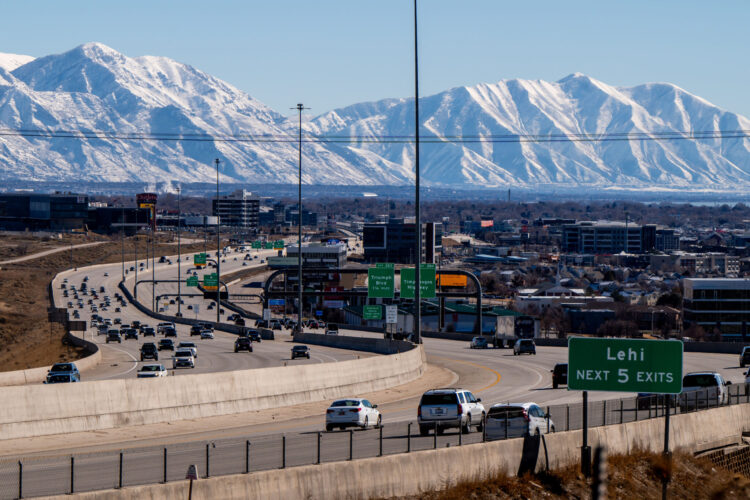
Photo by Spenser Heaps for Utah News Dispatch
I-15 near Point of the Mountain in Lehi is pictured on Sunday, Feb. 4, 2024.No longer do drivers in Utah need to signal out of a roundabout. Manufacturers who collect data about drivers through their cars must be more transparent. And law enforcement must impound a vehicle during a traffic stop if the driver doesn’t have a license.
Those are just some of the changes Utah is making to the rules of the road after a bustling 45-day legislative session ended on March 6. With a focus on law enforcement, registration rules, what happens when your car is towed, and other road rules, here’s a list of some of the bills — either already signed or headed to the governor’s desk — that could affect Utah drivers.
Law enforcement
- SB226 requires law enforcement to pursue chemical testing when investigating a crash if they suspect the driver was impaired. It also requires officers to review crash information with a senior officer.
- HB11 changes when law enforcement can search a vehicle suspected of using red dyed diesel fuel — which is only authorized for off-road use — making it so law enforcement can only check a driver’s fuel tank for red dyed diesel with probable cause, the driver’s permission, or at a port of entry.
- HB217 bars cities and local governments from imposing additional requirements that make it harder to report a stolen vehicle. It also allows law enforcement to wait 48 hours after a rental vehicle’s return date to accept a stolen vehicle report.
Legal penalties
- HB24 changes the penalty for speeding in a school zone from a class C misdemeanor to an infraction, if the driver’s speed was between 21 and 29 mph. It also reduces a careless driving offense from a class C misdemeanor to an infraction.
- HB423 increases the legal punishment for hit-and-run cases if the driver who flees a scene has been involved in similar cases or has a history with driving under the influence. The bill also prevents DUI cases from being dismissed just because a law enforcement officer fails to appear in court.
Towing and impound
- HB136 requires law enforcement to impound a vehicle during a traffic stop if the driver does not have a license or learner’s permit. Law enforcement is not required to impound the vehicle if the driver has expired driving credentials, if seizing the vehicle would create a public safety concern, if seizing the vehicle would prevent the officer from addressing other public safety concerns, if the operator is under 18 years old, or if another licensed driver is willing and able to drive or pick up the vehicle.
- SB191 allows people to retrieve “life-essential items” from their impounded vehicle. The bill also sets new standards for impound lots and allows the state to enforce those standards, setting a three-year ban for companies that lose their official designation as a state impound lot.
- SB120 requires a car to be towed to a nearby impound yard if law enforcement orders the towing without consent of the vehicle owner. Also changes requirements for opaque fencing at impound yards.
New rules of the road
- HB357 — which applies to newer vehicles — requires car manufacturers to be transparent with vehicle owners regarding data they collect on a driver using the car, and what third parties can access that information. Drivers must be able to opt-out of information collection if it is used for targeted advertisement and be able to delete data that is collected and stored on the vehicle.
- SB22 clarifies that a stepparent or foster parent may supervise a learner’s permit holder as their required in-vehicle adult when driving.
- HB128 removes the requirement to signal out of a roundabout.
Registration and insurance
- HB47, changes vehicle insurance requirements. If a vehicle has active registration but is not being driven for long periods of time, it does not need to be insured.
- HB119 requires insurance companies to disclose when they use, or plan to use, an aftermarket part to repair a damaged vehicle. The bill also requires these parts be equivalent in quality and performance to the vehicle manufacturer’s part.
- SB91 increases annual registration fees for Utah’s historic black license plate from $25 to $50 in an effort to increase funding for Utah’s Motor Vehicle Division.
- SB74 standardizes how insurance claims are made after a crash by clarifying the requirements for filing a liability claim. The bill also requires more transparent communication between drivers, insurance companies and attorneys.
Licenses and titles
- HB52 allows Indigenous people to request a designation on their driver’s license or identification card noting their tribal status with a “federally recognized Indian tribe.”
- HB228 requires Utah’s Motor Vehicle Division to check a national database for previous damage to a vehicle before issuing a new Utah title and changes when a salvaged vehicle may receive rebuilt or be given a restoration status.
- HB22 replaces the “vintage vehicle classification” with a “classic vehicle designation,” also removing emissions test requirements for some older vehicles.
- HB481 repeals Utah’s Clean Vehicle Program, which allows solo drivers of hybrid, electric or alternative fuel vehicles to use carpool lanes.
Safety inspections and commercial drivers
- HB118 requires all applicants for a commercial driver’s license to attest they are proficient in English before training, building on existing federal law requiring English proficiency for all CDL drivers.
- HB192 “allows safety inspection stations to charge a reasonable fee for safety inspections without a statutory limit,” as long as they post the fee in advance.