Utah may turn IPP area into a special district to accelerate sale of coal generators there
The state still hasn’t identified a buyer for the Intermountain Power Plant’s coal units as they sit idle since November
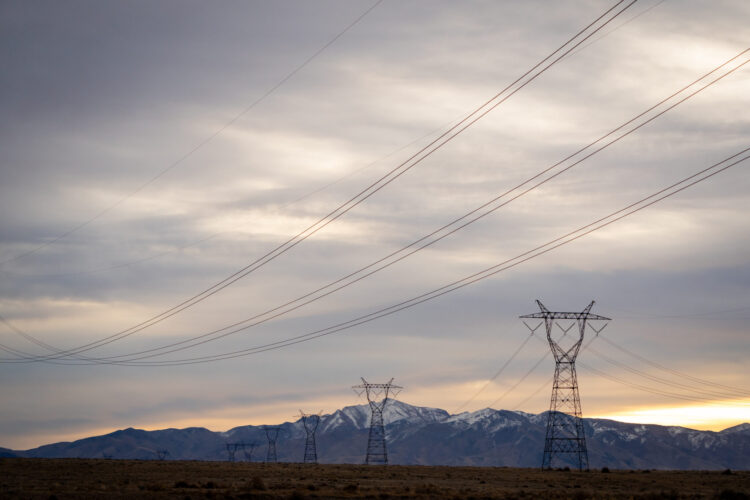
Photo by Spenser Heaps for Utah News Dispatch
Transmission lines lead away from the coal-fired Intermountain Power Plant near Delta, Utah, on Monday, Feb. 3, 2025.Utah’s efforts to keep the Intermountain Power Plant’s coal-powered units are still preliminary two years after the Legislature moved to block their planned closure. Now, lawmakers want to accelerate the process to re-open them by creating a new special district to ease the process for potential buyers for the plant’s coal generators.
That provision was included in a bill Santa Clara Republican Rep. Neil Walter sponsored this year expanding the Utah Energy Council from five to seven members. The council is a panel created in 2025 to coordinate and assess around-the-clock electrical energy developments.
According to Walter, the special district designation would work similarly to a water conservancy or a mosquito abatement district, and would help the council to raise funds, if needed, to complete the purchase of the coal generators at IPP, located in Delta.
“We’re trying to facilitate that transaction,” Walter said, “and we need to be able to have a means to transfer them from Intermountain Power Agency to the Utah Energy Council, and then to be able to raise capital from the operations.”
The bill is still waiting for the governor’s signature to become law.
The special district would be able to issue bonds and buy energy facilities, but it may not directly sell electricity to retail customers, according to the bill.
The state has had its eye on IPP’s coal units for years, but it wasn’t until 2024 that the Legislature passed a law requiring the Intermountain Power Agency, which owns the plant, to sell the generators to the state. Utah’s plan was to then look for a third-party buyer to keep the units operating.
That has been a controversial move, with the Intermountain Power Agency, which is transitioning to a multibillion-dollar natural gas facility, protesting the legislation. The agency argued that forcing the coal generators to remain open “interferes with municipal control of assets that have been developed and operated without any public funds,” and was at odds with environmental commitments the agency had made to the Environmental Protection Agency to pursue its new natural gas project.
Ultimately, lawmakers tweaked the legislation during a special session, after a request from the governor, and gave IPA more time to give a decommission notice and to submit air quality permit applications. The agency didn’t oppose those changes, and since last November, IPP coal generators are no longer working.
The units, which have a capacity of roughly 1,800 megawatts, are still in an operable condition. But the state hasn’t identified a buyer yet.
“IPA is fine with the bill,” John Ward, a spokesperson for the agency said about the recent special district proposal in an email. “It creates financing options that might be useful for a buyer of the coal units if one can be identified by the Energy Council.”
Walter said the state is still on the first step of its plan to keep the coal units open longer. However, he’s uncertain about a timeline to find a final buyer, months after the state received 14 responses to an initial request for information to gather data on companies interested in keeping the coal units going.
“We did think it would go faster than it is going. So that’s part of the reason why all the RFI ran earlier,” Walter said. “But we’re still in step one.”
Since the other coal-powered plants in the state aren’t facing retirement soon, Walter said he’s not anticipating needing this tool for other facilities.