Brady Brammer emphasizes his résumé, roots and relationships in Senate District 21 race
Courtesy Utah Senate
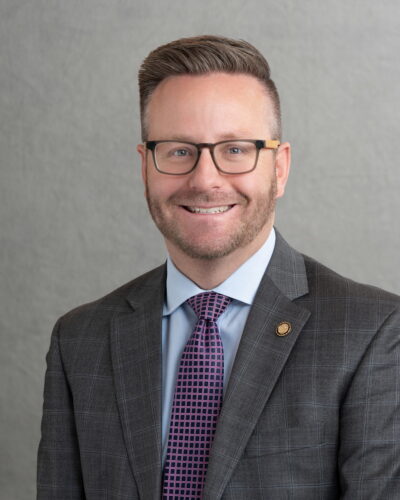
Brady BrammerBrady Brammer is a Republican candidate for the Senate District 21 seat. Below are his responses to a six-question survey sent to him by the Daily Herald. This interview may have been edited for brevity and clarity.
1. Why is the position you are running for important?
The Utah Legislature makes decisions that directly affect our families, businesses, schools, communities, and quality of life. From taxes and education to transportation, water, and public safety, these decisions shape both our daily lives and the opportunities available to future generations.
I believe the responsibility of a state senator is to listen carefully, understand the consequences of legislation and work toward practical solutions. Utah faces important challenges as our population and economy grow, and those challenges require thoughtful decisions that balance competing interests while protecting individual freedoms and maintaining accountable government.
Having grown up in Utah County and raised my family here, I care deeply about the future of our communities. Public service is an opportunity to help address today’s problems while preserving what makes Utah a wonderful place to live.
2. What unique qualities, attributes, skills and experiences do you possess that make you the best candidate in this race?
I bring a combination of legal training, public administration experience, business ownership, community involvement and legislative service.
I earned both a law degree and a Master of Public Administration from BYU. As a practicing attorney and business owner, I regularly work through complex problems, evaluate competing interests and understand how government decisions affect businesses and individuals.
I also have deep roots in this community. I grew up here, and my wife and I have raised our five children here. All five have attended our local public schools. Before serving in the Legislature, I served on the Highland Planning Commission. I subsequently served six years in the Utah House of Representatives and have served in the Utah Senate since 2025.
My experience has also allowed me to develop working relationships with municipal, county and state leaders. Those relationships are valuable when issues require coordination among multiple levels of government.
3. Please explain your priorities if elected, as well as why you believe you are uniquely capable of achieving those priorities.
My priorities are keeping taxes low, ensuring government is accountable, supporting strong public schools, protecting children and families, and responsibly addressing Utah’s growth, infrastructure, and water needs.
I believe government should focus on measurable results rather than rhetoric. During my legislative service, I have worked on successive income tax reductions (saving the average family in my district $700 per year), legislation addressing youth vaping (decreasing vaping among youth from 15% to 7.5%), and the creation of the Utah Lake Authority to improve the lake’s management and restoration (cleanest water in 100 years and new trails and marina improvements). These issues are different, but they reflect the same approach: identify a problem, bring the necessary people together, and develop a practical solution.
My legal and public administration background helps me understand how to translate policy goals into workable legislation. My experience as a business owner helps me consider economic consequences, while my relationships with local and state leaders help me understand implementation challenges.
4. Please describe how you view the importance of compromise in politics and provide an example from your own experiences that highlights your perspective.
Compromise is an essential part of representative government, but I believe there is an important distinction between compromising on principles and compromising on the methods used to accomplish a shared objective. Legislation rarely begins in its final form. Good policymaking requires listening to people with different perspectives, recognizing legitimate concerns, and being willing to improve a proposal. Sometimes the most productive discussions are with people who disagree with you.
One example is my work on legislation addressing therapy for LGBT youth known as “conversion therapy.” I negotiated a compromise to ensure that no therapist is pushing an agenda on a child. This was the first bill of its kind in the nation to pass unanimously with both pro-family and pro-LGBT groups in support. That compromise came from hours and hours of listening and understanding. That experience reinforced my belief that compromise should be directed toward finding solutions that respect the people affected and can be implemented successfully.
5. How will you balance the views of the vocal public, your political party, and your own understanding and knowledge as an elected representative (a challenge highlighted by issues such as data centers, water usage, redistricting, environmental concerns, taxes, etc.)?
I believe an elected representative has an obligation to listen carefully to constituents, consider the principles of the political party they represent, consider the principles upon which the representative ran and exercise independent judgment based on the facts and the long-term interests of the community.
Public input is essential, but the loudest voices are not necessarily representative of everyone affected by a decision. I try to hear from people with different perspectives, including those who do not participate in public debate. My political principles provide an important foundation, but they do not relieve me of the responsibility to examine the details of legislation or consider its practical consequences. Nor should my personal understanding prevent me from changing my mind when presented with better information.
Issues involving data centers, water resources, redistricting, environmental protection, and taxation often involve competing legitimate interests. I believe those decisions require careful analysis, transparency, and a willingness to explain not only what decision I reached, but why.
8. What is the best way for readers to contact you and/or get more information about your platform?
Website: www.votebrammer.com
Contact: email: votebrammer@gmail.com; cell phone: (801) 709-1790
Local News
Brady Brammer emphasizes his résumé, roots and relationships in Senate District 21 race
Kandee Myers highlights her ‘courage,’ ‘curiosity’ and ‘kindness’ in Senate District 21 race
Kandee Myers is a Democrat candidate for the Senate District 21 seat. Below are her responses to a six-question ...