Garden Help Desk: Want flavorful green beans? Better to pick sooner than later
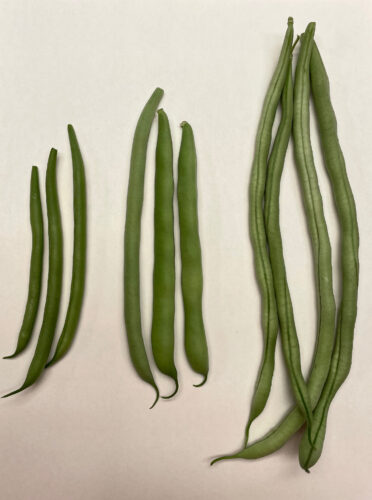
Whether you call them string beans, green beans or snap beans, there are many, many varieties in many sizes and colors to choose from. From left, French filet beans, an "average length" green bean variety and one of the varieties known for its extra long pods. (Courtesy Meredith Seaver)
Question: How big should green beans be if I want the best flavor?
Answer: That depends on the type and variety of green bean you’re growing and your own personal taste. Each variety has its own general characteristics. Most green beans, snap beans or string beans are some shade of green, but you’ll also find some with pods that are purple or yellow. Some bean pods are mature when they’re wide, long and flat, while others may stay short and thin. You’ll harvest your beans at their peak of quality if you keep a few things in mind.
Read the variety description on the seed packet or in the catalog. It will tell you what the average mature length of your beans should reach. Let that description guide you while you’re harvesting your beans.
Tasty green beans should be fresh-colored and feel smooth and plump. You might be able to feel small beans inside but there shouldn’t be really distinctive “outlines” of the bean seeds. Bean pods with well-developed beans and fading color will be tough and have poor flavor.
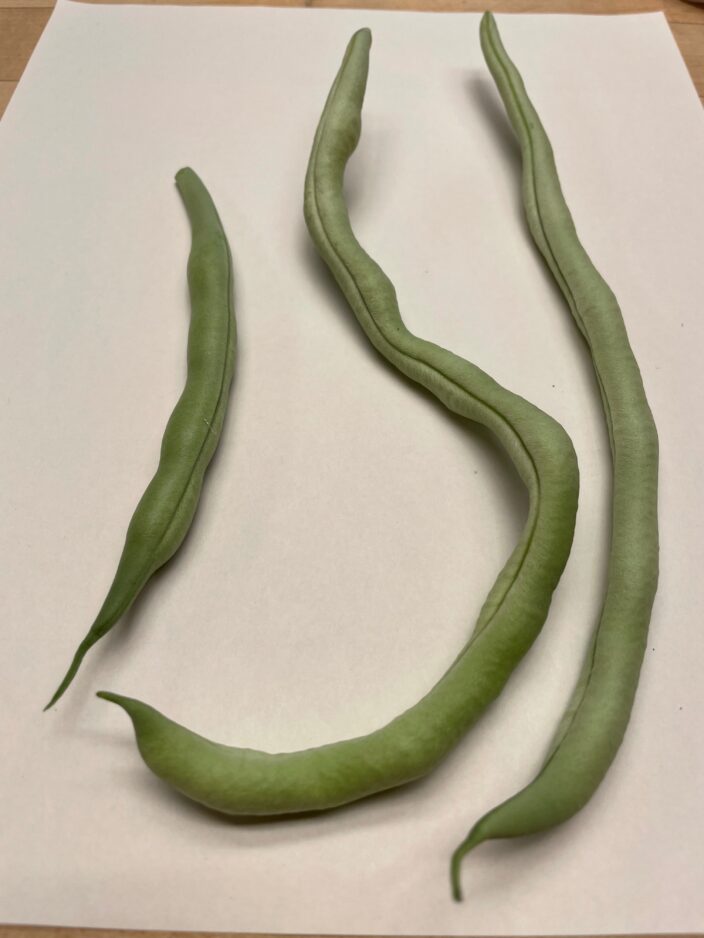
Once bean pods begin to clearly “show their beans” and fade in color they’re more likely to be tough, stringy or have poor flavor.
(Courtesy Meredith Seaver)
Check your bean plants every day, or at least every other day. Beans can go from perfect to past their prime in just a day or two, so you’ll want to be out in the garden often.
Don’t leave overgrown beans on your plants. Letting old beans stay on the plants can slow down production, so keep the beans picked even if an occasional bean pod is too old to eat.
There are so many green bean varieties to choose from that if the beans you grew this year weren’t quite what you were hoping for, you’ll find something you like if look at the variety descriptions carefully before you buy your seeds next year.
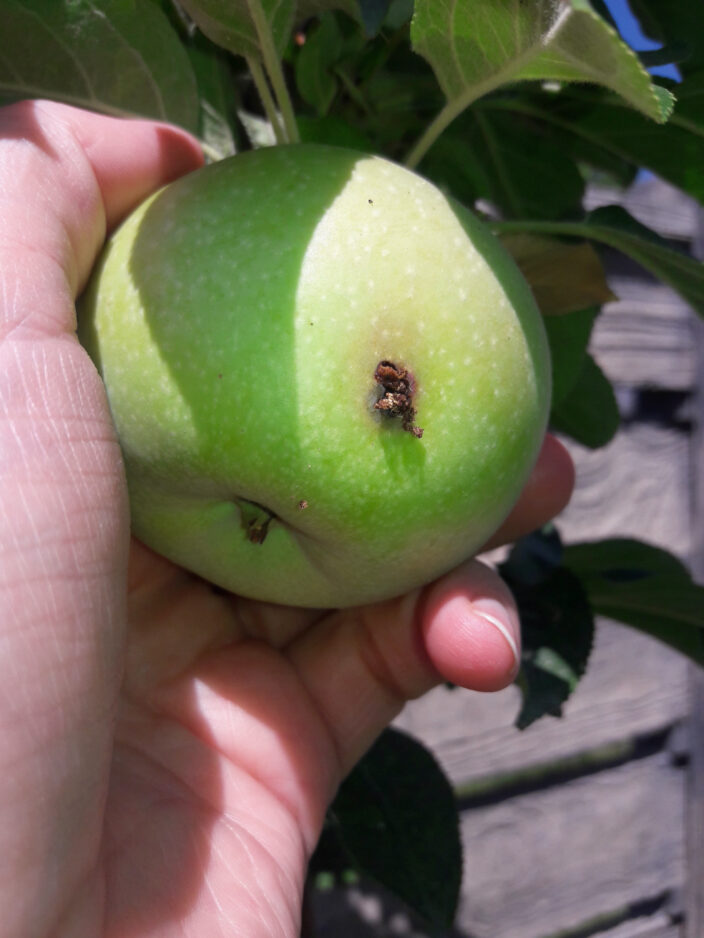
Codling moths are very common in Utah County. Apples need to be protected with preventive sprays or bagging. Damaged apples can often be trimmed and used instead of being thrown out.
(Courtesy photo)
Question: I’m pretty new to growing fruit trees. I noticed some strange brown spots on my apples the other day. Are they caused by bugs/worms? If they are, is there a safe insecticide I can spray that will kill the worms already in the fruit or should I pick those apples and throw them away?
Answer: It looks like a codling moth larva has been snacking on the seeds in this apple. Codling moths are so common here that it would be unusual if an unprotected apple tree didn’t have at least a few damaged apples.
Apples need to be protected from late May through mid-September. You can do this with one of many pesticide options — from conventional pesticides to pesticides registered for organic production. Individually bagging apples is another option. Preventive sprays need to be repeated throughout the season and each product has its own spray intervals.
If you want to bag your apples next year, you’ll cover them with bags while they’re small, about 10 to 14 days after petal drop, and leave them on all summer. If you use paper bags, you’ll need to remove the bags a few weeks before harvest so that your apples can develop their full color.
I’m afraid sprays won’t affect the larvae that are in the fruit now. The sprays are preventive, to keep larvae from getting into the fruit. You don’t need to let the damaged fruit go to waste though. Many people choose to trim out the wormy parts and use the rest of the apple instead of throwing way the fruit.
Dear readers: We had some rain last week, and a good rainstorm a few weeks before that, too, but all that rain doesn’t mean the drought has ended. Please continue to follow the watering guidelines we’ve been using the past few months.
- Deeper, less frequent watering is better for landscapes.
- Don’t water more than twice a week, and water less often if you can.
- If necessary, trees will do well with just one deep soak every two weeks during the summer.
- Watch your sprinkler system run and make sure everything is working properly.
- Set a timer when you use a hose-end sprinkler so that you don’t forget to turn it off.
- Keep an eye on the weather forecast and use the rain delay on your sprinkler controller if rain is expected.