Making a Difference: Volunteer Care Clinic serves underserved, keeps Utah County healthy
-
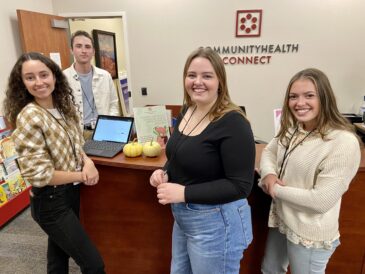
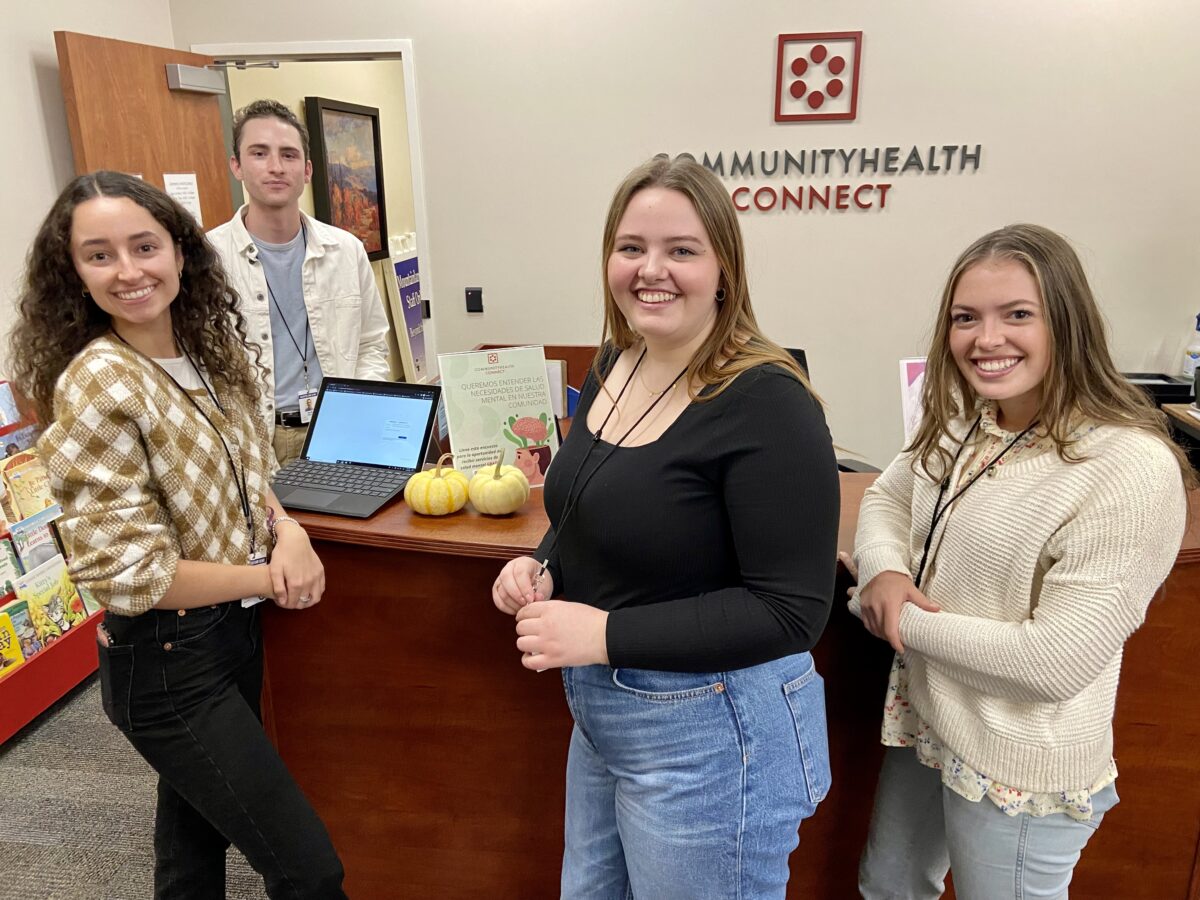
- From left, volunteers Victoria Stewart, Sean Moulton, Emma Dillion and Katherine Crawford pose in this undated photo.
-
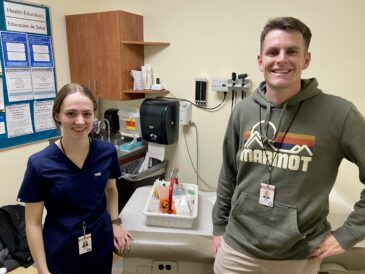
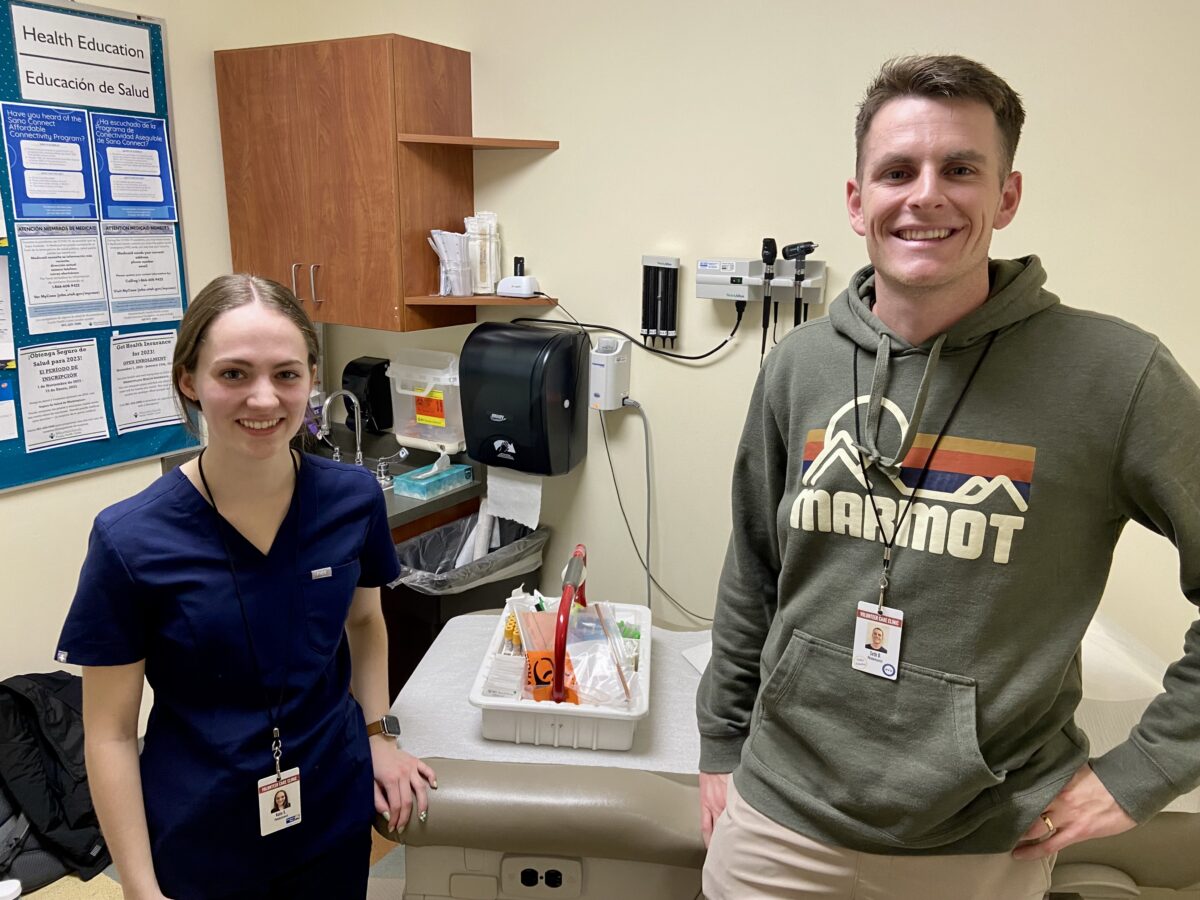
- Student volunteers pose for a photo at the Volunteer Care Clinic in Provo.
-
- Healthy Communities Caring Neighbor logo
-

- Darrel Hammon
Courtesy photo
From left, volunteers Victoria Stewart, Sean Moulton, Emma Dillion and Katherine Crawford pose in this undated photo.
Utah County’s economy has been thriving for years as thousands of people have moved here, particularly the last three or four years. We enjoy one of the best economies in the nation as new or renovated health facilities have sprouted up across the valley. Yet, there is still a growing underserved population that cannot afford health care.
Over the years, there has been increasing concern about a growing uninsured population and community health. In 2005, an executive committee was formed to discuss this concern. Soon, a broader committee was formed, which consisted of additional members from the Utah County Health Department, Intermountain Healthcare, Community Health Connect, Mountainlands Community Health Center, The Church of Jesus Christ of Latter-day Saints, Brigham Young University, local and state governments and local physician networks.
What grew out of those conversations was the founding of the Volunteer Care Clinic in 2006. The VCC’s mission was to serve as an acute care facility and provide medical services to assist in the relief of short-term illnesses for people in Utah County living below 150% of the Federal Poverty Level who had no health insurance.
The VCC is housed in the east side of the Mountainlands Clinic in Provo and is open on Tuesday and Thursday evenings, beginning at 5 p.m. The VCC touts a high-powered group of sponsors — the Mountainlands Clinic, Community Health Connect, The Church of Jesus Christ of Latter-day Saints, Intermountain Health, Utah County Health Department, and the United Way.
Each sponsoring organization provides one representative on the Board of Directors. They meet quarterly to discuss the past performance and future plans of the VCC, specifically focusing on challenges, successes and how the VCC can better help our community.
Courtesy photo
Student volunteers pose for a photo at the Volunteer Care Clinic in Provo.
While the VCC is not equipped to provide care for chronic illnesses, major trauma or psychological disorders, it does serve as a medical screening resource to refer and assist patients with more serious illnesses to other appropriate health care and educational services.
Two incredible and dedicated volunteers, Clyde and Connie Stauffer, have served as the VCC executive directors for the past several years. They are more than just administrative directors. They are the epitome of leadership, love and mentorship for all those who come to the VCC — whether they are students, health care providers, community members or others. As one volunteer said, “Clyde and Connie don’t just take us in as volunteers but truly as one of their own.”
Clyde and Connie are responsible for all clinic operations, managing volunteers and medical professionals, and ensuring there are enough support people available each night. They also manage the Electronic Medical Records system and work closely with other associated organizations to ensure the people who come to the clinic get the help they need.
“When we see a problem, it is addressed quickly and proactively. To help us, we are in constant communication with each of our sponsors,” Clyde and Connie said.
Essential to the success of the VCC are the volunteer health care professionals — medical doctors, nurse practitioners, nurses, medical assistants, phlebotomists, CNAs and many others.
Courtesy
Healthy Communities Caring Neighbor logo
“The Volunteer Care Clinic is such an uplifting place to work. The atmosphere is energetic and happy. We take our work very seriously but not ourselves. You will never work at a more satisfying place,” said Dr. Brenda Crawford, a former emergency doctor who volunteers one night per week at the VCC.
Crawford said one of their roles at the VCC is to focus on the underserved populations of the community.
“These are people in great need for health care and without access to it — other than visiting an emergency department,” she said. “The last thing people need when they are coming to a new country to establish a better life for themselves and their families is a huge medical bill.”
Kristen Erekson, now a BYU nurse practitioner professor and VCC health care provider, initially became involved with the VCC as an AmeriCorps volunteer while she was a student.
“Because of my experiences with Community Health Connect and the VCC, I decided to pursue further education in the health care field and went on to become a nurse practitioner. I feel like I have come full circle as a provider at the clinic,” Erekson said.

Courtesy photo
Darrel Hammon
Another major focus of the VCC is to provide hands-on opportunities for nursing students to treat patients and provides opportunities for pre-med students to experience a medical facility, which increases their confidence in applying to medical school.
Victoria, a student at BYU and one of the current student directors at the VCC, has gained much from her service.
“I am currently applying for medical school and see a direct correlation between my service at the VCC and my future endeavors as a medical provider,” Victoria said. “I learn about health care disparities faced by minorities, the steps providers take to come to a diagnosis, and the importance of communication using interpreters and bilingual providers. I know everything I have seen and learned at the VCC will be extremely relevant as I enter the field of medicine.”
Clyde and Connie feel their biggest successes at the VCC are the patients who come to the clinic. “To look into the eyes of patients–and we have seen hundreds and hundreds of them–and see the relief and gratefulness they have is beyond the value,” said Clyde.
One such patient was Tania, who came to the VCC with her three children and husband after being referred by a friend. She was a bit hesitant at first because she didn’t speak English, and her children were very young.
“They helped me to have the best possible medical treatment since sometimes my health problems were difficult,” she explained. “They all spoke Spanish, and I loved that we felt listened to and valued. I never had any problem receiving medical attention. The service was simply the best and very professional. If I had to rate it from 0 to 10, I would have to give it a 100!”
Repeatedly, patients who came to the clinic found it to be beneficial.
“They give so much attention to the patient,” said Rosa and Pilar, a couple who came to the clinic because they didn’t have insurance. “We give thanks for the health services they provide to the Latino people.”
“People here are so kind and treat us with respect,” said Dominga, who came to the clinic with her husband.. “They make us feel like we are their neighbors, and we feel comfortable here even though we are new.”
“I see these people as pure helpers who have helped us so much,” said Wendy, a single mother of two pre-teen daughters.
Clyde and Connie proudly talk about the excellent cadre of volunteers and sponsors, but there is always a need for additional support.
“We are always looking for providers (MD, DO, NP, and PA), nurses (RN, LPN), MAs, CNAs, and phlebotomists,” said Clyde and Connie. “Plus, we would love to have older, long-term volunteers who speak Spanish and still have a lot of energy.”
When asked why they have served for such a long time at the VCC, Clyde said simply, “We have been given much and want to share and help others who do not have the same as we do.”
You can connect with the Volunteer Care Clinic by sending an email to nataliem@unitedwayuc.org.
Community
Pick up a book: Utah Valley University’s forum on reading focuses on fostering lifelong readers
A strong connection: As school closures are considered, one Orem elementary cherishes its community