
Making a Difference: Clinic improving health, saving lives in Uganda
-

- Samuel Mugaya fits a patient with glasses at the Rosbren Health Clinic in Uganda.
-
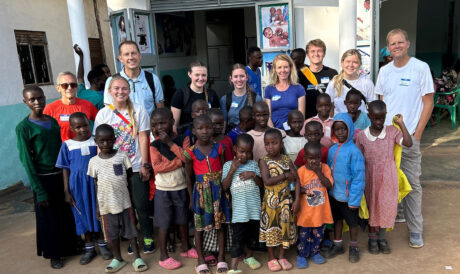
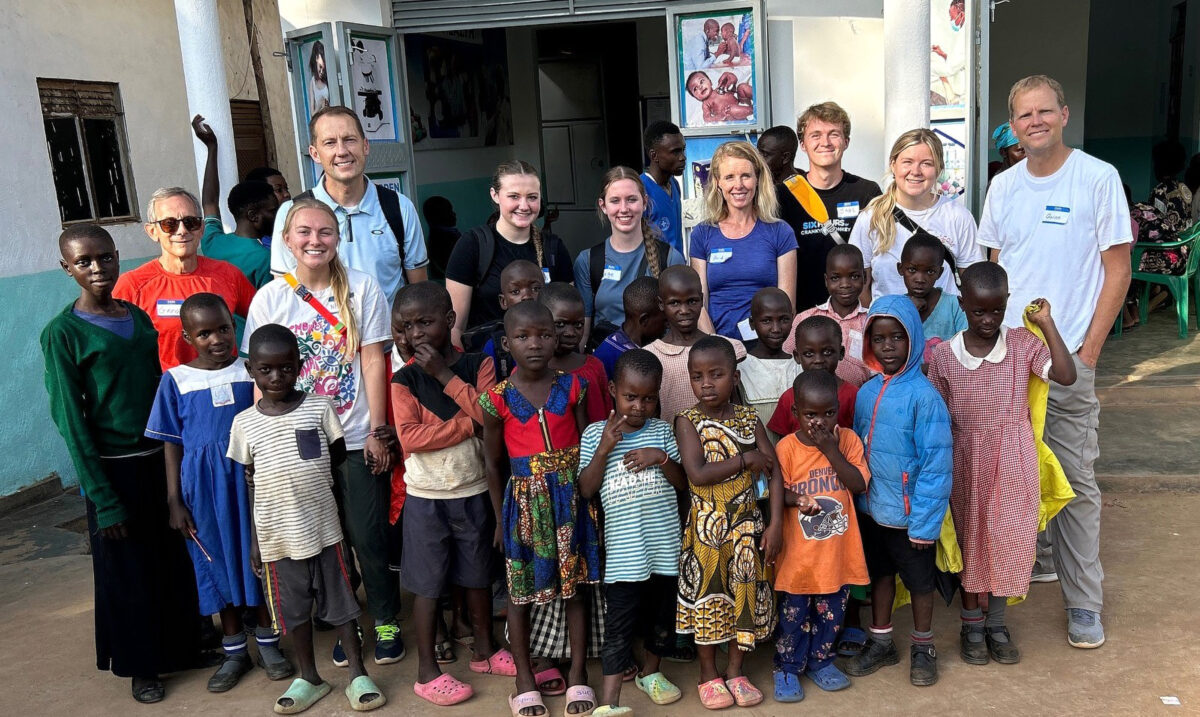
- Quinn and Heidi Galbraith are shown with patients at the Rosbren Health Clinic in Uganda.
-
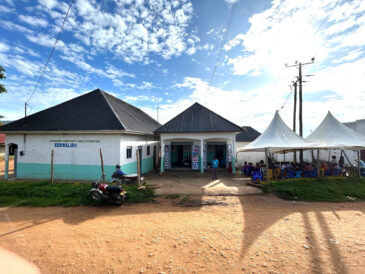
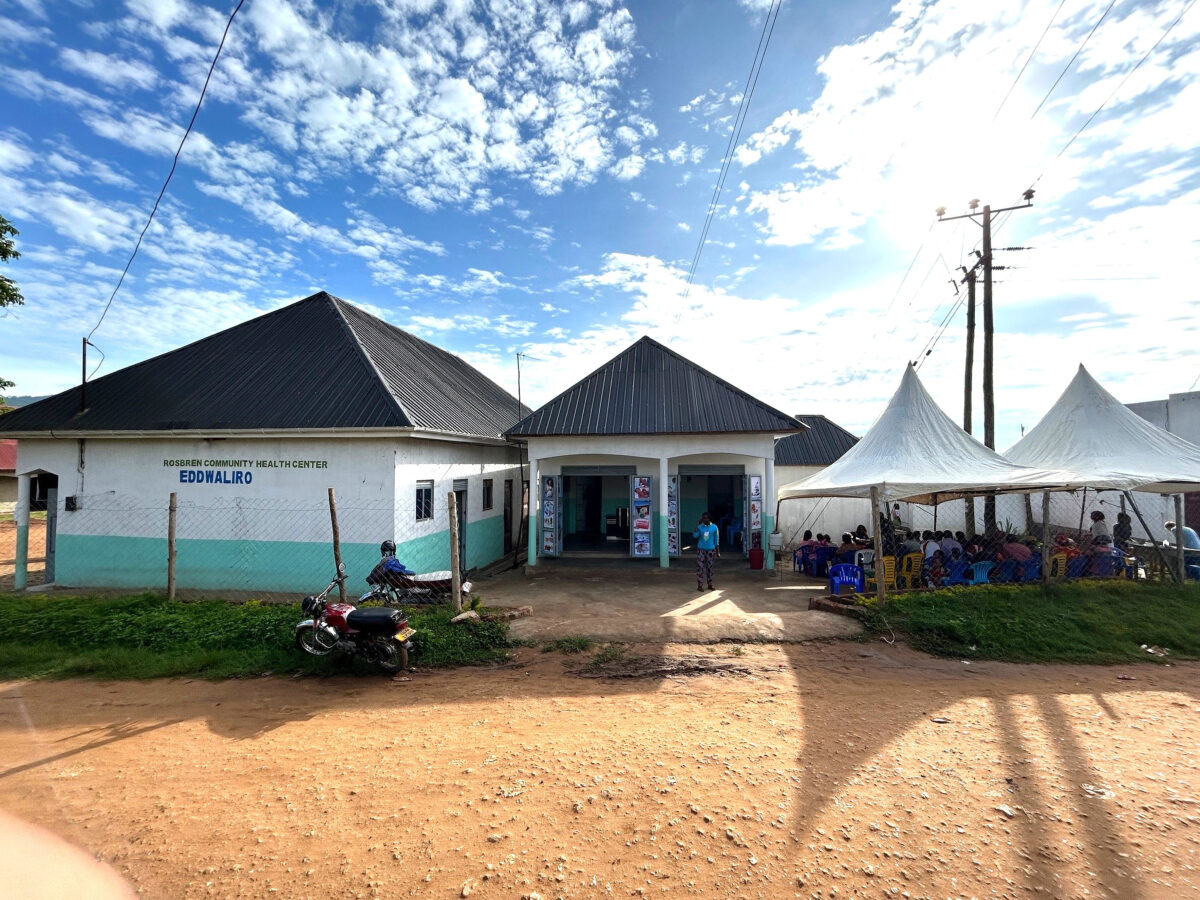
- Rosbren Health Clinic in Uganda was created through the efforts of Samuel Mugaya, a native Ugandan, and Quinn Galbraith of Springville.

Courtesy Quinn Galbraith
Samuel Mugaya fits a patient with glasses at the Rosbren Health Clinic in Uganda.
Samuel Mugaya, a native Ugandan, traveled to the U.S. with the help of his village to obtain a nursing degree. He now teaches part-time at a nursing school in Uganda with the skills he learned in the U.S. He met Quinn Galbraith from Springville in 2019 when Quinn traveled to Uganda to visit several nonprofit organizations operating there.
In October 2022, Samuel contacted Quinn and his wife Heidi to ask for help in treating a dying infant boy in a remote village in Uganda. “We sent him $25 so Samuel could hire a motorcycle taxi to take the baby to the nearest health clinic a long distance away,” Quinn said.
Fortunately, the clinic was able to give the infant an IV with antibiotics that saved his life. A week later, the child’s mother became similarly ill, and Samuel was able to hire another motorcycle taxi to take her to get tested for malaria and to acquire the necessary drugs, all for about $15.
After these two experiences, Samuel discussed opening a small health clinic and pharmacy in Busunju, a community an hour north of Kampala, the capital of Uganda, since there is not a health clinic nearby.
“The main cause of illness in Uganda is malaria, but the people cannot afford to go to the capital city for treatment,” Quinn said. “So they suffer for weeks with malaria in the hopes they don’t die, although a large percentage of untreated young Ugandan children do die of malaria. We decided to do something about it.”
Courtesy Quinn Galbraith
Quinn and Heidi Galbraith are shown with patients at the Rosbren Health Clinic in Uganda.
In December 2022, less than three months later and with the help of some donors in Utah, the Rosbren Health Clinic became a registered nonprofit organization and opened its doors with a nurse practitioner, nurse and lab/pharmacy technician.
“We started with a small pharmacy and $1,000 in medications, two small hospital rooms to house patients overnight, a patient exam room and a small lab for testing blood for diagnosis,” Samuel said.
On a weekly basis, Rosbren Health Clinic treats patients who can often only pay the equivalent of a dollar or less. “We treat all patients whether or not they are able to pay for services,” Samuel said. “Since healthcare is severely lacking in villages in rural Uganda, most people suffer without treatment hoping they recover over time.”
A few months ago, Rosbren Health Clinic held a free community health screening. More than 600 people attended, and 150 women were screened for urinary tract infections, 30% of which tested positive. For $2 in antibiotics, they can receive treatment.
The most common illness treated at Rosbren Health Clinic is malaria, especially with young children. It is estimated that 70,000 to 100,000 children needlessly die each year of malaria in Uganda (https://pmc.ncbi.nlm.nih.gov/articles/PMC4426580/). They can draw a child’s blood and then, using a microscope, they can diagnose in minutes whether a child has a malaria parasite.
Courtesy Quinn Galbraith
Rosbren Health Clinic in Uganda was created through the efforts of Samuel Mugaya, a native Ugandan, and Quinn Galbraith of Springville.
Rosbren Health Clinic saves many lives. Last year, it treated a 2-year-old boy who was unconscious and foaming at the mouth. He had eaten a large and highly lethal dose of rat poison. The staff were able to reverse the effects of the rat poisoning, and, with their excellent treatment, he was saved.
Another life-saving example is an unconscious and extremely ill teenage girl who was brought into the clinic.
“Initially, her parents had taken her by taxi to a government facility where they were told by the medical personnel there that they could not do anything else for her and for parents to take her home so that she could die at home,” Samuel said. “On their way home, the taxi driver suggested taking her to Rosbren Health Clinic, which they didn’t know existed. The clinic’s medical people were able to save her life, and the next day she returned home.”
Several people have helped Rosbren Health Clinic deliver medical services. One of those is Jared Melby of Provo, who has been highly instrumental in Rosbren Health Clinic’s success. He graduated from Brigham Young University in 2024 and has plans to attend medical school. In 2023, he traveled twice to Uganda and helped organize a large health fair that taught health care classes.
Jared and Samuel recruited 20 Ugandan nursing students to help screen patients. Then, with the help of a U.S.-trained optometrist, they traveled to numerous remote villages, giving out 2,500 pair of prescription and reading glasses to people who had never owned a pair of glasses.
Also, through Jared’s fundraising efforts, the pharmacy attached to the health clinic has grown significantly. Jared contacted local doctors in Utah and Salt Lake counties before he traveled to Uganda in 2024. He was able to take five large suitcases full of donated medical supplies for the clinic.
Samuel is definitely the glue that holds everything together at the Rosbren Health Clinic. As the founder and director, he volunteers more than 50 hours a week at the clinic. Fortunately, his wife has a full-time job, and Samuel also works part-time as a professor at a local nursing college.
“It’s the many successes of helping people that keep Samuel volunteering his time and energy to keep the clinic open,” Quinn said. “Plus, many volunteers come from students at the nursing college where Samuel teaches part-time, which allows them a clinical site to hone their nursing skills.”
Rosbren Health Clinic has had a significant impact on the health of the community, which is home to more than 20,000 people. It serves about 30 patients a day, and the attached pharmacy serves 75 customers on a daily basis. They now partner with the government to provide free vaccinations for school children. Since a large percentage of the children are not vaccinated and they have outbreaks of preventable diseases such as measles, the vaccines are crucial to protect children.
Each month, Rosbren Health Clinic provides a free screening and diagnosis for all community members. The typical health challenges are urinary tract infections for women, malaria, high blood pressure and diabetes.
Patients who come to the clinic are not charged anything for the healthcare appointment with the clinician. Almost all of the patients are extremely poor and grow gardens to feed their families. Medical services are free, although the clinic charges for medications and lab fees.
“For example, if a parent brings in a child that likely has malaria, the doctor appointment is free, the lab fee for diagnosis cost $1, and the malaria medication costs $4 dollars,” Samuel said. “Drugs and medications are very inexpensive in the clinic, and they don’t need a prescription to purchase antibiotics or other medications. Our on-site clinician is able to talk to all of these patients to help them receive the right medication or antibiotics.”
As a small grassroots nonprofit organization, Rosbren Health Clinic has experienced success and a connection to the rural community because of the funding from hundreds of small donors living in Utah and Salt Lake counties.
“Ninety-five percent of our funding comes from Utah donors,” Quinn said. “The clinic receives approximately $800 a month from these donations that keep the clinic open. Because the overhead is low, the clinic is able to be successful. One of the biggest surprises we have seen is how a $5 donation can literally save the life of an infant in Uganda who has malaria.”
Since opening its doors, the Rosbren Health Clinic has quickly gained a reputation in its rural area as the place to go for medical needs. It now treats several hundred patients a month, and the pharmacy has over 2,200 customers a month. While the community brags about the excellent care given at Rosbren Health Clinic and its reputation for saving many lives, it still has challenges.
“The biggest challenge has been raising the $800 a month on a consistent basis,” Quinn said. “If we had some larger donations, we would purchase more pharmacy supplies since the pharmacy makes a profit and helps the clinic become self-sustaining.”
Measuring the success of Rosbren Health Clinic comes from the many stories of people recovering from their illnesses after being treated at the clinic. One such story is about an 8-year-old girl who stepped on some broken glass that embedded in her feet. Her parents thought they had pulled out the glass, but after it healed, the girl still walked with a strong limp and pain. After a year of pain, the parents brought the girl to Rosbren Health Clinic.
“We did a small surgery to open up the healed wound and pulled out a half-inch shard of glass and stitched her back up,” Samuel said. “Without Rosbren Health Clinic, she would have likely suffered in pain for years with no available health clinic to help her.”
Rosbren Health Clinic is highly successful and has a bright future. “The clinic is developing such a good reputation that people with serious health issues will travel a distance because of its great reputation for saving lives,” Samuel said. “We hope to expand the vaccination program to infants and many schools in the area. We would love to have a corporate partner that would invest in Rosbren Health Clinic and help it grow and reach more patients.”
To connect with or donate to the Rosbren Health Clinic, visit its website at www.rosbrenclinic.org. People can also make a 501(c)(3) tax-deductible donation by visiting https://givebutter.com/RosbrenClinic.
Community
Utah Valley Calendar: Things to do – Dec. 13
AMERICAN FORK "Journey to Christmas" concert — The American Fork Symphony will give its annual Christmas Concert ...
A place to gather and play: Spanish Fork’s new 136,000-square-foot recreation center opens
