Veteran’s Stories: Lehi’s Jim Slade describes a dangerous combat mission in Vietnam
-
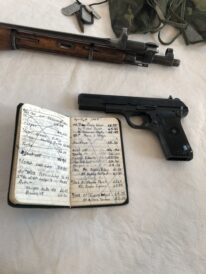
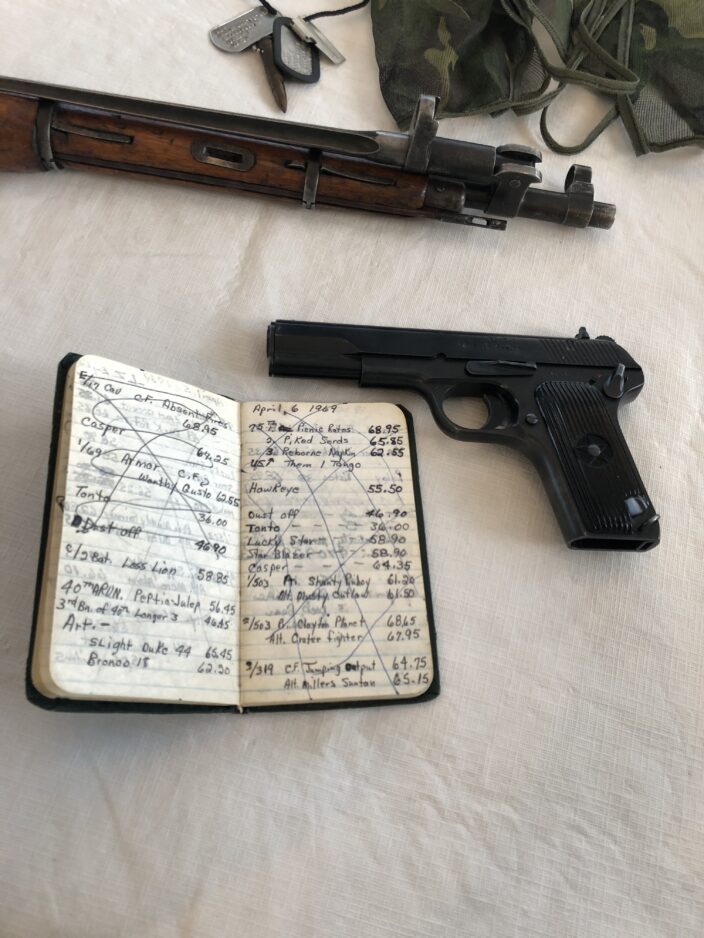
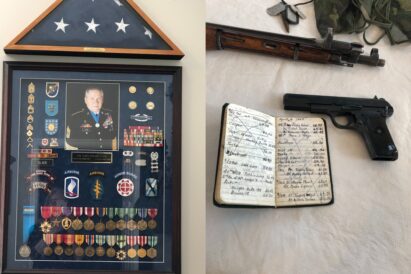
- Chinese-made 9mm pistol taken from a dead enemy combatant and Jim Slade’s notebook of his Vietnam missions completed.
-
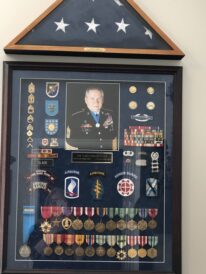
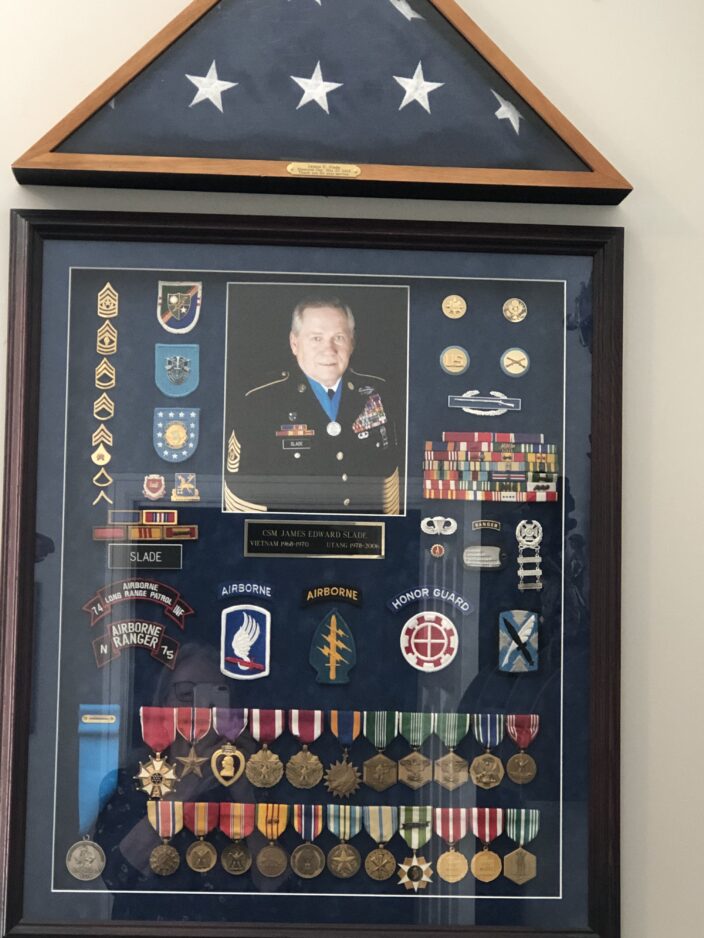
- Wall display showing Jim Slade’s many medals and commendations over his 30 years of service in the US Army.
-
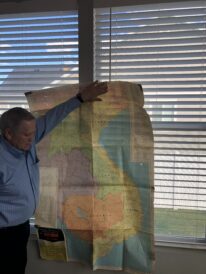
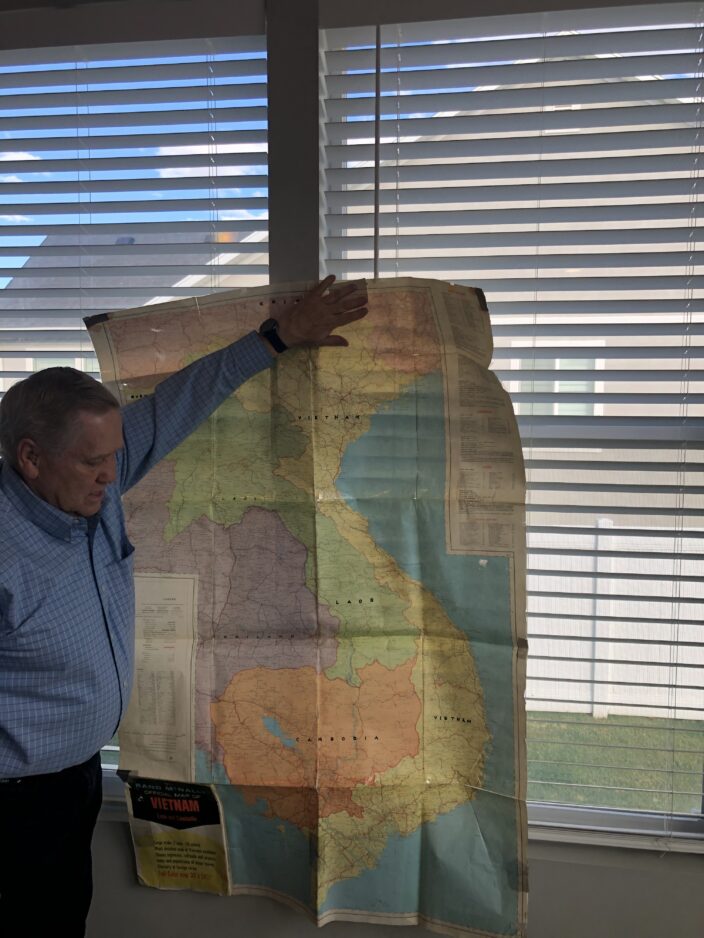
- Jim Slade showing a map of Vietnam used during the war.
-
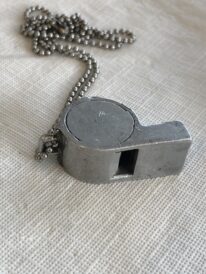
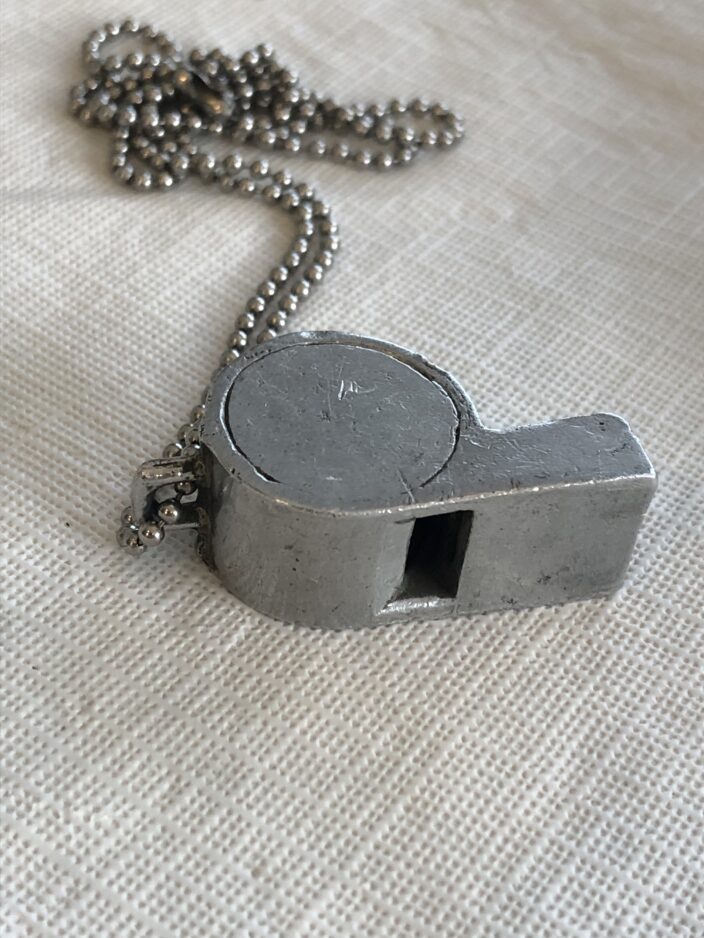
- Metal whistle carried by Viet Cong to communicate in thick jungles, now owned by Jim Slade.
Americans everywhere owe an enormous debt to the men and women who fought for their country. To remember these brave individuals, the Daily Herald is pleased to share some of their stories.
This is the fourth article in a weekly series which will share the experiences of Jim Slade of Lehi, who served as a soldier during the Vietnam War. It was not Jim Slade’s choice to serve in that war but when he was asked, he answered the call. A loyal American who has served admirably and who loves his country, Slade tells his children and grandchildren, “Freedom is not free!”
Due to his greater combat experience, he was often sought out as a leader and as an expert on risky night missions.
One such dangerous mission came unexpectedly when Jim and his unit had been assigned to a base camp in a valley near Phu Thai, Vietnam. A large river ran down the valley and there were mountains on both sides. This American base camp had been under relentless enemy mortar attack for days. The Viet Cong mortar crew had the major buildings within the camp dialed in. This meant they did not need to fire locating rounds to find their main targets. The crew had attacked this camp so often, they knew the correct coordinates for the buildings and fired one or two quick rounds, then disappeared into the jungle. They were so accurate that these rounds frequently killed or wounded Americans and destroyed buildings and equipment. This happened almost every night.
Jim’s commanding officer told him that his job was to find and kill this enemy mortar crew. Jim’s team searched several weeks for the mortar tube and its crew. On one patrol, they spotted three VC in the area and killed two of them, but the mortars kept falling.
One day Jim’s men asked for a day pass so they could go to a nearby Air Force base for some much-needed personal supplies. They were given the OK to go, but they had to be back later that same day. Jim decided not to go off the base with his men.
Around 2 p.m. that same day, as he was relaxing in the barracks, he heard a jeep racing up to the entrance. It skidded to a stop and the Brigade Personnel Officer jumped out. “Get your men and your gear,” he yelled. “We think the mortar crew is holed up in a cave and I want you guys to go get them!”
When Jim informed him that his team was on a day pass, he was told, “Then you’ll have to go get them alone. Let’s go!” During the fast jeep ride, Jim was informed that several truck drivers from the motor pool had been down by the river washing their trucks. One soldier heard a group of Vietnamese men arguing loudly on the other side of the river, where they knew there was a cave. They determined this was probably the enemy mortar team in the cave where they were hiding.
A very courageous American truck driver went up the river bank and into the cave. He found a group of NVA soldiers playing cards and smoking pot in the cave. They were so stoned they were completely oblivious to his presence. He saw six rifles stacked near the cave entrance. He grabbed the rifles, ran out and carried them back to the trucks. When he got there, the truck drivers were hiding under their trucks to avoid any danger. He threw the rifles on the ground.
Jim, being a well-experienced combat veteran, knew how to operate an AK-47. The Personnel Officer took Jim’s M-16 rifle for his own protection, gave Jim one of the AK-47s that had been captured from the cave and ordered him to go and get the enemy mortar crew all by himself. This sounded like a suicide mission to Jim. He was mad, but he was trained to follow orders. He took the AK-47 and headed down the trail toward the cave.
He had not gone far when he saw two enemy combatants near the trail. They ducked down and hid in the jungle. Jim threw a grenade at them at the same time they threw a grenade at him. He felt pain in his left leg and thought he had been hit by a rock kicked up by the grenade. When he approached the area where he had thrown the grenade, Jim found two dead NVA soldiers who had been killed by his grenade. Jim then went out on a small sandbar in the middle of a river where he saw a man with a rope pulling a canoe upstream. He knew this man was VC. After a short physical skirmish, Jim was able to take him captive and turned him over to a Captain who had come to help.
Continuing out into the river, Jim saw another NVA soldier’s head come up out of the water. He knew this man and the first man were enemy soldiers using the canoe to escape. He also knew it was often the practice of Vietnamese soldiers to hide under the water, using hollow bamboo branches as snorkels to breathe.
He waited. When the man resurfaced, he called out to him in Vietnamese to “surrender”, “stop” and, “come here” (American soldiers were required to know basic commands in Vietnamese). Jim knew the man had heard him but was not obeying his orders, a strong sign that he was the enemy.
The rules of engagement in the war zone mandated that any Vietnamese man or woman be required to carry documents showing they were not VC. Otherwise they were considered enemy combatants and were subject to capture or even killing if they threatened an American soldier or tried to escape.
Jim was convinced this man was an enemy combatant. He fired three or four warning shots very close to the man, which were ignored. As the man started up out of the water, he made a sudden motion, attempting to grab something he had stashed in his waistband. In that split second, Jim thought it was a pistol. He fired the AK-47, hitting the man in the head and killing him instantly. His body sank down to the bottom of the river, which was about eight feet deep at that point.
When Jim got back and told his story, the officer in charge became angry, saying Jim would have to prove that he had killed an enemy combatant and not a civilian. He told him he would have to prove this by finding the gun. He also told him he would have to recover the body. Otherwise he would write him up for killing a civilian.
Jim’s story was heard by several of the other enlisted men. The Brigade CSM agreed to help him search the river. After 40 minutes of searching, Jim, who was using a rake to scour the bottom of the river, felt a bump. He dove down and found a Chinese-made 9mm pistol that had been tucked in the pants of the NVA soldier. They were also able to recover the body.
They put the body and the pistol on the back of one of the big trucks and drove to the barracks where the personnel officer was staying. When they rolled the body out of the truck. The officer, never having had combat experience, vomited at the sight of the dead body. Jim was able to keep the pistol he had raked off the bottom of the river.
Jim didn’t know it but during the grenade incident, he had been struck in the left ankle by shrapnel from the enemy grenade. After he spent some time in the river recovering the body, his leg began to swell and bleed badly. He was taken to the hospital where he was treated and stayed for three days. It wasn’t until much later, after Jim could be X-rayed, that it was discovered that shrapnel had traveled up inside his left leg and lodged just below his knee. This X-ray also revealed that two other small pieces of shrapnel from the grenade had lodged in his back and side.
Originally, Jim was treated in a small field hospital where they had no ability to perform X-rays or surgery. Because of this, all of the shrapnel from the grenade is still in Jim’s body to this day. He received a Purple Heart for the grenade injury and was recommended by the 173rd CSM to receive the Silver Star with a V for valor, commemorating his courageous actions during this harrowing event. It was abundantly clear that Jim had shown courage and bravery in the face of great danger.
Upon his return from the hospital for the grenade injuries, the Personnel Officer called him into his office. He told Jim he was up for the Silver Star but he would not sign the recommendation unless Jim gave him the pistol. Jim was very angry and said, “No, I won’t get the Silver Star under those conditions!”
Jim received many medals and awards during his combat service and during his 30 years in the Army National Guard including the Purple Heart, but he never received the Silver Star with a V for valor. Jim suffered other relatively minor injuries during the war besides the grenade injury, but declined any other Purple Hearts. He was able to bring the pistol home to America.
Check back next Saturday as Slade shares another of his experiences during his time in Vietnam.
Community
Veteran’s Stories: Lehi’s Jim Slade describes a dangerous combat mission in Vietnam
Utah Valley Calendar: Things to do – March 14
AMERICAN FORK "Annie Kids" — Timpanogos Youth Theater will perform "Annie Kids," featuring everyone's favorite ...