Orem’s older parks losing shade trees because of age

-
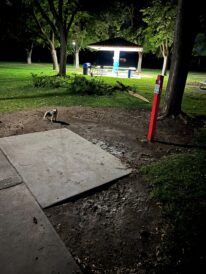
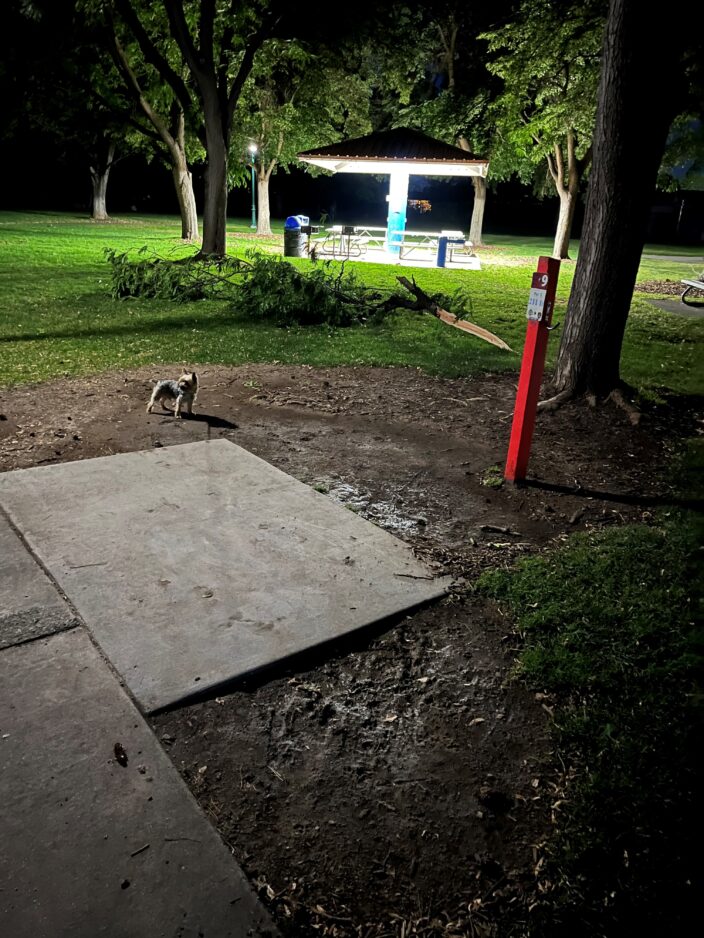
- This photo shows a large limb that fell from a tree in an area on the south end of Scera Park where families and children play. The tree is close to the south playground area.
-
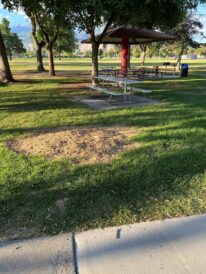
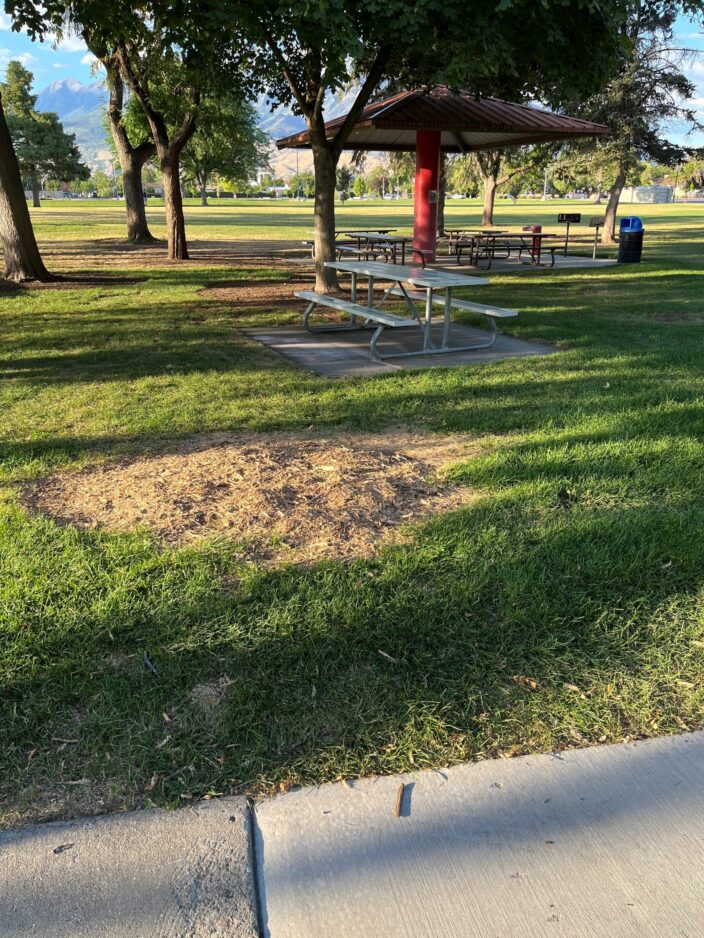
- A spot in Scera Park where an old shade tree has been taken out.
-
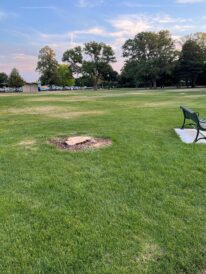
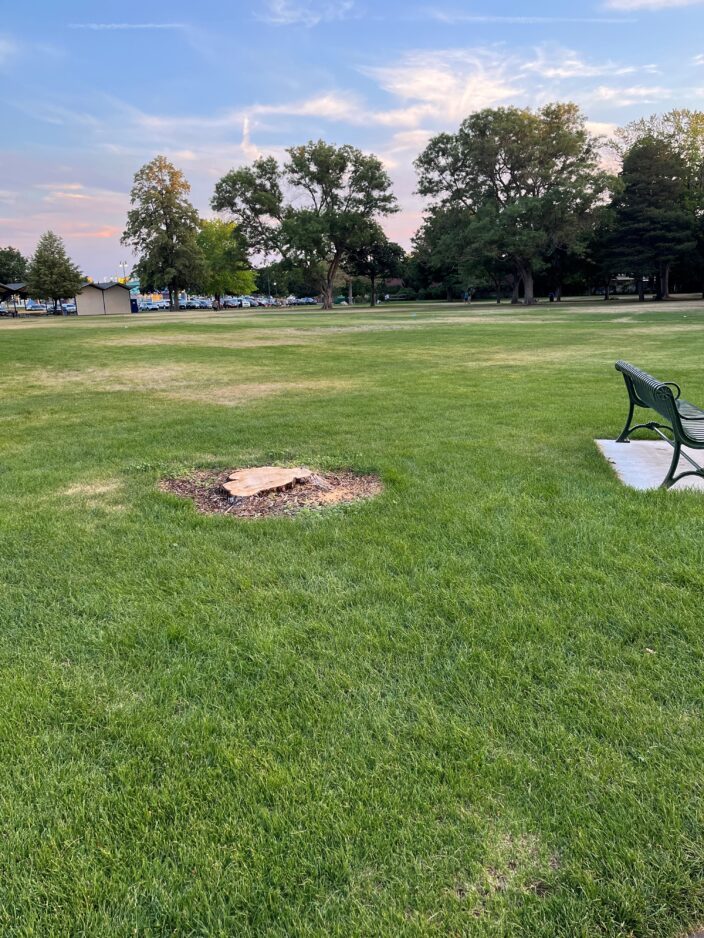
- This stump is the only thing left of one of the shade trees in the northwest end of Scera Park.
-
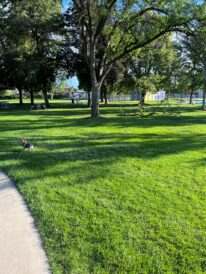
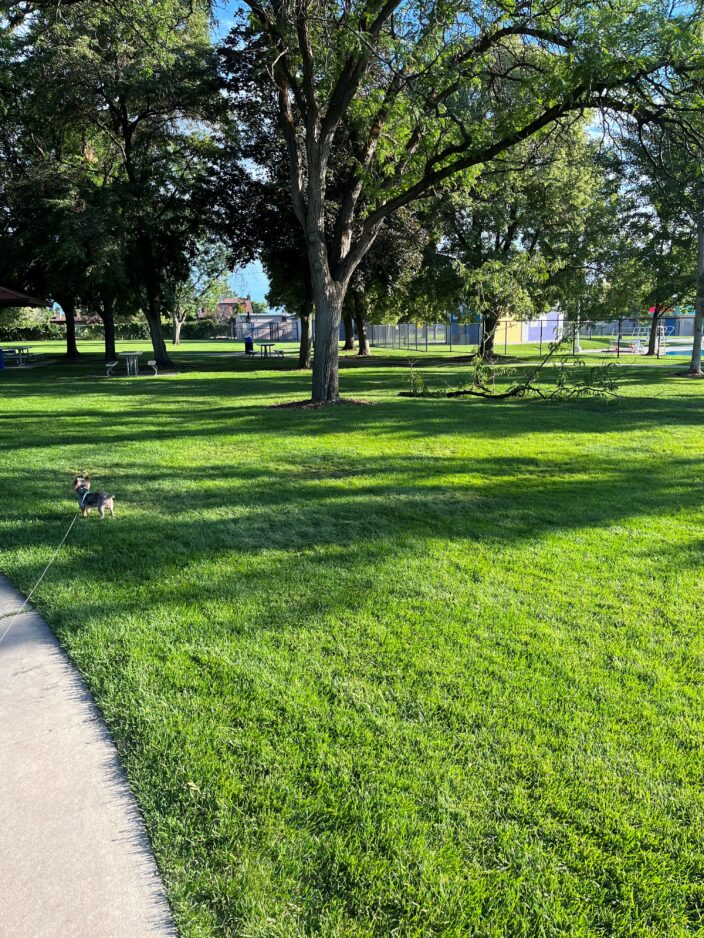
- Trees in the south end of Scera Park have dropped limbs recently as many of the treed continue to age. Many of these trees were planted in the 1950s or before.
-
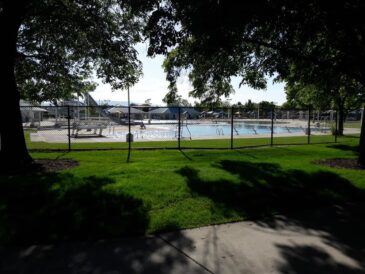
- Orem’s Scera Outdoor Pools, adjacent to Scera Park, are shown on May 18, 2021.
For decades, residents have enjoyed the beauty and the shade provided by many of the tree-filled parks in Orem. Some, like the 24-acre Scera Park, the City Park and Westmore Park, are clustered with numerous shade trees and pine trees.
But these shade trees do grow old like the rest of the population. Trees at Scera Park — the largest in the city — are well over 60 years old and are beginning to show their age. Limbs are dropping and trees are dying.
Replacing the number of trees that need to be removed is planned for but is often waylaid by other emergencies, according to Josh Story, Orem’s urban forester, and the entire process takes time and money.
“We don’t plant anything smaller than a 2-inch trunk,” Story said, a process that takes six to seven years.
Story, the only forester for the city, cares for more than 7,000 trees throughout the parks and other areas of Orem. Trees have to be strong enough to withstand the public, he said, noting that trunks larger than 2 inches are harder to break or pull over and kids won’t snap the branches.
“Nurseries in northern Idaho and Washington grow the trees before they are shipped to local nurseries, where we get them at wholesale prices for the city,” Story said.
The trees are about $300 apiece to purchase. By the time the city grows them out more, that time investment and the resources used make the trees about $600 each.
When residents see the trees looking half-dead or dropping branches, they needn’t worry about blights or bugs. According to Story, there is some fire blight and bark beetles all the time, but there isn’t anything happening like the great Japanese beetle infestation in the city in 2014.
When it comes to water, Story said the trees are doing OK. “If the grass is fairly green, the trees have enough water. You can shut off the water in the parks for a week and it’s not too bad on the trees like it is on the grass.”
In the past few weeks, branches have dropped off trees in Scera Park. Two large trees were taken out by the new north playground area. Other trees have also been completely taken out and the stumps mulched.
While Story said he is glad when residents let him or the Parks Department know about felled tree limbs and other problems, he is hoping residents will take the time to care for trees on their own properties; particularly if they hang over sidewalks and streets.
“Residents should keep trees that overhang sidewalks no lower than 8 feet. And trees should be trimmed between 12 to 14 feet if limbs hang over the street,” Story said.
Doing this actually saves Story the time he often takes to contact residents about their trees. Story also cares for and trims those thousands of city trees.
Story said there is a plan to replace trees, but it is the ones that need urgent care that take the priority. Right now, Story is looking at a variety of shade tree species to replace old pine trees and other trees that have been removed from the parks. Residents, however, may notice a thinning out as the parks and trees continue to age.