Lessons of deadly 2003 avalanche helped spread global education initiative
-
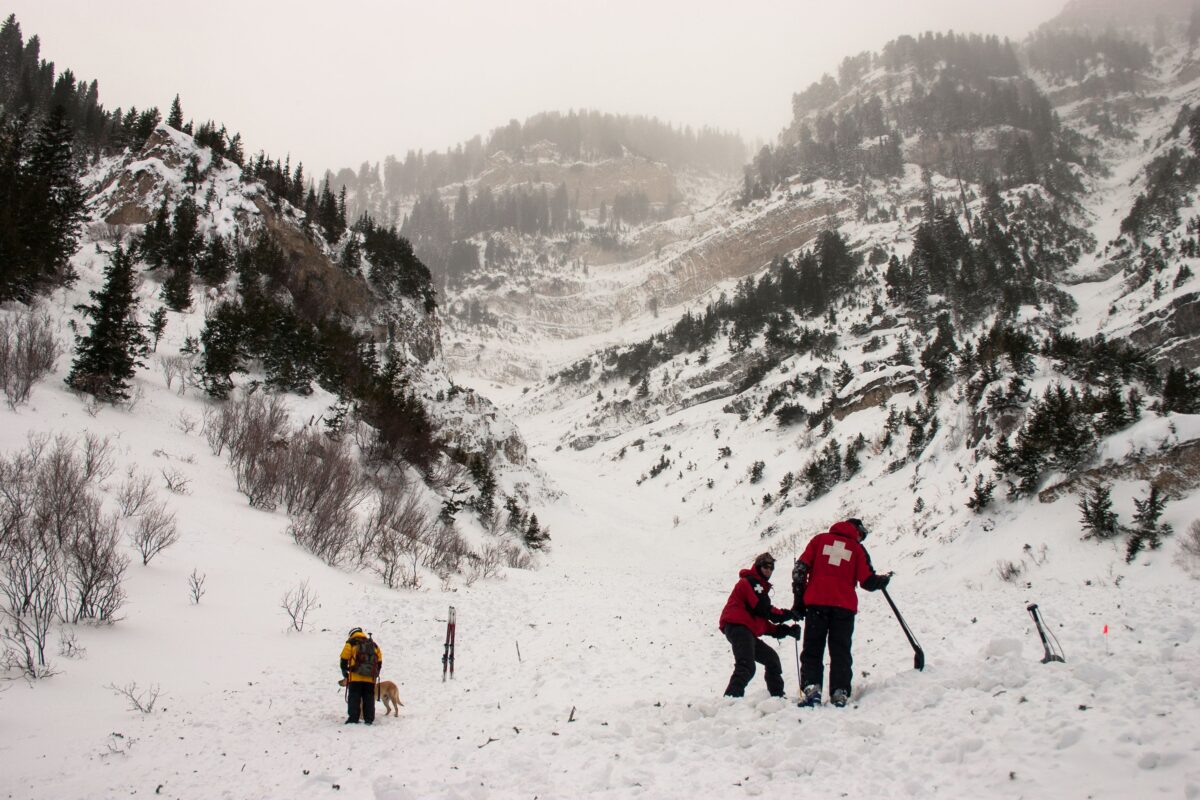
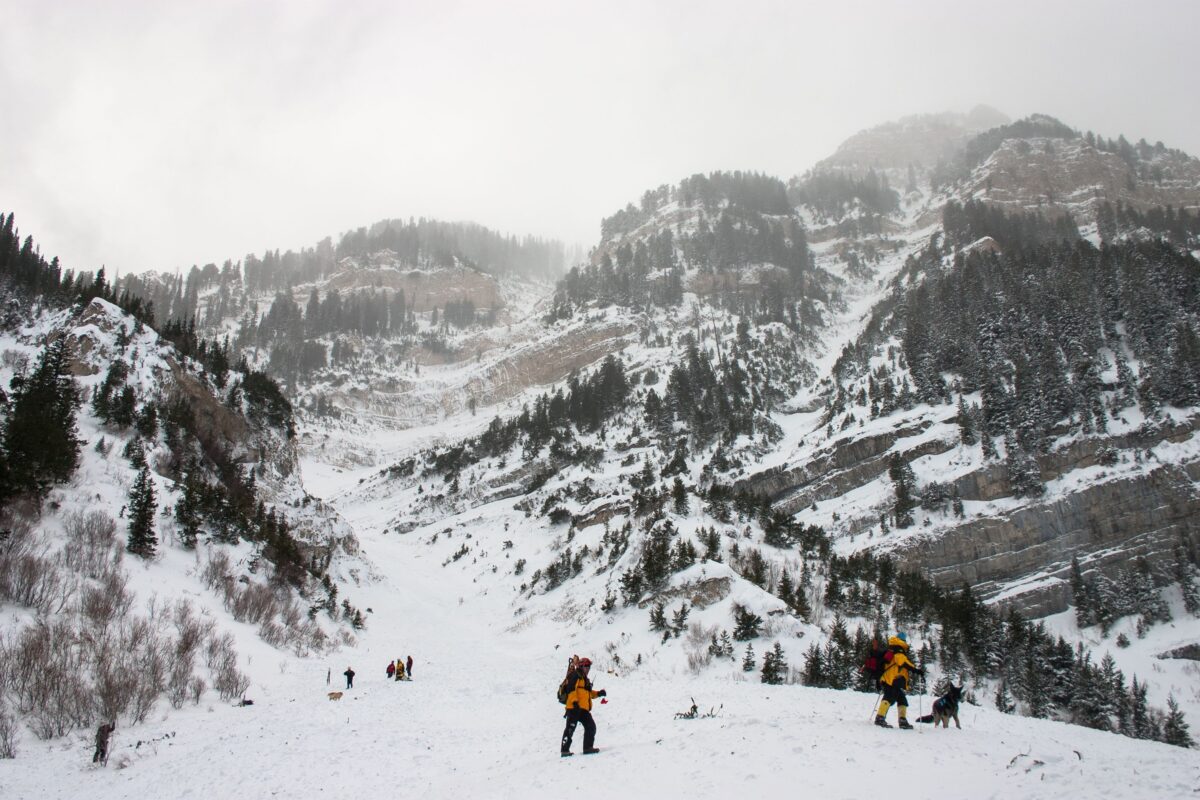
- Local search and rescue crews scour the mountainside for three teenage boys buried in an avalanche that occurred above Aspen Grove Trailhead at the base of Mount Timpanogos on Dec. 26, 2003. All three boys were killed in the avalanche, which is being remembered 20 years later.
-
- Local search and rescue crews scour the mountainside for three teenage boys buried in an avalanche that occurred above Aspen Grove Trailhead at the base of Mount Timpanogos on Dec. 26, 2003. All three boys were killed in the avalanche, which is being remembered 20 years later.
Twenty years ago, three teenage boys died in an avalanche that occurred above the Aspen Grove Trailhead at the base of Mount Timpanogos. But while tragic, the event sparked a global initiative to spread awareness and education about avalanche safety.
In the fall of 2004, a free program called Know Before You Go, abbreviated KBYG, was launched as part of this initiative to educate people about the dangers of avalanches and spread awareness for how to navigate avalanche terrain safely. KBYG has “reached over 300,000 Utahns and expanded its reach across the United States and in more than 40 countries. Translated into 11 languages, the program has saved countless lives,” the Utah Avalanche Center, or UAC, stated in a press release about the 20th anniversary of the incident.
According to the UAC, the winter storm that brought on the avalanche “unleashed 30 inches of snow on the valley floor and paralyzed Salt Lake and Utah counties. The tempest, occurring from Dec. 25-31, 2003, left a lasting impact on the region, marked by downed trees, power outages, and record snowfall, particularly evident at Alta, where an astounding 87 inches blanketed the slopes.”
“The avalanche covered an area equivalent to 22 football fields with depths ranging from 10-25 feet,” the press release stated. It happened the day after Christmas, Dec. 26, 2003, when an unprecedented winter storm was rolling in. “The day took a devastating turn when a colossal avalanche, triggered from 4,000 feet above, engulfed 14 individuals, burying six, including three teenage boys.”
While a warning of high avalanche danger was issued, none of the individuals buried in the avalanche were aware they were in avalanche terrain, the UAC said. After the avalanche, the group committed to creating an education initiative to make those who reside in the mountains and those visiting more aware of seasonal hazards and able to recognize signs of avalanche danger. “Avalanche Forecaster Craig Gordon spearheaded the initiative, vowing to help prevent families from enduring the emotional fallout of such accidents,” the press release stated.
Speaking to the Daily Herald, Gordon said his goal for the KBYG program was to save lives through avalanche education.
The program was first implemented in Utah and over the past 20 years has spread nationally and globally. In the days following the 2003 avalanche, which was one of the biggest in Utah’s history, Gordon said, “I personally realized that I did not want to see another family or another partner or another friend have to go through a grieving process of losing someone that they love in the mountains when avalanche accidents are preventable.”
Over the years, the program has evolved with the use of new technology and access to videos of avalanches to better educate those who come to learn, Gordon said.
In 2008/2009, Chilean was the first language the program was translated into. The impact of this program spreading worldwide is “colossal,” Gordon said. “We are able to spread our message, what I call the avalanche gospel, into parts of the planet that would be totally void of avalanche education. If I’m able to save one life, in a place that I’ve never visited, much less right here in my own backyard, just to be able to save one life is a great testament. But I know along the way in the past 20 years, we’ve saved many lives.”
Gordon reflected on how that tragic day in 2003 could have gone differently had the KBYG program existed and those in the canyon been educated about avalanche safety. He explained the avalanche was likely naturally triggered rather than human-triggered, and while Aspen Grove Trailhead is not on a steep slope, it sits beneath one of the largest avalanche paths in Utah. “There were many people that were playing around low on the slope (and) mid-slope, not realizing what was up above them, and therein lies the tragedy, and therein lies the outcome of so many people being on this giant slope at once,” he said.
The KBYG program teaches basic avalanche safety skills such as checking the weather forecast before leaving, checking for avalanche warnings on the UAC’s website, understanding the need to carry avalanche rescue gear and recognizing avalanche terrain and conditions.
In the case of the 2003 storm, the nearly 3 feet of heavy snow in the valleys and more than double that in the mountains landing on a weak preexisting snowpack from earlier in the season, paired with very strong winds, created prime avalanche conditions, Gordon said. The avalanche warning was rated high. He explained the first avalanche on that day triggered several others as it came down the slopes of the mountain, causing the slide to be “unusually large.”
“The day could have turned out differently because had even just a couple of members of the different groups attended a Know Before You Go class, they would have put together the basic pieces of the puzzle to know that the avalanche danger was high. They would have known to have already checked with our website, and they would have known just by identifying terrain that they were in an unsafe area,” Gordon said. “They wouldn’t have had to have been snow scientists and they certainly didn’t need a degree in avalanche forecasting, just some rudimentary understanding of what a historic storm it was and the magnitude of the avalanche terrain that they were in. Their basic understanding of just putting two and two together would have at least enabled them to pump the brakes, reassess their decisions and go forward from there.”
This type of basic understanding of avalanche safety is what the KBYG program teaches.
While there have been challenges and times when educating about avalanche safety globally “seemed colossal in size and undertaking,” Gordon said he pushed through and continued the work because, “I realized that no matter how much it took out of me, it paled in comparison to people who have lost loved ones in the mountains. My lesson from that is, I keep on keeping on because I know that my efforts will save lives in the mountains.”