Report: Homelessness rates rise in Utah County, state provides $50 million to help
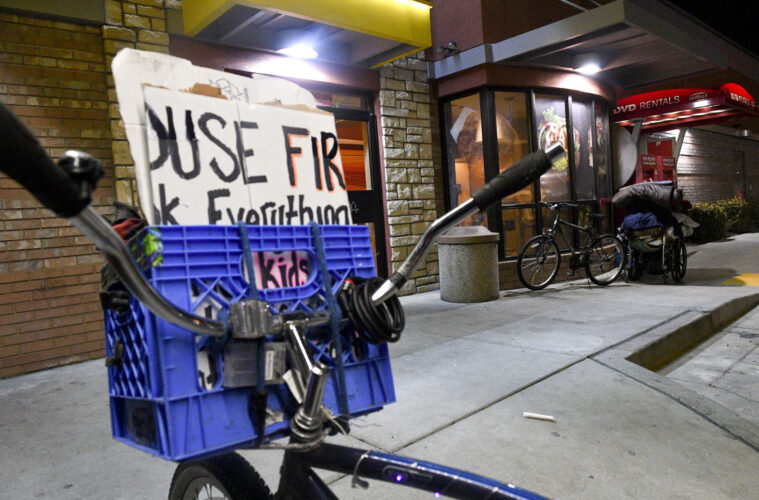
Isaac Hale, Daily Herald file photo
Bikes belonging to possible homeless individuals sit outside the McDonald’s restaurant on South University Avenue on Jan. 17, 2017, in Provo.“Permanent, supportive housing solves homelessness, a shelter is a good way to keep people from dying,” Heather Hogue, project coordinator/planner at Mountainland Continuum of Care, told the Daily Herald.
The 2023 Annual Data Report on Homelessness, released by the Utah Department of Workforce Services, said according to the 2023 Point in Time count, there are 192 homeless people, 86 sheltered and 106 unsheltered, in Utah County. This number decreased from 206 in 2022, but is an increase from 178 in 2021. Under the sub-populations there are a total of 337 homeless people, increasing from 260 people in 2022.
The PIT count is completed by groups of people, walking around cities and giving a survey to homeless individuals they find on the streets, in fields, on river banks, in shelters and in permanent homes.
It can be difficult to account for all homeless people with PIT Count, so the population is also measured with a list of names. The list includes any person who has entered the homeless system — anyone who seeks services such as food, shelter or similar resources. These people are split into subpopulations based on their needs and conditions.
Hogue explained this is the most effective way they have found to keep track of the sheltered and unsheltered homeless population and know the individuals by name. It can be complicated counting the exact number of unhoused people, though, because many individuals can fall into different sub-groups.
In Utah County alone, 20 to 30 people enter the homeless system each month, Hogue said. In the 2022 legislative session, the Utah Legislature approved $55 million in affordable housing grants, which was used to fund 17 projects across the state, providing 1,104 income restricted affordable units for homeless individuals in Utah. This year, the legislature approved another $50 million in grants which are currently open for applications.
Three of these 17 projects, which are all permanent housing, were built in Utah County — one for domestic violence victims, one for chronically homeless individuals and one for adults with disabilities and senior homeless individuals. Hogue said they have applied for grants for three more projects in the county.
“Approximately 93% of individuals enrolled in permanent housing projects, excluding rapid rehousing, successfully exited to or maintained their permanent housing,” the report reads.
The projects in Utah County are designed as low barrier, or housing-first projects, so that more people can have a roof over their head. The housing in Utah County also provides free services to residents to assist with physical and mental needs. Housing first projects are for people who need help crossing their barriers, so they have access to a safe, secure place to sleep.
“I’m a big proponent of the housing first model. For me. It lines up pretty clearly with Maslow’s hierarchy of needs. Nobody’s going to self actualize if you don’t know where you’re going to sleep that night, or if you’re going to freeze to death,” Hogue said.
The overall state increase of homelessness is reflected within Utah County, where the housing inventory PIT count from 2021 to 2022 has increased from 303 to 460. In addition, the rate for the number of people experiencing homelessness for the first time and the number of people experiencing multiple episodes of homelessness have increased significantly.
For 2023, the housing inventory shows 460 people who are using some sort of housing, and there are 517 beds available, meaning 89% utilization of the beds. However, Hogue explained when the PIT was conducted they had a low number of homeless youth and domestic violence victims whose spot cannot be given to someone else.
While the number of total beds exceeds the recorded number of homeless people, it does not only reflect permanent housing. Emergency housing is included in the number of beds. While the resources available in regards to funding, physical and mental healthcare and food are abundant, nonprofits in the area still seek more beds.
“A shelter is never the final destination, permanent housing and particularly permanent supportive for people that have multiple disabilities or lots of challenges. That is the final destination,” Hogue said. “If you give me 300 beds, we’ll have it pretty much covered for Utah County.”
“Data from the Utah Homeless Management System Information (UHMIS) revealed a 10% increase in the count of individuals experiencing homelessness for the first time and a 5% increase among those who have experienced homelessness multiple times accessing services during the reporting period,” reads the DWS report.
Local News
Constitution conversation: High School students taught the significance of the U.S. Constitution at UVU conference

Provo City School District official addresses $38 million plan for new Timpanogos Elementary