Heat advisory warning in effect for Utah County this weekend as heat wave hits southwestern US
-
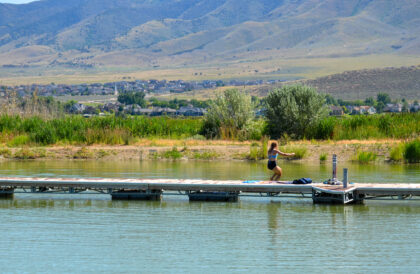
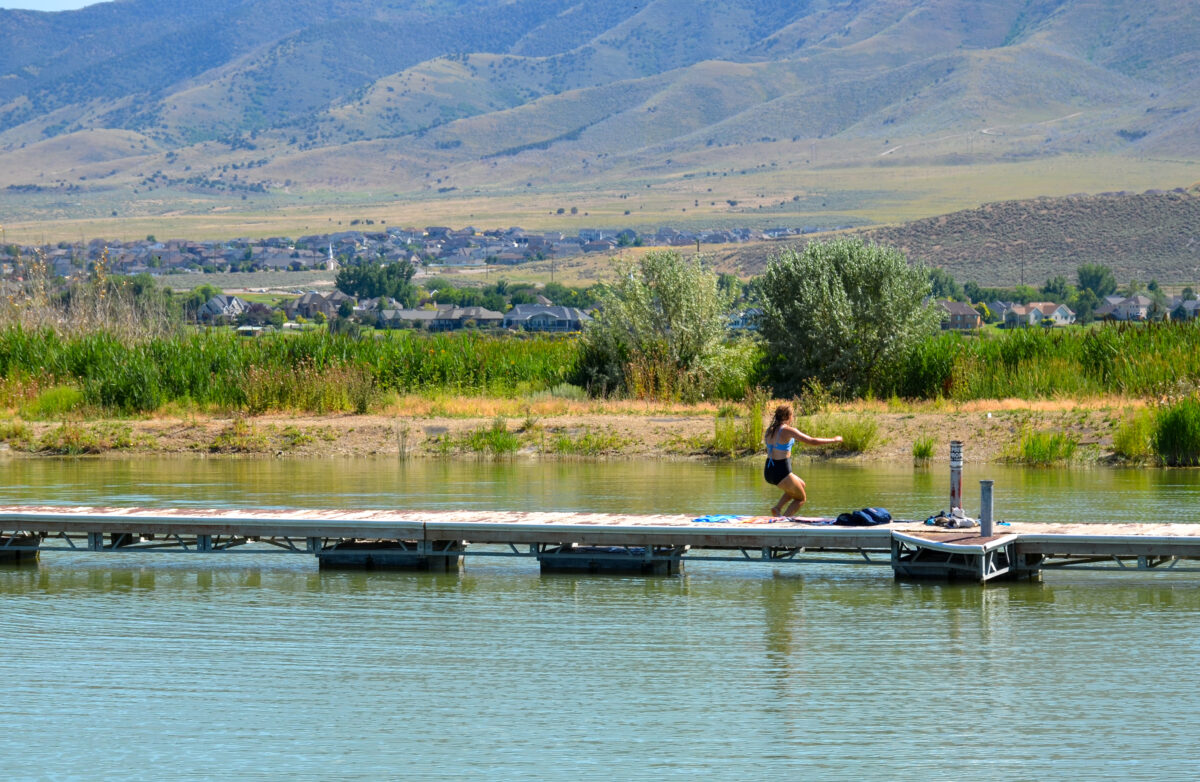
- A girl jumps into Utah Lake at the Saratoga Springs Private Marina on Thursday, July 20, 2023.
-
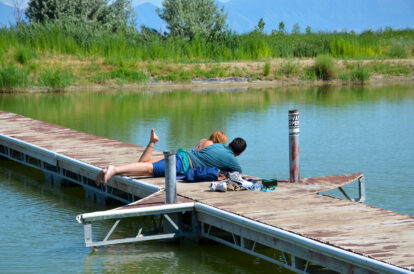
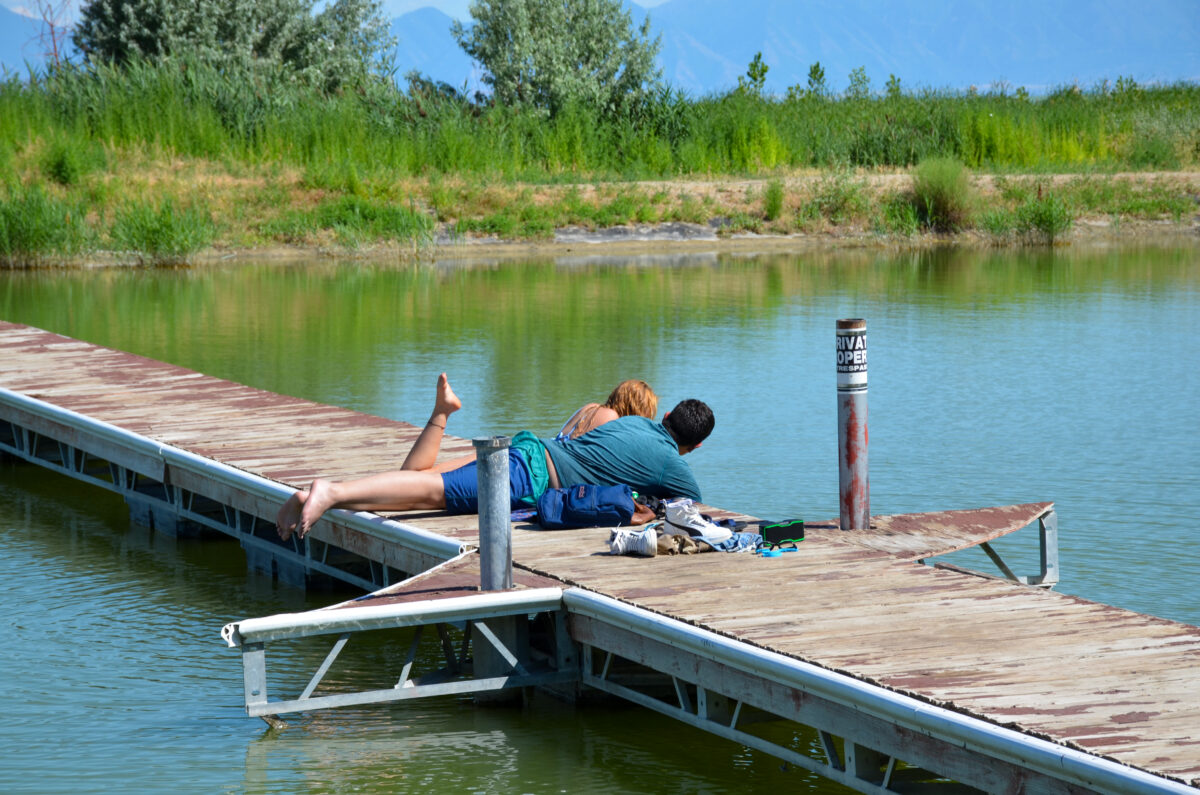
- Two people lay on a dock at the Saratoga Springs Private Marina on Thursday, July 20, 2023.
Nichole Whiteley, Daily Herald
A girl jumps into Utah Lake at the Saratoga Springs Private Marina on Thursday, July 20, 2023.
Excessive heat warnings and heat advisories have been issued across Utah for this coming weekend, with temperatures around 10 degrees higher than normal for this time of year. However, the heat warnings are not out of the ordinary.
“I wouldn’t say to see excessive heat warnings is unusual for Utah,” said Sam Webber, National Weather Service meteorologist.
Utah Valley has been issued a heat advisory that begins on Saturday at 9 a.m. and lasts until Monday at 9 a.m. The other areas included in this heat advisory are Cache Valley/Utah Portion, Western Millard and Juab Counties, Eastern Juab/Millard Counties and Southwest Utah. The excessive heat warning in southern Utah begins Saturday.
Temperatures up to 104 degrees are expected in these areas during the daytime with lows of 70 degrees at night. With temperatures not dropping lower at night, it creates a poor heat recovery, Webber said, which contributes to the need for an advisory warning.
“The most important things during these prolonged heat events is to really try to limit the amount of exposure you have outside during the peak heating hours of the day, which are typically between 2 p.m. and 6 p.m,” Webber said.
Nichole Whiteley, Daily Herald
Two people lay on a dock at the Saratoga Springs Private Marina on Thursday, July 20, 2023.
Daytime heat does contribute to heat advisories and warnings, but depending on the area, temperatures for an excessive heat warning could look radically different. The temperatures in St. George during the excessive heat warning are expected to reach 113 degrees while the same advisory was issued in Salt Lake City for a high of 105 degrees.
“We have a guidance system that we use, which is called Heat Risk, which takes into effect both high temperature during the daytime, low temperature overnight, and then it also takes into account CDC statistics from previous heat waves that look at hospitalization, at risk communities and demographic groups that might be affected more,” Webber said.
The NWS is advising to plan outdoor recreational activities for the morning when it is cooler and if a person must be outside for work or another reason to take breaks often in the shade and stay hydrated. The difference between a heat advisory and an excessive heat warning can sometimes be only a few degrees, Webber said, but there are more factors that come into play than the daytime temperature.
“Drink plenty of fluids, stay in an air-conditioned room, stay out of the sun, and check up on relatives and neighbors. Young children and pets should never be left unattended in vehicles under any circumstances,” reads the heat advisory.
Webber advised people to wear lighter material clothing that is breathable and clothing that is lighter in color. Staying hydrated is vital to avoid heat stroke or heat exhaustion which are both dangerous, Webber said.
Signs of heat stroke and heat exhaustion are similar with the biggest difference being that someone suffering from heat stroke may become unconscious. Signs of heat exhaustion include confusion, dizziness and nausea. The person may also become thirsty, weak and fatigued, Webber said.
When signs of heat exhaustion or heat stroke occur, Webber said to move the person to a shaded place, loosen their clothing, have them take sips of cool water and overall, “try to cool your core body temperature down.”
Weather advisory, watch and warning updates can be checked regularly on the National Weather Service website. They also provide additional details about the conditions and outline precautions to take and ways to stay safe.
Local News

Making progress: Huntsman Cancer Institute in Vineyard begins vertical construction

Utah election audit finds ‘compliance issues’ in Utah, Wasatch counties