Provo Municipal Council hears housing needs report from Continuum of Care
-
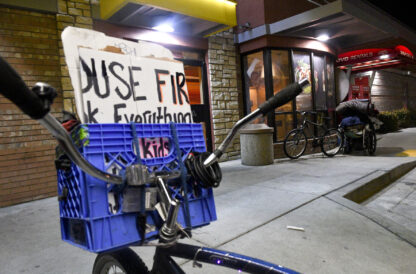
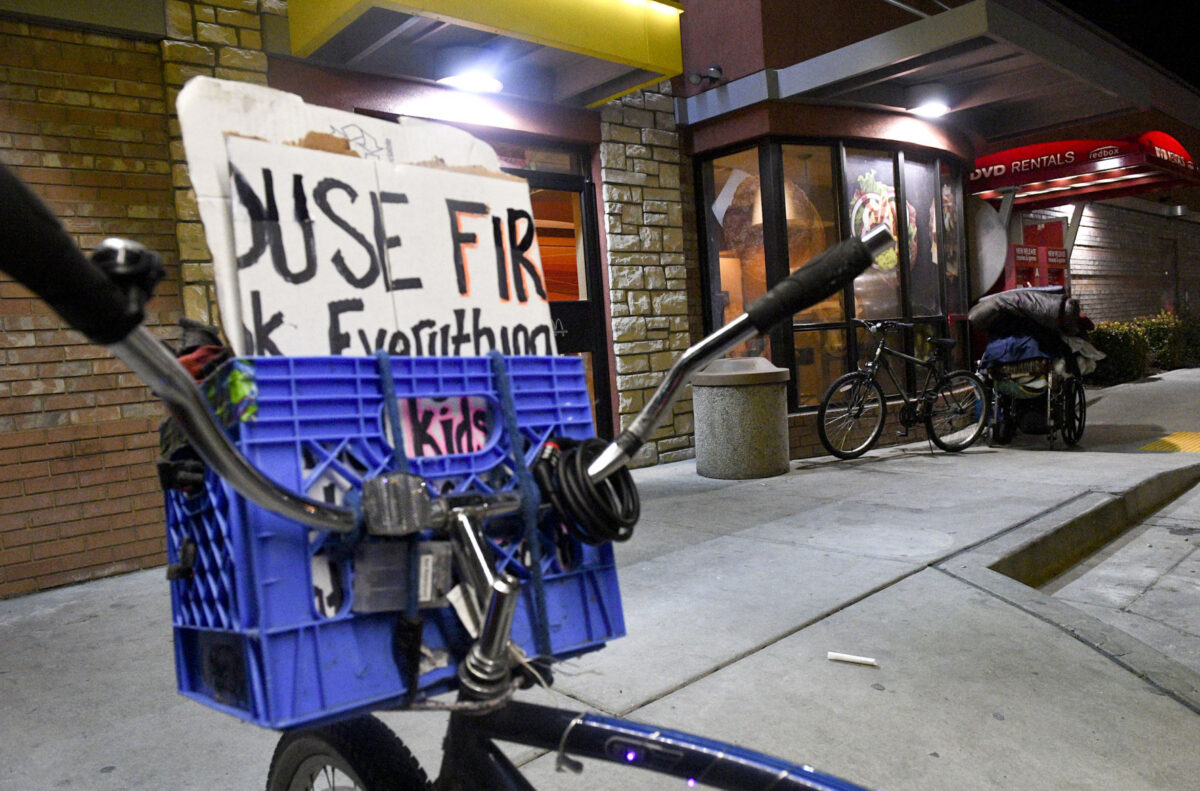
- Bikes belonging to possible homeless individuals sit outside the McDonald’s restaurant on South University Avenue on Jan. 17, 2017, in Provo.
-

- Volunteer Nick Gull walks through a park in Provo while searching for homeless individuals on Jan. 30, 2015.
Isaac Hale, Daily Herald file photo
Bikes belonging to possible homeless individuals sit outside the McDonald’s restaurant on South University Avenue on Jan. 17, 2017, in Provo.
In the past 30 days, 20 people have entered the homeless system in Provo. Because of that, Heather Hogue with the United Way of Utah County’s Mountainland Continuum of Care gave an impassioned plea for support to the Provo Municipal Council on Tuesday.
“It is time to fill the service gap,” Hogue said. The service gap, Hogue added, includes permanent supportive housing for the severely disabled.
These people would need a specific housing base to protect vulnerability and give daily contact for social workers, doctors, nurses and others. While these individuals are able to live on their own, they still need that daily contact.
“They can’t overcome barriers or their ability to get a home,” Hogue said.
For the past several work sessions, the council has been hearing from community organizations that deal with housing issues in Provo. Tuesday was the Continuum of Care’s turn.

Daily Herald file photo
Volunteer Nick Gull walks through a park in Provo while searching for homeless individuals on Jan. 30, 2015.
The Continuum of Care is not a service agency, it is the homeless response system for the community. It coordinates services with front-line agencies, creates strategic responses for homelessness, finds and fills service gaps and avoids duplication of services, according to Hogue.
Most of those in the service gap have utilized vouchers, but those are limited and don’t take care of the whole problem, according Hogue. She argued in favor of a “holistic approach” that would require collaboration between the government, nonprofits and faith-based organizations.
She noted that homelessness is growing at a much faster rate than are available beds and shelter for them in Provo. Councilman Bill Fillmore asked how many of those homeless people were from the local area, to which Hogue answered that up-to 70% are native to Provo, Orem and Springville. Hogue said repeatedly that a coordinated effort is needed to make a significant difference.
Coordinated entry
“A standardized intake is given at all entry points, including street outreach and data entered into a collective database. Front-line service agencies meet together to discuss individuals by name and help connect with needed resources, specifically housing opportunities for which they qualify,” Hogue said. “Coordinated Entry helps ensure people have equal access to services and housing opportunities, no matter where they enter our homeless system.”
As of 11 a.m. on Tuesday, when Hogue pulled data numbers for the council meeting, the following were shown. The group had 82 chronically homeless individuals; 10 homeless veterans; the oldest individual is 88 years old and the youngest is 19. This does not show the complete list of homeless in the area.
The age percentage breakdown for those completing an entry assessment in the last year:
- 1.9% are age 70+
- 9 % are age 60-69
- 19% are age 50-59
- 24.4% are age 40-49
- 28.7% are age 30-39
- 15% are age 20-29
- <1% are age 18-19
“We have a 91% retention rate of people in permanent supportive housing who have retained housing at 1 year,” Hogue said. “These are individuals who are chronically homeless, meaning they have a disabling condition and have been homeless for more than 12 months. They also receive wraparound services by professional case managers, social workers, doctors, nurses, occupational therapists and others as needed.”
In 2022, 37% of the people experiencing homelessness contacted during the Point in Time Count indicated they were survivors of domestic violence. Last year, The Refuge housed 201 adults and children in their domestic violence shelter while turning away 480 requests due to a lack of space.
Point in Time Count is an annual homeless census required by Department of Housing and Urban Development for funding. The next count will be in January 2024 and the 2023 data will be released July 10.