American Fork police receive $52,125 for mental health services
Ashtyn Asay, Daily Herald file photo
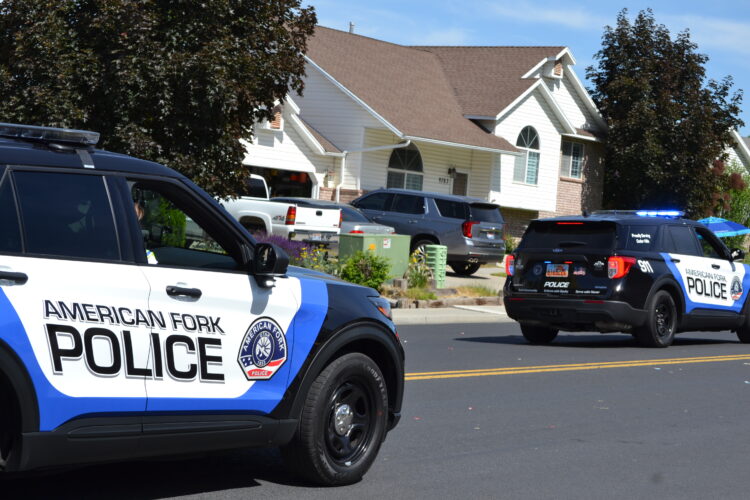
Members of American Fork Police Department ride in the Cedar Hills Family Festival parade on June 11, 2022.The American Fork City Council on Tuesday unanimously approved a grant of $52,125 for the mental health services of the police department. Now that the grant has been approved, the money will immediately be given to the police department.
Adam Ellison, division commander over support services for the American Fork City Police Department, applied for the grant in late January/early February. The grant is paid for through a $5 million statewide fund dedicated for mental health services, approved by the Utah Legislature in 2022. Another $5 million was added to the fund in 2023.
“Kudos to the legislature for providing some funding by way of grant and so we’re really excited for it. It’s going to really provide opportunities that are definitely needed,” American Fork City Council member Ryan Hunter said. “Our officers, as you well know, are on call for our worst moments in our lives. And they do that every day for everybody and so for us to be able to support them, … it’s the least we can do.”
Joe Brown, finance director for the Utah Department of Public Safety, said the grants are designed to “pay for the first year costs for them to start up their mental health programs or to enhance their mental health programs.”
Cameron Paul, American Fork Chief of Police, said the $52,125 grant will be used to increase their mental health resources by covering annual wellness checks for officer mental health. Typically, Paul said, the department received around $5,000 for the examinations.
Previously, the department paid for one therapist visit each year for officers and the majority of the grant will go toward allowing multiple visits. It also allows the department to extend mental health services to members of the police department that are not sworn officers, such as victim advocates and the evidence technicians. Retired officers and family members will also have access to this mental health care.
“Ultimately the money is to just help us expand our mental health programs to make sure officers and staff are getting all of the help that they need to continue to stay mentally strong and resilient and to be able to overcome any mental health issues that they may be experiencing. That’s the ultimate vision and goal,” Paul said.
Ellison explained there has been a stigma on police officers seeking mental health services. Paul said he has seen cases where poor mental health “substantially affected an officer’s ability to render good services” and ultimately resulted in them leaving the profession completely.
Ellison said one of the reasons their department has come so far is because the police chief is open about his own mental health journey and supports other officers receiving services. He hopes that, over time, receiving mental health care will be woven into the culture and he has already started to see positive changes within the department.
“For the longest time in our profession anything dealing with mental challenges has been something that has just been concealed and hidden,” Paul said. “It’s our responsibility to just make sure they’re getting all the help they need to be able to cope with what they see so they can continue to go out and do the best they can for the community.”
The impact of trying to keep up this image, he added, has a negative impact on people’s mental health.
Brown said they have not decided how the extra $5 million, approved in 2023, will be spent. He said the new bill extended the occupations that were eligible to receive the grant, but they are not yet sure if cities will be eligible to apply for a second grant the following year. Eligible first responders now include forensic interviewers, victim advocates employed by a children’s justice center or investigators/prosecutors of cases involving sexual crimes against children, among others.
Local News
Private voter info to become public, but some Utahns, including police, can get exemptions

Dallin H. Oaks sustained as president of The Church of Jesus Christ of Latter-day Saints in solemn assembly during general conference