Unpacking Utah’s primary upsets: The race that’s sending ‘shockwaves’ through the Legislature

-
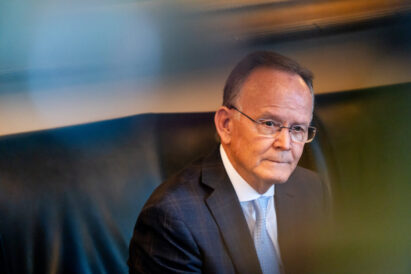
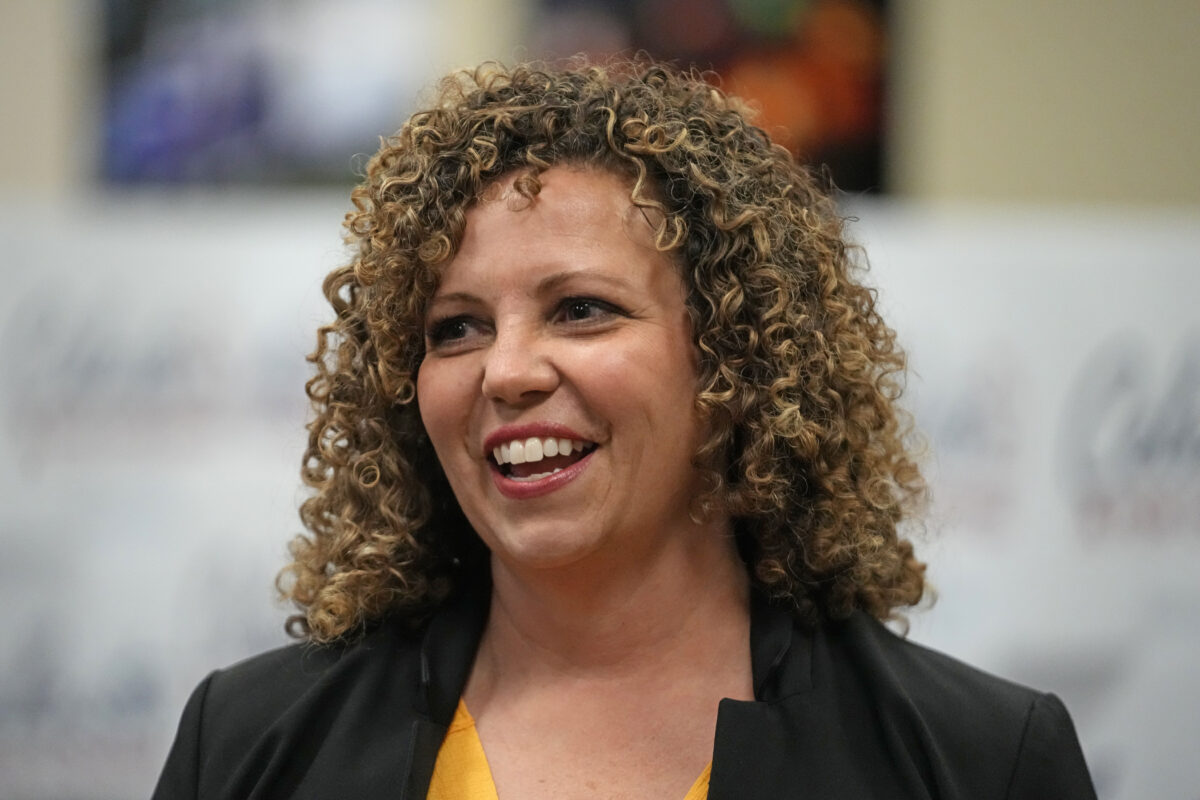
- Senate President Stuart Adams, R-Layton, is pictured during a press conference on the first day of the legislative session at the Capitol in Salt Lake City on Tuesday, Jan. 16, 2024. (Photo by Spenser Heaps for Utah News Dispatch)
-
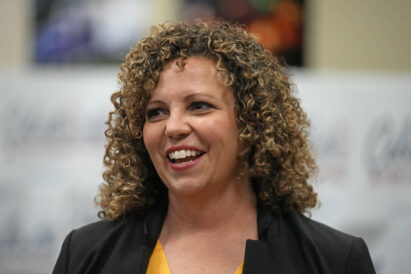
- Utah 2nd Congressional District Republican nominee Celeste Maloy speaks to reporters before an election night party at the Utah Trucking Association, Tuesday, Nov. 21, 2023, in West Valley City, Utah. (AP Photo/Rick Bowmer)
When Taylor Morgan saw longtime Senate President Stuart Adams was trailing one of his Republican challengers by more than 8 percentage points in election night results Tuesday night, he said he was “blown away.”
“I was genuinely shocked,” Morgan, a political consultant with the Utah-based lobbying and public affairs firm Morgan & May, told Utah News Dispatch on Wednesday, as the dust from the contentious primary was still settling.
Morgan had previously predicted based on a variety of polls that Adams was “vulnerable,” but he would ultimately win his Republican contest between challengers Stephanie Hollist and Braden Hess, though it would be “too close for comfort,” with single-digit margins.
But he was wrong.
Within hours of polls closing, Adams conceded to Hollist, and that was that. Come November Hollist will be the Republican nominee on the general election ballot for the GOP-majority District 7 in Davis and Morgan counties, and Adams will lose the seat he held for 16 years.
And the Senate Republican majority caucus will then need to elect a new Senate president, one of the most powerful positions in the state.
What happened — and why didn’t pundits like Morgan see it coming?
The outcome was “wild,” Morgan said, adding he and other political analysts will be studying the race and its precinct-level vote data to “really try to get a handle on that.”
But what’s clear is the controversy that sparked just as the primary election season was heating up — widespread outcry over a massive data center proposed by celebrity investor Kevin O’Leary in Box Elder County — was likely a major factor leading to Adams’ downfall.
A ‘casualty’ of data center controversy
Adams had direct ties to the data center controversy as chair of the Military Installation Development Authority, known as MIDA, the special district that gave initial approval to the proposal before Box Elder County commissioners consented to the project. The plan prompted outrage not just in Box Elder County but statewide over concerns about energy use, water and environmental impacts to the already threatened Great Salt Lake.
“I think it really is all about the timing with the data center and Stuart being the target as chair of MIDA,” Morgan said.
But the data center wasn’t the only issue for Adams, Morgan noted, pointing to another controversy last year, first reported by The Salt Lake Tribune, that Adams initiated passage of a law that later helped his 18-year-old granddaughter reach a plea deal in a criminal case involving sex with a 13-year-old.
Morgan noted that Hollist — an attorney who has worked as senior legal adviser for Weber State University — jumped into the race long before the data center issue exploded. She far surpassed Hess in fundraising, equipped with about $190,000, and she ran a campaign focused on voters frustrated with feeling unrepresented, unheard or in the dark on decision-making.
More than anything, Morgan said Adams’ loss is “a real lesson for legislative leaders” because it appears he “lost touch with his voters.” He said that can happen, especially for lawmakers who hold positions of power and typically don’t face challengers because they’re in a safe one-party district that can go years without producing an inter-party challenger. This year was unique, marking Adams’ first-ever primary in his 16 years in the Senate.
“Stuart has not had to worry about reelection for a long time, and I think he lost track and lost sight of his voters,” Morgan said. “And it caught up with him.”
Rather than Hollist and Hess splitting the vote, Morgan said it appears Hess split the more conservative vote away from Adams while the “centrist and conservative voters all rallied behind this anti-data center, anti-Stuart Adams incumbency momentum.”
“It’s really fascinating,” Morgan added, crediting Hollist with running an effective campaign.
Adams’ loss has “sent shockwaves, honestly, throughout the entire Legislature and especially through leadership,” he added. The chatter he’s heard in the aftermath so far is that Adams’ race was a reminder “to stay grounded and stay connected with voters.”
“There is a conversation happening among leadership that, you know, perhaps Stuart was too focused on his role as Senate president and not sufficiently focused on what his voters were saying, or what his voters needed,” Morgan said. “The general narrative out there is, ‘Boy, we cannot take our voters and our base for granted. We’ve got to engage, we’ve got to communicate, we’ve got to be responsive to our voters.”
Morgan also said Adams’ loss shows how politicians are “really struggling to figure out how to respond to the data center issue,” not just in Utah but nationally. Republicans like Adams have tried to make the case that there’s a need for data centers to grapple with national security issues surrounding artificial intelligence development and competition with China, but Morgan said they need to figure out how to communicate better with voters on why they support their development.
“Republicans, honestly, are completely lost on this issue,” he said. “I think Stuart Adams was the first significant conservative Republican casualty of the data center issue.”
With Adams heading out at the end of the year, now Senate Republicans need to gear up to pick a new leader. Morgan said it’s been “no secret” that Adams has been grooming Senate Majority Leader Kirk Cullimore, R-Sandy, to run to succeed him, but it will be interesting to see how that closed-door caucus election will pan out.
Though Morgan said he respects Adams for public service, he emphasized that the primary election is “super healthy for our process.”
“It is so important for voters to see that there are consequences for even the most powerful, even the most insulated and protected members of majority leadership,” he said. “Even they have to be accountable to their voters.”
2 Box Elder County commissioners on track to lose
Box Elder County commissioners Boyd Bingham and Lee Perry were both trailing their Republican challengers Wednesday. Election results had Vance Smith ahead of Bingham with nearly 52% of the vote, while Nathan Tueller had nearly 54% of the vote over Perry.
Perry told Utah News Dispatch on Wednesday the race came down to a single issue: the Stratos data center project, which he characterized as forced on Box Elder County by state leaders.
“If it had been based on a whole bunch of issues, I’d be a lot happier about it,” he said. “But the fact that was a one-issue thing — the data center that was brought to us and crammed down our throat by the state of Utah — I think was unfair.”
Feeling blindsided and frustrated by the fast-moving project, hundreds protested at the Box Elder County Commission’s meeting in May, where commissioners consented to allow MIDA and Stratos to move forward with the project.
Perry said he and his colleagues were rushed into making the decisions on a timeline set by state leaders and developers. He said he saw resisting it as a futile exercise that wouldn’t stop the project from becoming a reality, but would invite lawsuits against the county.
Perry, also a former state lawmaker, said he doesn’t plan to run for elected office again.
“Come January, I’m going to spend a lot more time with my family,” he said.
Other legislative upsets
Two other Republican incumbents lost their seats on election night: Sen. Dan McCay, R-Riverton, and Rep. Trevor Lee, R-Layton.
Both lawmakers have run controversial legislation in the past. McCay sponsored Utah’s near-total trigger abortion ban that’s currently held up in court, and Lee sponsored multiple culture war bills, including a flag ban aimed at restricting LGBTQ+ symbols in classrooms and government buildings.
But to Morgan, Lee and McCay’s losses were more about the effectiveness of their challengers rather than a signal that their Republican base was deeply unhappy with their track records.
Davis County Commissioner Bob Stevenson, a former mayor of Layton, led Lee with about 65% of the vote. He ran an “incredibly smart campaign,” Morgan said, bolstered by his existing popularity in the community.
Plus, it seemed voters in District 16 were “just kind of ready for a change,” he said, while pointing to some scandals that likely hurt Lee, including businessmen that accused Lee of committing check fraud and using his position in the Legislature to help a company secure a government contract in exchange for money, though the contract never materialized, KSL reported. Lee disputed those characterizations to Utah News Dispatch.
As for McCay, Morgan similarly said his challenger, Rep. Doug Fiefia, R-Herriman, “ran a much better campaign, and he worked a whole lot harder.”
“I mean, Doug just worked his tail off, and he put in the time, he put in the work, he raised the money, and frankly Dan … ran a very vanilla campaign,” Morgan said. “Honestly I just think Doug outworked him and outsmarted him on the campaign.”
Another surprise: A resounding win for Maloy over Lyman
While Morgan rightly predicted that former congressman Ben McAdams would comfortably win the Democratic nomination for the state’s newly drawn blue 1st Congressional District, he didn’t expect Republican incumbent Rep. Celeste Maloy would resoundingly beat her GOP challenger, Phil Lyman for the nomination for the 3rd Congressional District.
Morgan had expected a much closer race between Maloy and Lyman in the sprawling, deep red District 3. But election night results had Maloy running away with the nomination, with nearly 66% of the vote to Lyman’s 34%.
That shows she ran an extremely effective campaign, Morgan said.
“Boy, no one works harder than Celeste Maloy,” he said. “She earned every vote in the victory last night.”
Morgan also said the outcome shows Lyman’s “very angry, very conspiracy-based, populist, toxic form of Republicanism (is) frankly wearing very thin, especially here in Utah.” Lyman also ran a bitter and unsuccessful gubernatorial challenge against Gov. Spencer Cox in 2024, though he gathered significant write-in support.
“I think Phil Lyman threw his hat in with the wrong lot in the party here and nationally, and I think voters are exhausted,” he said. “I think voters are not interested in his kind of politics anymore.”
The fact that none of Utah’s three incumbent Republican congress members were ousted this primary — even though they were running in new, redder districts under a court-ordered map — shows that Utah voters still lean toward more “centrist, conservative Reagan Republicans.”
“We did not swing further to the right with these primary elections for Congress,” he said. “I think that’s significant.”
Contributing: Annie Knox
Utah News Dispatch is part of States Newsroom, the nation’s largest state-focused nonprofit news organization.