Utah moves toward allowing health care providers to deny treatment based on their beliefs
Will Ruzanski, Utah News Dispatch
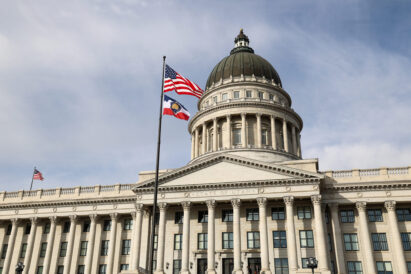
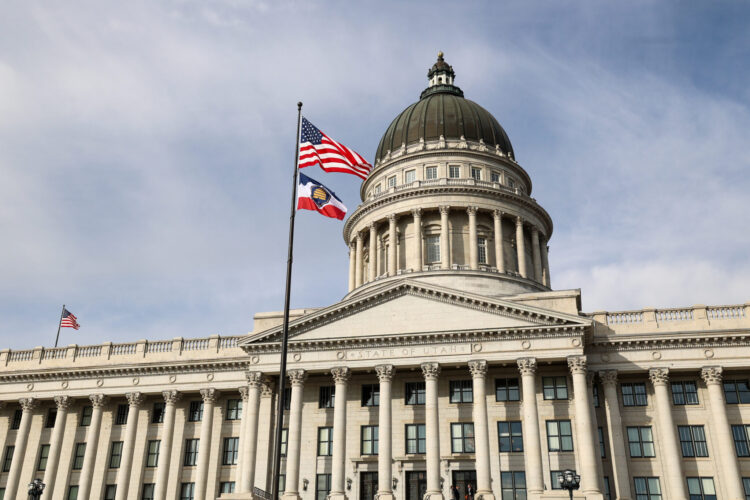
The Utah State Capitol is pictured on Tuesday, Jan. 20, 2026.After overcoming bill-halting opposition when it was introduced, a proposal allowing health care providers in Utah to refuse treatment based on their deeply held beliefs — including religion or conscience — is advancing to the House floor with two days left in the Legislature’s general session.
SB174 is sponsored by Sen. Keven Stratton, R-Orem, and passed out of the House Health and Human Services Committee along party lines Wednesday, with all three Democratic committee members representing voting no. After originally facing a slim defeat in the Senate Health and Human Services Committee in mid-February, SB174 returned the next day with enough support to advance, eventually making it through the Senate earlier this week.
The bill — which does not apply to emergency care — would allow health care providers to choose not to provide treatment or services if it violates their religion or conscience. Providers would have to notify Utah’s Department of Health and Human Services when they decide to object, as well as post a notice in their office.
Supporters argue the bill fills a gap between federal and state law, striking a delicate balance that protects Utah’s health care workers while maintaining patient accessibility to care. One member of the public spoke in opposition, citing concerns over vaccine access.
Federal versus state law
Federal law already protects health care conscience rights by prohibiting recipients of federal funds from requiring individual providers to give treatment they find religiously or morally objectionable, pointing to abortion and assisted suicide as examples.
Bill Duncan, religious freedom fellow with the Sutherland Institute — a conservative public policy think tank — argued the bill clarifies Utah law and fills that legal gap.
“Many of these protections are provided in federal law, but the enforcement of those protections has changed over time,” Duncan said. “Federal law is subject to the whims of federal enforcers, Utah needs its own provision to protect those people.”
Caitlyn Jasumback — representing the Utah Public Health Association’s Immunization Advocacy Coalition — said that “Utah already has some of those protections in place,” arguing the bill “may unintentionally create barriers to vaccine access for Utah families.”
“The concern is that SB174 goes much further, with a potential hammer approach instead of a scalpel approach,” she said. “We’re making the assumption that folks are coming to an appointment knowing what they want, but maybe they need to receive education and counseling on those decisions.”
How the bill works
Robin Fretwell Wilson, a law professor at the University of Illinois who spoke to the committee in a personal capacity, said the bill “strikes a delicate balance between protections for religious belief and conscience, and the interests of the public and patients.”
“SB174 allows no objections in the emergency setting,” Wilson said, emphasizing the bill requires “individual practitioners give notice to facilities,” which she argues prevents any objections from hindering access to vital health care.
Under the bill, providers can only object to forms of treatment, rather than individual patients. It also requires clinics to staff around their physician’s objections when possible. If a clinic cannot staff around those objections to provide specific types of care, Utah’s Department of Health and Human Services is required to direct patients to alternative health care providers.
“This extends a Utah tradition of allowing persons of faith to live with integrity without harming the public,” she said.
Utah News Dispatch is part of States Newsroom, the nation’s largest state-focused nonprofit news organization.