
Guest opinion: Get your facts here, and nowhere else
Courtesy photo
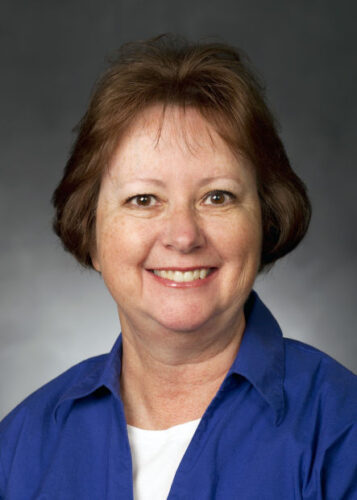
Diane ChristensenLike most people, I have lost friends and neighbors to COVID. I mourn them. Like some people, I have gotten COVID and recovered, only to realize quickly that COVID is the gift that keeps on giving. I mourn what I used to be able to do and will never be able to do again.
Today I’m adding a few more things to the list of things I (we) have lost.
We have said goodbye to logic and reason. Some might say that happened long ago, hence the existence of the Flat Earth Society and the more recent Birds Aren’t Real (joining these groups is only a mouse click away, and, bonus, they have tee shirts.) We call this kind of thinking stubborn, or, uncharitably, pig-headed. It’s different in the pandemic — worse. Overnight, it seems, this mindset has multiplied exponentially until we have turned into a nation of stubborn old coots, the word “coot” being expanded to describe even high-school students. It gets worse when there are multitudes of sources for contradictory “facts.” What one accepts as fact is the subject of endless argument in and of itself.
Also lost, swirling down the drain, is our respect for science. That’s a shame considering we used to take pride in the advances in science that came from red-blooded American research and rigorous study in laboratories, universities, and industry. Robert Fulton? Ours. Eli Whitney? Ours. Samuel Morse, Alexander Graham Bell, the Wright Brothers? Ours, ours, ours. This is true of medical breakthroughs as well. The first ever surgical procedure using anesthesia was performed by dentist William Morton, in Boston in 1846. American Karl Landsteiner developed blood-typing and the first-ever blood transfusion using this method was performed in 1907 in New York. First cardiac pacemaker, first kidney transplant, here and here. First polio vaccine, here (thank you, Jonas Salk).
What caused the demise of our faith in scientific data? It was replaced — because nature abhors a vacuum — with wholesale acceptance of theories spouted by people with questionable credentials or no credentials, but who possess something the scientific community does not have: certainty. Certainty is comforting, certainty is reliable. And take that, you scientists who can’t make up your minds!
Imagine my surprise when I learned, from a hugely popular video that was making the rounds almost two years ago, that COVID had been developed secretly by scientists at USAMRIID (The United States Army Medical Research Institute for Infectious Diseases in Frederick, Maryland) and this deadly virus was unleashed upon us as part of a conspiracy to destabilize the world. As I said, that was a surprise to me, considering that my oldest son was a scientist and researcher at USAMRIID at that time. I called him to acquaint him with the video. He wasn’t as entertained as I had hoped.
A year ago, when I battled COVID, I was so miserable and sick it was near-impossible to evaluate whether I should chase the treatments that were still relatively new and controversial: Monoclonal antibodies, remdesivir, corticosteroids, hydroxychloroquine. My doctor recommended a course I wasn’t sure I could support. What to do? I finally called two medical professionals I trusted because I had given birth to them 30-some years earlier, and got their advice. People who didn’t have that option up their sleeves were left to take their best guess. Some were too paralyzed by uncertainty to do anything at all. We abandon medical science and sow doubt in our own minds, at a cost.
Here is a mini-tutorial on science.
- Science doesn’t deal in certainty. Science presents the best information it has at any given time. If researchers can’t back up their theories with data, they don’t present them at all. As the data evolve, so does the science.
- When scientists themselves don’t agree, we look for a consensus or we wait for more data to come in.
- The news media doesn’t report scientific breakthroughs very well. Look up the footnotes yourself. Read the abstracts. Click on the links.
- Scientists don’t fabricate results of studies and experiments. Because if they do, their careers are over, irrevocably.
- The scientific community, the ones who publish in JAMA and Lancet and the like, has no interest in hoodwinking the public. The best and brightest scientists barely know the public exists.
COVID has struck in waves and so has public hysteria. At the moment, we’re riding the Omicron wave and we’re back to the bitter mask debate again. The vitriol is awful to behold. My study is better than your study! My freedom is more important than your paranoia! My children! Your children!
As much as I hated the quarantine of Spring 2020, there was one good thing to be said for it. There was a general feeling that we were united, that we were fighting something together, that the majority took the pandemic seriously. We would make sacrifices for the common good.
I only wish that feeling of unity had lasted more than 3 ½ weeks.
Diane Butler Christensen is a 40-year resident of Provo. She is a former member of the Provo City Planning Commission, the Provo City Landmarks Commission and the Provo City Council Budget Committee.
Opinion
JOECKS: What every graduate should aim for
Many of today's graduates are about to make the same mistake Matthew Emmons made during the 2004 Olympics. It's ...
Guest opinion: The effects of short-term rentals in our schools
Orem’s schools are one of the main reasons families choose to live here. But the continued spread of short-term ...
