
Guest opinion: Cost of enforcement driving Utah businesses out of business
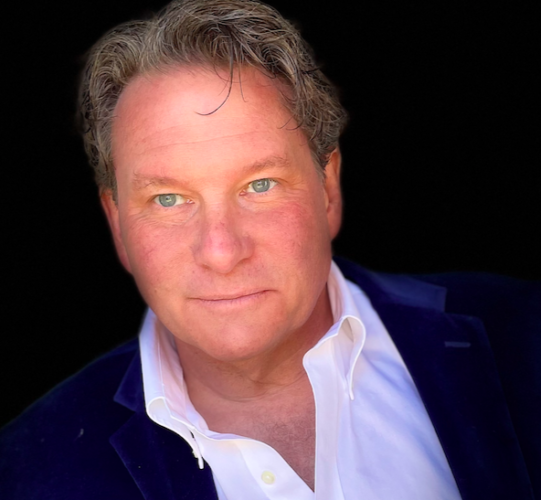
Courtesy photo
Rob HousmanFederal regulatory enforcement has reached the point it needs to be checked.
I’m not anti-government. Early in my career, I represented environmental groups and labor unions. While a Clinton White House appointee, I played a substantial role reforming professional sports (doping) and the Olympics (doping and corruption). I worked closely with Salt Lake Olympic Committee CEO Mitt Romney as he succeeded in hosting the Salt Lake Games in 2002. However, we didn’t approach these entities, as adversaries; we sought partnerships to achieve progress.
However, I am now seeing a problematic approach out of Federal regulatory enforcement. Among my clients, I represent a family-run Utah company being sued by the Department of Justice (DOJ) on behalf of the Federal Trade Commission (FTC) for statements they allege lacked adequate scientific basis.
When private parties litigate, the costs can be enormous. However, parties have incentives to act somewhat efficiently and with professional courtesy. Obstructionism begets obstructionism. You try to focus on what matters, seek common ground to settle, and be advocates not antagonists.
However, throughout this FTC litigation, the Government has made it clear it has unlimited resources (our taxpayer dollars) and legions of attorneys (paid with our taxpayer dollars) and will use these — in my view purposefully to grind us down and run up our costs. You see this in some private David v. Goliath cases — but this tactic is unsavory coming from our government.
As a result, the government has taken a series of actions seemingly intended to delay and drive up costs. For example, we sought to amend our initial answer to their complaint — typically allowed as a common courtesy. Instead, the government filled an opposition — requiring more time and money. In granting our motion, the Magistrate judiciously noted: [T]he court shares some concern here . . . that the “[government’s] underlying purpose [was to] to prevent discovery into disputed facts. …”
The cost of actions like these on the American economy, in particular small businesses, are staggering. The company I represent has already paid over $200,000 per employee to defend itself. All that money could have gone into much more productive uses in Utah — jobs, wages and economic growth.
Our experience is not unique. Over the last year or two, courts have taken Federal agencies to task for regulatory overreach. Last April, the Supreme Court unanimously held the FTC lacks authority “to seek … equitable monetary relief such as restitution or disgorgement” — an enforcement power the FTC has been using against companies for years. More recently, in a decision with sweeping ramifications, the Supreme Court rejected an Environmental Protection Agency rule because the agency lacked clear statutory authority to impose the regulation. This term, the Supreme Court will hear Jarkesy v. the SEC, a Government appeal of a Fifth Circuit case finding administrative enforcement procedures — whereby an agency acts as judge, jury and prosecutor — violate the Constitution.
I’m all for sensible regulatory oversight: Prevent kids from being injured by defective products; Stop price-fixing costing consumers billions of dollars; Ensure companies polluting the environment have to internalize the health costs they inflict on society; Sensibly protect Americans’ data privacy. All good and smart.
However, that isn’t what is going on in too many instances. Consider this: the same government suing us, alleging we lack sufficient random clinical trial data to support certain statements about COVID, just approved new Emergency-Use vaccines with no human clinical data whatsoever to be used by millions of Americans. Kafkaesque is an understatement.
We need incentives to compel the government to exercise greater restraint and efficiency in oversight and enforcement. For example, if the government does not prevail in an enforcement case, the private party should be able to recoup legal costs. government lawyers should have a budget–just like private attorneys–commensurate with the size of the matter, the gravity of alleged harms and other factors. None of these constraints would preclude the government from bringing important cases to protect the public’s interest. However, they would compel the government to be more judicious and efficient.
With the American economy sputtering, getting the government to act less adversarially and with greater economic efficiency is in the interests of all Americans.
Rob Housman is a private practice attorney based in Washington, D.C. He formerly served as Assistant Director for Strategic Planning in the White House Drug Czar’s Office during President Bill Clinton’s administration and currently represents Xlear, based in American Fork.
Opinion

DE RUGY: When businessmen enter the Beltway, it’s business as usual
MCCLURE: The bridge generation is feeling its age
Millennials are a cultural infrastructure, like an older overpass everyone depends on, but it's starting to carry ...
BARONE: Who wins the re-redistricted House?
As President Donald Trump's job approval sinks to or below 40% (depending on which poll you're looking at), betting ...