
Guest opinion: We need to reassess our opinions on addiction and recovery
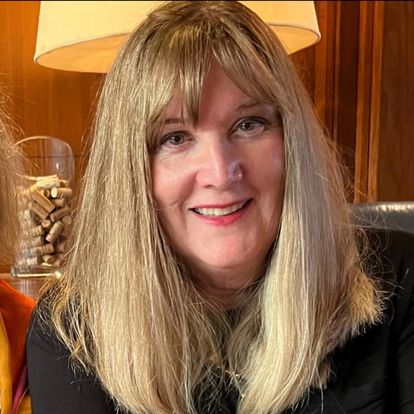
Courtesy photo
Karen Wallace BarteltI screamed in my car for what seemed like five minutes after the phone call came.
My son’s fiancée’s name flashed across the screen when I answered my cell somewhere near Payette, Idaho, on Interstate 84. I wondered why she was calling at 7:30 a.m. When I answered, her voice was barely audible.
My beloved, insightful, intuitive, hilarious and charming son had died at 31 from an accidental fentanyl/heroin overdose. It was Dec. 2, 2018.
I had a great visit with Randy and his fiancée two nights earlier in Park City and was heading back home to Portland. He planned to see us in a few weeks at Christmas. Good things were happening in his life: sober for two years now, he was engaged, days away from receiving his college degree, and with an excellent job awaiting.
But that morning, Randy’s smart and vivacious fiancée found him dead on the kitchen floor in the early morning hours in her apartment.
After I received that phone call, overwhelming grief and anguish became my constant companions, along with the feeling that somehow, some way, I should have been able to save my boy.
Later, we would find on his phone a search of drugstores that sold syringes, directions to a certain park in Salt Lake City known for drug dealing and even more heartbreaking — rehab centers. It was as though he knew he was in trouble again. As with many addicts, he had been in rehab several times before.
Ten months after burying my son, I felt compelled to do something to fight against the disease that had taken my son. I began a search for what to do about an epidemic that has killed a significant portion of Randy’s generation.
Drug overdose deaths have increased by 65% between January 2019 and January 2024 — basically since Randy died.
Randy had always liked helping homeless people. He once told me he recognized their mental turmoil in himself. His bachelor of science degree would have put him directly in that field, working directly with people living on the street.
So, I began teaching creative writing to people transitioning from homelessness. My class consisted mostly of addicts.
Many drafted stories of horrific, violent childhoods: incest, sex trafficking, prostitution, drugs and rape. Those people with drawn, scarred and sorrowful faces understood my son’s addiction and understood my grief.
One student wrote of seeing his best friend shot and killed by a dealer.
I had written a weekly newspaper column for years for The Oregonian. I thought I had heard everything, but nothing had prepared me for their stories. Although they shared the same disease of addiction with my son, the similarities stopped there.
Randy grew up in a safe and picturesque suburb, in a stable home, with both parents. He had a close-knit group of friends from kindergarten through high school graduation, was on the football team, was class vice-president his junior year and he loved skiing.
Although I kept a close eye on him, he began partying with his friends. I received my first middle-of-the-night phone call from the police when he was still in high school. He and a buddy had taken my car, scored some booze and drugs and crashed into someone’s garage after a high-speed chase by police. It would be our introduction to the juvenile court system — an overworked, sometimes well-meaning, yet ineffective system.
Randy’s craving went way beyond beer pong. Once alcohol and drugs caught hold of his life, family, house arrest and even a bright future could not stop him. Randy desperately wanted to stay clean.
Addiction knows no economic, racial or cultural boundaries; not every addict grows up in chaos and abuse and ends up on the street.
Addiction can kidnap anyone’s child.
Like Randy, most in my writing class still felt the seduction of their addictions. Many left the class and the rehab program because the pull of drugs landed them back on the streets.
After a year, I realized I wasn’t making much of a dent in their lives. While writing might have been therapeutic, it did not bring them any closer to freedom from the addictions they were fighting.
Hitting rock bottom is a suggested route by many; this requires family members to watch the addict flounder and destroy their lives, and sometimes the lives of those around them, until the addict has an epiphany, develops self-control and becomes sober. While this might work for some, it’s not the case for many addicts and wasn’t for Randy.
If a parent or loved one does not buy into the rock-bottom prescription, they are often called co-dependent or enablers or worse. Parents of children with other diseases, such as cancer, are not given such labels.
Four years after Randy died, I began to write about his death and about how addicts and their parents are viewed. With each article I wrote, emails poured in from parents who had also lost children from fentanyl and heroin overdoses.
They, too, witnessed their teen — their child — succumb to the lethal disease.
They, too, felt like they somehow should have saved them.
They, too, tried everything to keep their kids alive.
And they, too, became consumed by grief.
A parent whose son has been dead a year recently asked me if it is wrong that “I still cry every day?”
Willpower is not the cure.
More evidence points to inherited genes as the underlying issue, according to this study from the National Institute on Drug Abuse.
And new and more dangerous synthetic opioids are hitting the streets, according to the Drug Enforcement Administration. One such drug — nitazene or “ISO” — is mixed with other drugs and has caused deadly overdoses in unsuspecting victims just like fentanyl.
Some families go into debt paying for rehab, legal bills and fines to keep their children alive and out of the revolving door of jail. The financial impact can be almost as devastating as the emotional. I’ve known of people who have sold cars, taken on two jobs or mortgaged their homes.
In fact, the American taxpayer paid an average of $260 in 2023 to combat the drug epidemic, according to a recent study by Rehab.com.
With so many deaths, we parents should be protesting in the streets, but because of the stigma attached to addiction, it is difficult to speak out. Shame and judgment are prevalent around addiction, drug abuse and overdose.
Addicts are often incarcerated instead of hospitalized. Depending on the charge, this can become a permanent part of someone’s record. Parents of minors are routinely required to take parenting classes, as if bad parenting causes addiction. Why is shame and punishment the prevailing mindset for solving this deadly crisis?
It is not working.
What can we do as parents? I am asked this repeatedly by other moms and dads who have lost a child, or more horrifically two children. No one agrees on one answer.
But I do know this: Irrational minds cannot make rational decisions. Countless opioid users are too far down the rabbit hole to dig themselves out. They need our help.
The cost of the lives lost cannot be calculated. All those parents who emailed me have asked what they can do about their grief and how to solve this growing problem.
“I know the pain goes on forever…it colors my life,” one father wrote.
“The fact that people see my sweet, thoughtful, smart son as some sort of loser is especially heartbreaking,” emailed a mother.
What can we do in the meantime?
- Despite the stigma, we mothers and fathers need to speak out against jailing our addicted children because they were born with a certain gene.
- We need our communities to show compassion and not condemnation toward addicts.
- We need to make enough noise so our government will allocate more money, research and efforts toward understanding addiction and finding a cure.
- We need to find a way to make Narcan free and available to everyone.
We are losing our children by the hundreds of thousands. Continuing to criminalize drug addiction instead of treating it will kill hundreds of thousands more.
Karen Wallace Bartelt was a weekly newspaper columnist for The Oregonian and has written for many other publications. She worked at Paramount Pictures in its heyday. She has taught creative writing to people who are transitioning into stable housing. She can be reached at ksweekly@aol.com.
Opinion
Guest opinion: Making school zones safer: Solutions to speeding
GARVEY: Are jury trial problems unfixable?
This is not another opinion article about Lindsay Clancy. Well, not really. I'm not qualified to discuss the ...
