
COMER: One book that unquestionably deserves to be banned from schools
-
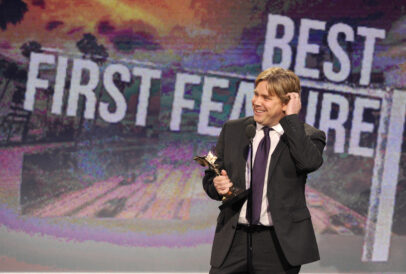
- Director Stephen Chbosky accepts the award for best first feature for “The Perks of Being a Wallflower” at the Independent Spirit Awards on Saturday, Feb. 23, 2013, in Santa Monica, Calif.
-

- Ryan Comer
Chris Pizzello, Invision/AP
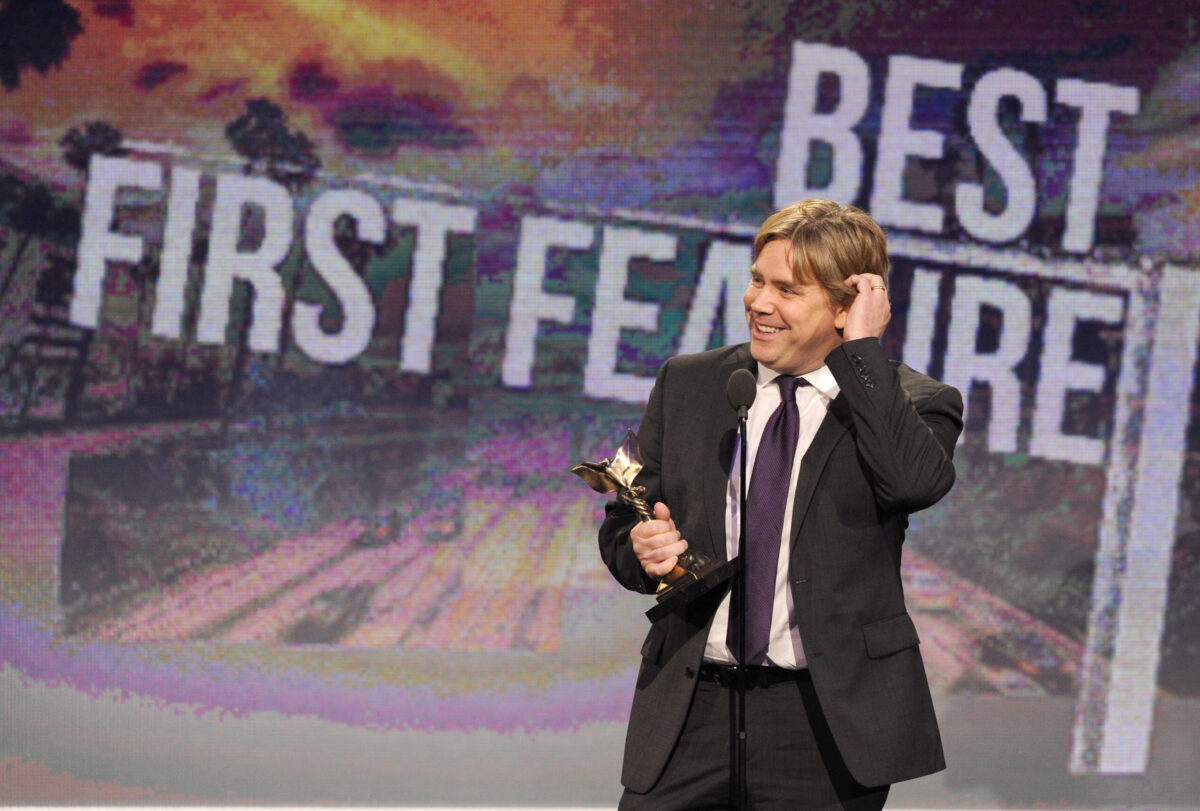
Director Stephen Chbosky accepts the award for best first feature for "The Perks of Being a Wallflower" at the Independent Spirit Awards on Saturday, Feb. 23, 2013, in Santa Monica, Calif.
On Jan. 6, ABC4 reported new additions to Utah’s list of banned books, which resulted in a lawsuit from the American Civil Liberties Union against the state of Utah.
Said the ACLU in a press release, according to the article:
“These laws undermine students’ fundamental freedoms by denying them access to the books and literature they depend onto learn, grow, and understand themselves and the world around them.”
I decided to go to the Kaysville Library and check out one of the books that was recently added to the list: “The Perks of Being a Wallflower” by Stephen Chbosky.
The ABC4 article described the book in the following way:

Ryan Comer, Standard-Examiner
Ryan Comer
“‘The Perks of Being a Wallflower’ is a coming-of-age novel that follows a socially awkward teenager, Charlie, as he navigates through high school and all of its complexities. The book is narrated by Charlie through a series of letters to an anonymous friend.”
That sounds pretty innocent, but the content is definitely not.
Keep in mind, this is content that involves teens.
The book includes themes of:
- Suicide
- Racism
- Physical abuse (in parent-child, spousal and boyfriend-girlfriend relationships)
- Cursing (including the “f” word multiple times, multiple “s” words and Jesus/God said in vain multiple times)
- An exorbitant amount of alcohol use, tobacco use, drug use (including LSD) and sex-related material.
There’s explicit descriptions of sexual activity, including homosexual activity. Sexual nonconformity is a central theme of the book.
And all that doesn’t even include the most egregious material: an explicit description of a rape.
In one scene, the main character is in a room at a party when another boy and girl come into the room and proceed to engage in sexual activity with each other. The sexual activity escalates, and the details of it all are explicitly described. Furthermore, it’s made clear that this encounter escalates against the objections of the girl, it is emotionally traumatic for her and that they are both potentially intoxicated.
As I read this book, the main frustration I had with it was not just the content, but how pointless the book was. It’s not uplifting. It doesn’t leave you feeling happy about anything. It’s definitely not teaching anyone any moral lessons, and in fact, much of these themes are discussed as if there isn’t anything inherently wrong with them.
The pervasive smoking and drug use is treated like normal, acceptable high school behavior. In one scene, the main character’s teacher actually allows him to smoke in his office. This teacher is presented as if he’s some sort of role model worth revering.
The main character is given a brownie with some sort of mind-altering drug in it at a party, and mere lip service is given to how horrible this is. Ultimately, it’s treated as if it’s just some wacky, playful experience at a party – the type of experience every kid should have, really.
When the main character takes his sister to get an abortion, he goes to the car to smoke, and when she comes back to the car and notices, it’s treated like some sort of bonding experience between them. Because I know that nothing would cheer me up more after killing another human being for pure convenience than seeing my brother smoking in the car.
By the way, the word abortion isn’t actually used to describe what the sister had done. In fact, there’s no mention of a specific procedure being done at all. The author sanitizes the whole experience by saying that the main character took her to a “clinic,” obviously guiding the reader into thinking what she had done was typical “health care” that was necessary to solve a problem – that pesky problem that comes from sex called life.
The political messaging is undeniable and, frankly, nauseating.
The main character’s father talks to him about sex but makes no attempt to try and prevent it and actually encourages he use protection. Great parenting.
The entire book reads as a recounting of just a whole bunch of really bad, depressing decisions and situations that don’t lead to any sort of moral lessons or happiness. None of the characters seem happy on any level.
I watched the film version of the movie and was struck by how much of the book version didn’t make the cut. There was no rape scene. The abortion narrative was left out. Much of the tobacco and drug use, language and sexual activity was either toned down or not included at all.
Those were clearly narrative choices to keep the movie at the PG-13 rating (it’s shocking what was still allowed to be included for that rating), and yet, there are people who are completely fine with the book version being in schools? Think about how insane that is.
To anyone who is upset over schools banning books, I ask you to consider a few questions in relation to this particular one.
- How would you feel if your child came home from school and said that during class, the teacher required them to read from this book word for word, not leaving anything out?
- Would you ever read this book word for word to your own child?
- Would you ever allow your child to watch a movie adaptation of this book that included every aspect of the book, depicted exactly as it was told in the book?
If you wouldn’t answer yes to any of those questions, then why would you want this book in a school?
If you would answer yes to any of those questions, then I suppose you and I simply have completely different morals and I don’t know what to say to that other than I think you are in the extreme minority and I would implore you to reconsider. But just because you would be fine with this kind of content being accessible for your kids doesn’t mean everyone else should as well.
I want my kids to go to school to learn things that will help them become productive members of society when they grow up. I don’t want them going to school to learn about just how declining the world around them is. I think that’s a reasonable expectation. I know I can’t protect them from everything, but I think it’s fair to expect to be able to protect them from spirit-crushing books like this one inside their schools. Because it is exactly that: spirit-crushing.
Ultimately, I have no idea why this book is worth defending. Its removal is something truly worth celebrating.
Contact Standard-Examiner editor Ryan Comer at rcomer@standard.net.

