
LLOYD: Do we take enough time to truly value the words we use?
Spenser Heaps
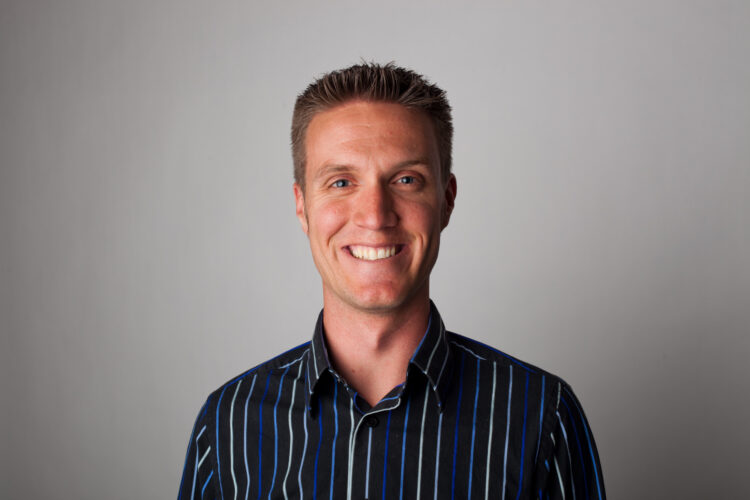
Jared Lloyd mugFor as long as I can remember, I’ve had a fascination with words.
I grew up in a home where reading was a regular activity, both individually and out loud to the entire family. Books, stories, religious works, encyclopedias, newspapers and other materials were regularly read and shared.
I had a brusque but brilliant English teacher in high school who had an amazing vocabulary, something she attributed to reading and regularly doing crossword puzzles — so I started doing more crossword puzzles as well.
I also find humor in direct interpretations of things I see, intentionally bypassing the intended message to chuckle at what the words literally say.
A sign the says “SLOW Men at Work,” for example, is meant to be read with a colon after “slow.” What it really is saying without the punctuation, though, is different. I mean, the construction workers may not be working very fast but do you really have to highlight it on the sign like that?
Words are amazing, when you take a moment to think about them.
According to Ethnologue.com, linguists estimate that there are approximately 7,170 languages currently spoken in the world today — a number that doesn’t include all of the languages and dialects that have been used in the history of human beings.
Yet I find it interesting that no one really knows how language developed. There are hypotheses that human speech patterns were present 135,000 years ago and that it likely began by imitating natural sounds, but there are still lots of unanswered questions, such as how diverse words and concepts developed.
I recently looked at how impressive some animals are, with dogs, parrots, dolphins, sea lions and other primates demonstrating the ability to understand and mimic up to 2,000 human words. That’s impressive and it appears we might be making real progress in the ability to truly communicate with other species.
But the average middle-age human knows 50,000 words, or 250 times the number learned by the most advanced members of the animal kingdom.
To be fair, many species have their own methods of complex communication — but only one (us) has emerged with the vast diversity of linguistic skills and variations. There really is no comparison.
Yet with the amazing ability we have to convey ideas, descriptions and emotions to each other also comes the reality of the negative uses of language.
We can build with words, but we can also tear down. We can share with words, but we can also shun. We can connect with words, but we can also abuse.
It’s time to hold ourselves to a higher standard.
I think we can do a lot better at being purposeful with our words and recognizing their impact.
I think it’s all too easy in this day and age to lose sight of the humanity that surrounds us. Whether it’s in a car on a freeway or on social media, there is this illusion that others aren’t just human beings doing the best they can. So what does it matter if I say rude or mean things? It’s not like they have feelings, right?
I think it is both sad and disappointing to see how often we turn to some of the basest forms of language, like profanity. The majority of the time there are much better ways to share what we were thinking and feeling than just defaulting to crude words. But all too often that’s the tone that comes through in media, politics, social media discussions, and even too often in conversations.
Can’t we do better?
I think it’s somewhat ironic that we have access at all times to the estimated 1 million words in our English language, and yet we can’t come up with better ways to converse.
What do words mean to you?
How often do you think about how you are communicating with those around you?
How important is it to you to convey respect, compassion, hope, appreciation, inspiration, even love?
My challenge to you today is to be more cognizant of the words that you use.
Pay attention. Think about what they really mean. Use the words that you say and write to show who you really are to those around you. It’s not about being perfectly eloquent as much as it is about being aware.
I think it’ll make a big difference.
Jared Lloyd is the managing editor of the Daily Herald and can be reached at jlloyd@heraldextra.com.


