
Guest opinion: Light goes out in Provo: A tribute to an unhoused Christmas angel

-

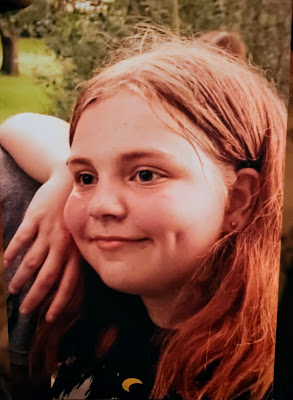
- Katherine Josephine Hauck
-

- Bonnie Shiffler-Olsen
On Dec. 11 – two weeks before Christmas – our beloved angel, Katherine Josephine Hauck, returned to her home in heaven. A light went out of the world.
Born Feb. 19, 2004, the 21-year-old girl leaves behind grief-stricken parents, Alan and Debbie Hauck, of Sioux Falls, South Dakota. She will be missed by her “street family,” Utah County social workers, and her sisters in the Community Compassion Collective – a program created by BYU students to combat homelessness.
Just eight months after she arrived, “Baby Kate” was found lifeless under a bridge in north-central Provo. Toxicology reports indicated methamphetamine in her urine, along with lethal levels of fentanyl – a federally-classified weapon of mass destruction. The young woman was known to carry Narcan in her bag; the man who gave her the drugs fled the scene. Her body showed no evidence of sexual assault, which likely means she smoked what she thought was meth, lost consciousness and drifted off.
Kate – firecracker and friend – went out soft.
The girl from out of town burst onto the warming center scene early last April, glowing like a red-headed cherub. Her smile threatened to consume the lot outside the Red Warehouse as she shivered in line. Once inside, her uncontainable energy lit the public works storage facility. Kate gave hugs and quickly made friends.
The centers closed April 30, and May to December — with no place to go — she tried to find her place in our community. She assumed the role of Baby Kate; a personality tough enough to survive Provo’s streets. On occasion, she visited my house to catch a meal, shower, or wash laundry. I tried to help, but the problem with Katherine J. Hauck was that she told contradictory stories. No one knew who she was or where she came from — so no one knew what to do. One thing was certain, the young woman was vulnerable and quickly ensnared by addiction.
As Kate’s use increased, her youthful sparkled and hygiene declined. A week before she died, she stood in the lobby of Food & Care Coalition with dirt-caked fingernails, and lice-infested hair. Poor nutrition had bloated her body, and her back sagged under the weight of her backpack so that maybe she was 35 after all.
“Rehab, baby girl!” I said. “Rehab is a good thing.”
“I know, Mama,” she said. “I’m a big girl. I can take care of myself.”
Only, she couldn’t.
One week following their daughter’s overdose, Alan and Debbie visited Utah for the first time. They went to the places Kate had been and chose to wait out her cremation at my home. Her father was a red beard, etched with grief. He remained silent, staring in bewilderment as Debbie and I chatted. Every so often, Alan wiped tears with hands weathered by a lifetime of animal management. Sometimes, he simply excused himself from the room. I hope at some point in the coming year he’ll throw back his head and scream for the answers he deserves.
All I had to offer were jars of the hawthorn and rosehip jelly that Kate and I made last fall. In exchange, Debbie filled in the details.
She and Alan adopted their daughter from Debbie’s sister when Kate was 11 weeks old. They raised her on a sprawling farm near Sioux Falls, where she became a skilled archer. She enjoyed playing golf. She loved cats. From a stack of photos, preteen Kate beamed behind ribbons she won at the state fair. She was the cheerful redhead, front and center in family reunion group shots. She modeled Halloween costumes – Daenerys from Game of Thrones, Clary Fray from Shadowhunters, and Hunger Games heroine, Katniss Everdeen.
“Kate loved the idea of being an actress,” said her mom.
Near the bottom of the pile, a breathtaking young woman in a lavender dress stands beside a handsome prom date. Her thick, auburn locks are swept up with an elegant rhinestone clip – nothing like the mess of tangles and filthy sweatshirts I was used to. Debbie hands me Kate’s high school transcript. Under her mother’s careful tutelage, the homeless girl excelled in every interest, maintaining an honor role GPA in Christian homeschool. Baby Kate balks the stereotype of homeless youth.
If you ask me, the problem was trauma — things out of control.
As a child, Kate was attached to her grandmothers, but by age 12 she’d lost them both. Unable to contain her grief, she acted out in alarming ways. Her parents took her to specialists who diagnosed her with severe ADHD. They were advised to place their daughter in in-patient behavioral health facility. Alan and Debbie regret following that recommendation.
The two-month separation was hard on them all.
Kate improved enough to return home, but her willful nature clashed with her mother’s strict expectations. At Debbie’s insistence, she graduated before she moved out. Kate turned 18, met up with homeless teens, and headed to Wisconsin. She returned to South Dakota a year and a half later, clearly addicted to alcohol. Her parents allowed her to stay, but another year passed and she left again — this time for California and then Utah.
Her mom said prior to reaching Utah County, Kate never used meth. She stayed in contact by phone, calling Alan regularly. Baby Kate was a daddy’s girl, but when she started asking for financial help, he and Debbie struggled to lend support without enabling her dependency.
They didn’t know what to do.
One week before Christmas, Alan and Debbie returned to South Dakota with their daughter’s ashes. As our Latter-Day Saint community is left to contend with this unimaginable tragedy, I pray the Hauck’s anchor faith and hold fast to Jesus Christ’s saving grace. They are good Christian people — I believe they will see their angel again.
“[Kate’s parents] did an awesome job with her, and they should be proud,” said Kate’s peer mentor and friend, Kimber Behunin. “It goes to show how one small choice can change everything.”
Fred Sheehan, peer support specialist with Wasatch Mental Health WATCH program wishes others would remember that not all homeless are criminals — not all homeless are addicts.
“Some are very young and new to the street — just trying to fit in, be loved, and love others,” he said. Vulnerable youth sometimes omit the truth, he said. They lie about their story, afraid of what others might think.
Baby Kate had resources available to her.
“At any time she could have gone to treatment and been housed,” Sheehan said. “Where did we fail her? How did we fail her? Is this a resource issue? Is this a relationship issue?”
Davis Paxton and Kate were close. He was the student facilitator for the BYU pilot program designed to promote relationships between housed and unhoused women. Kate was part of that study.
“She had a light,” he said. “She was bright, and funny, and outgoing. I could see that she was good to the core. I was trying to support and help because she was my friend — a genuine friend. Regardless of her choices, it was a net-positive relationship. Kate was a great person — both sides.”
Katherine J Hauck, you are loved for exactly who you are. Sleep, little one. Sleep in heavenly peace.
Bonnie Shiffler-Olsen is an American poet, essayist and advocate for the unhoused. She spearheads the Community Compassion Cooperative, a volunteer organization whose goal is to relieve the suffering of the area’s unhoused and promote recovery.


