Guest opinion: What if this were the last time?
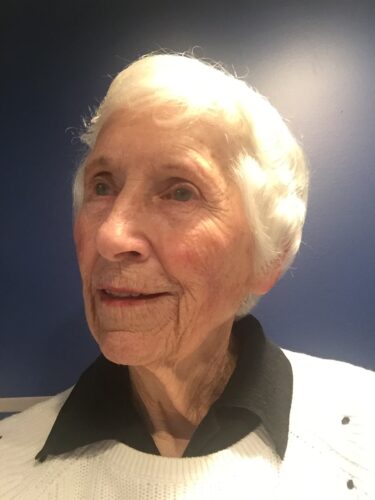
Photo supplied
Patsy NealThe deaths and injuries caused by the fires in California and by the airplane crashes in Pennsylvania and D.C. were so tragic. Unexpected deaths are extremely hard to cope with, but separation of any kind is hurtful. Broken marriages, religious differences, disagreements between parents and children, and even conflicts over pets and credit card use can create divisions that are hard to repair.
Politics has damaged many relationships as we are constantly bombarded with heated discussion about opinions and beliefs — often separating us from relatives and friends. Permanent separation from loved ones after arguments and contentious discussions can be especially sorrowful as individuals regret their actions and angry words.
It is often regrets that make the sorrow and grief extremely difficult to get through. Mourning the loss of others is usually bearable when separation catches the relationship in a good place. Regretting something we have done or left undone is another story.
Nothing hurts more than looking back and wishing things had been different and that certain things had been said — or not said. These regrets do not heal well and often come back to scar the mind and the heart — bringing with it a sorrow deeper than the sorrow of death.
Regret and sorrow can entrench itself in many ways, becoming embedded by our ability to hurt others and the choices we make along the way to do so. Our caring core can be broken by distraction or the unwillingness to acknowledge how fragile and fleeting life can be — especially when separation catches us unexpectedly and our last contact was not meaningful or loving.
I live in a retirement community, where illness and death is a constant reminder that life is not permanent. Individuals you see here and there can be gone before you realize anything is wrong. Even though time seems to be abundant, we often find that we are in a hurry to do something — whether important or not. Juggling time is even more difficult for those who work, have families or are engaged in endless errands, volunteer work and other busy activities of their lives.
In the rush, we often neglect the chance to make meaningful contact with others — not only with people — but with other forms of life around us.
Research has shown that individuals who have a connection with nature usually feel that life is more worthwhile and are happier than those who do not bond with nature.
When we focus on human relationships, we often forget that it is nature that provides the essentials for our survival, such as water, food, air and the many pleasures of its beauty. And we forget it is the intricate balance between animals, insects, plants and other parts of nature that allows the ecosystem on our earth to function — and for us to live on our planet. As Fairfield Osborn wrote in his book, “Plundered Planet“: “We have forgotten the earth, forgotten it in the sense that we fail to regard it as a source of our life.”
In forest fires, such as that in California, the loss of beautiful surroundings natural habitats, pets and wildlife compound the sorrow.
Whether dealing with humans or nature — damaging one part, damages the whole. “The first law of ecology is that everything is related to everything else,” Barry Commonder, environmentalist, said.
So what do we do? It would benefit us all to remember the principle expressed by Albert Schweitzer: “If I am to expect others to respect my life, then I must respect the other life I see … not only other human life, but all kinds of life.”
Most of all, we should remember there is no substitute for kindness in our contact with other people and other forms of life.
It is best to be gentle with all life — we never know when it could be the last time for us.
Patsy Neal received a master’s degree from the University of Utah and has had several books, articles and op-eds published.