
Guest opinion: Pete Hegseth’s High-T Department of War
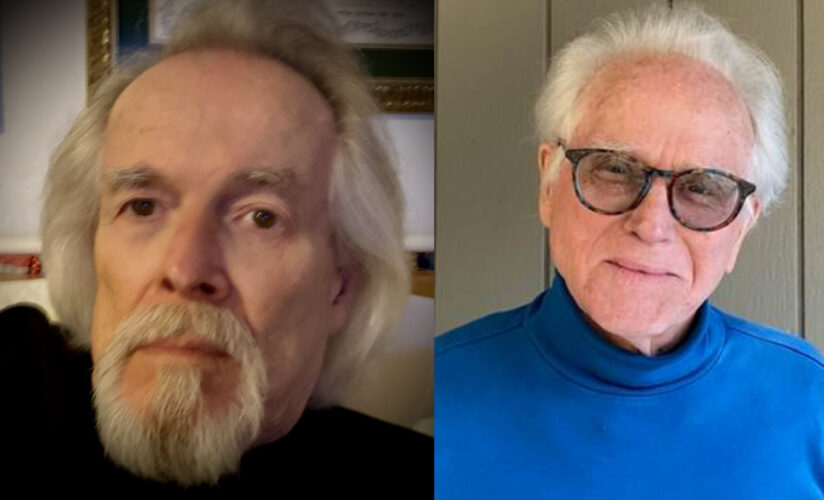
Photos supplied
Clifton Jolley and Robert ReesDefense Secretary Pete Hegseth views warfare through the lens of a cartoonish Macho Man, claiming that military members “are not defenders anymore”; they are “warriors, trained to kill the enemy and break their will.” Directing the war in Iran, he ordered, “No quarter, no mercy for our enemies.”
Hegseth’s recent announcement of T-testing is the clearest expression yet of the Trump administration’s fascination with a comical version of machismo. Under the new policy, service members age 30 and older will be screened annually for testosterone deficiency, with testosterone replacement therapy offered those diagnosed with clinically low levels. He argues that maintaining testosterone levels is essential to military readiness and “lethality.” Critics wonder whether Hegseth misunderstands the difference between patriotism and roid rage.
Hegseth’s policy reflects an ideology that equates military excellence with an antique stereotype of toxic masculinity that prizes swagger over strategy and aggression over the dedication and discernment that make for an effective fighting force.
Since Trump’s return to office, he and Hegseth have repeatedly described the military as an institution defined by domination. Hegseth has championed a “warrior ethos” while criticizing diversity initiatives and questioning the expanding roles of women in combat. Their rhetoric suggests that America’s military is challenged less by evolving threats or technological competition than by a decline in testosterone.
That diagnosis misunderstands military history, modern warfare, and medical science.
In addition to superior armaments and force of will, America’s greatest military successes have relied on intelligence, logistics, planning, innovation, diplomacy, and leadership. Allied victory in World War II required codebreakers as much as infantry, scientists as much as soldiers, and coalition-building as much as battlefield courage. Today’s challenges–from cyberwarfare and artificial intelligence to space operations and electronic warfare–make intellectual agility even more indispensable. Success increasingly depends on commanders and operators capable of integrating vast amounts of information while under extraordinary pressure, intellectually as well as physically.
Yes, physical fitness remains essential. But reducing readiness to hormone levels sends a curious message: that the path to a stronger military runs through the testes rather than the training, education, leadership, and strategic thinking of a modern military. Meanwhile, medical experts caution that widespread testosterone screening and replacement therapy leads to overdiagnosis and unnecessary treatment, with potential risks including infertility, cardiovascular complications, hormonal disruption…and shrinking of the testes. (Since Hegseth presents the appearance of one obsessed with T, it may be kind as well as strategic to worry whether his personal T-regimen has created any of the unintended consequences.)
Another motivation for the new policy may be continued false questioning of the value of women in uniform. Women naturally produce testosterone at much lower levels than men, and the Pentagon has offered no details about how the new screening standards are being applied to female service members. Several senators have requested clarification specifically about application to women and the medical basis for universal screening. Whatever the crazy outcome, Hegseth has been clear about his attitude regarding the role of women in combat: “It hasn’t made us more effective. It hasn’t made us more lethal. I’m straight up just saying we should not have women in combat roles.”
Given Hegseth’s operational failures in Iran, one may be tempted straight up to say the same about him. To focus apprehension on gender and testosterone rather than on our miscreant Secretary of War’s failures to anticipate outcomes is a further retreat from the progress we have made in valuing character, contribution, and performance above color, class, or gender.
And it introduces an additional irony we cannot expect the simplistic thinking of Hegseth and Trump to address. What of “gender-affirming care” that may include testosterone replacement therapy? When medically indicated, such treatment helps restore or reinforce male physiological characteristics. Never mind the disparities in populations and prejudices: Hormone therapy is embraced — even celebrated — when it reinforces the ridiculous stereotype of the Macho Man, while other forms of medically supervised testosterone treatment are condemned.
Of all the ironies in this nonsense peddling, none is more absurdly telling than Trump’s enthusiasm for The Village People and their hits such as Macho Man, Y.M.C.A., and Hot Cop. They even performed their camp takedowns of hyper-manliness at Trump’s January 19, 2025, victory rally, where he joined them onstage and performed his now-familiar bump-and-grind victory shimmy and fisting. It was a perfect demonstration of a lack of rhythm underscored by a surfeit of cluelessness: our homophobic president dancing with the hot cop and Leatherman biker.
The United States deserves a military that is unreservedly strong. However, a truly ready military is not simply “high-T.” And never mind the risk of how Hegseth and Trump may turn the data gathered from testosterone diagnoses into a new enemies list based upon T-discrimination.
Pity the poor warrior whose brain is bigger than her or his T-count.
Clifton Jolley is a writer, producer, and educator living in Ogden, Utah. Robert Rees has taught Humanities at UCLA and as a Fulbright Professor in the Baltics. He is President of FastForward for the Planet, a Utah non-profit focused on saving Great Salt Lake.
Opinion
MOORE: Why are Americans so pessimistic?
In nearly every way, Americans have more material wealth, better health, better housing and more of just about ...
Guest opinion: Open letter to the Utah Debate Commission
The mission statement of the Utah Debate Commission begins with “The Mission of the non-profit Commission is to ...
