
Guest opinion: Vengeance is mine, saith Trump
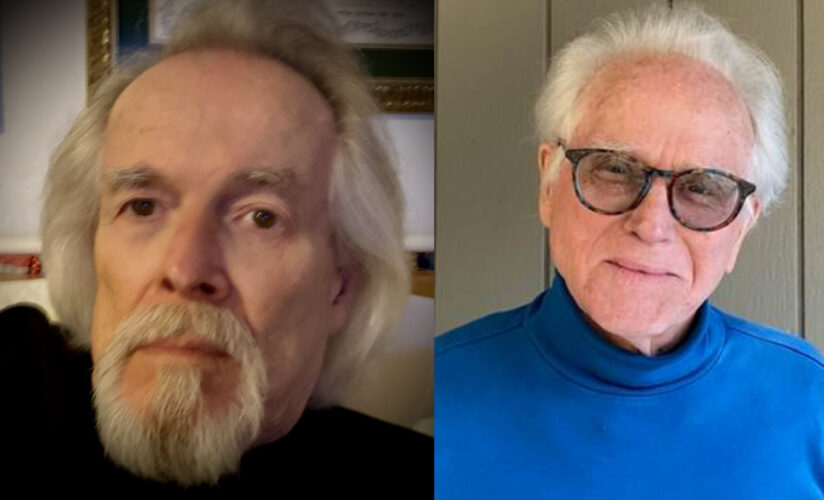
Photos supplied
Clifton Jolley and Robert ReesIn March 2023, standing before a crowd in Waco, Texas, Donald Trump issued a pledge that would define his return to the political stage: “I am your warrior, I am your justice. And for those who have been wronged and betrayed: I am your retribution.”
What sounded to critics like campaign hyperbole has degenerated into an operational philosophy of misgovernance. From mass purge initiatives within the federal civil service to retaliatory investigations and targeted grand jury subpoenas against dissenting local officials, the machinery of state power is systematically being redirected toward a single, personal end: settling scores.
To watch a nation’s legal architecture be transformed into an instrument of personal grievance is to witness a profound degradation of constitutional governance. Yet, the crisis we face is not merely institutional or constitutional. It is deeply moral. For a political movement that frequently drapes itself in the language of Christian faith and traditional values, the embrace of a platform built on personal vengeance and retribution represents a stark, irreconcilable betrayal of the values it purports to honor.
Throughout both the Old and New Testaments, human conflict is addressed with a clear, uncompromising boundary regarding the settling of accounts. In the Book of Romans, the Apostle Paul echoes an ancient commandment found in Deuteronomy: “Do not take revenge, my dear friends, but leave room for God’s wrath, for it is written: ‘It is mine to avenge; I will repay,’ says the Lord” (Romans 12:14).
The scriptural insistence that “vengeance is mine” is not an arbitrary restriction; it is a profound diagnostic insight into human nature. Scripture locates vengeance strictly within the divine prerogative, because human beings are fundamentally incapable of wielding it justly.
When a mortal leader stands before an audience and claims, “I am your retribution,” he is doing something far more consequential than engaging in partisan warfare. His words are an attempt to usurp a role that theology reserves exclusively for deity. They are a statement of political hubris that collapses the vital distinction between secular authority and divine judgment.
The danger of this theological overreach is made manifest in the real-world erosion of our democratic norms. When vengeance becomes the driving directive of an administration, the rule of law is the first casualty.
- Politicization of justice: Traditional guardrails designed to keep law enforcement independent are dismantled. The Department of Justice ceases to be an arbiter of objective law and morphs into a tool for vindictive prosecution against political adversaries.
- The culture of fear: Career public servants, intelligence officials, and independent inspectors general are purged for failing tests of absolute personal loyalty. This creates a chilled environment where state power is exercised to reward cronies and punish critics.
- Erosion of public trust: When citizens see the apparatus of state power used to settle personal scores, faith in the neutrality of the system evaporates. Justice is no longer viewed as a blind, fair ideal, but as a weapon wielded by whoever happens to hold the keys to the Oval Office.
History provides a monotonous, bloody ledger of what happens when nations tolerate rulers who govern by grievance or assumed divine permission. Dictatorships and autocracies always begin with a promise to punish the “enemies of the people.” According to Chief U.S. District Judge Patrick Schiltz, “Initiating a criminal investigation in order to harass political opponents or to coerce them into taking official action… is a blatantly unlawful and unethical use of the grand jury process.”
A healthy republic cannot survive a permanent cycle of political payback. If every transition of power is viewed simply as an opportunity to turn the machinery of federal law enforcement against perceived enemies or political opponents, the peaceful transfer of power will eventually cease to exist.
To avert this trajectory, the American electorate–particularly those who anchor their worldview in responsible citizenship–must rediscover the courage to reject the politics of grievance and retribution. True strength does not look like a state apparatus mobilized to crush a president’s critics. It looks like the quiet, robust preservation of institutional guardrails that protect the dissenter, the political opponent, and the institutional skeptic alike.
We must re-establish the boundary that separates the finite, flawed justice of humanity from the infinite justice of God. True leadership does not promise to carry out our vendettas; it reminds us of our shared obligations to the Constitution and to one another. It is time to leave retribution to the heavens and return the focus of the state to the urgent, earthly work of a just and equitable governance.
Clifton Jolley is an essayist living in Ogden who has published in the New York Times and other national and Utah publications. Robert Rees is an independent scholar and humanitarian and President of FastForward for the Planet, a Utah non-profit focused on saving Great Salt Lake.


