
Guest opinion: Two visions of America
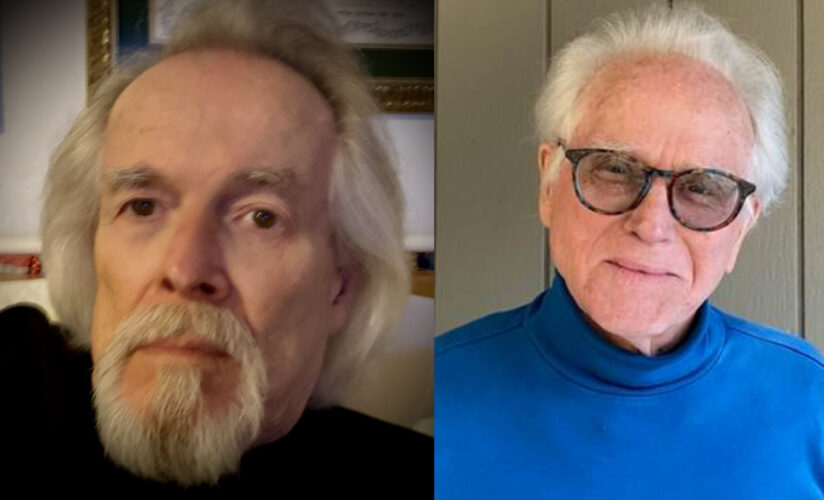
Photos supplied
Clifton Jolley and Robert Rees“Oh say, can you see….”?
As the United States stands on the precipice of our historic 250th anniversary, two starkly divergent visions of the American soul recently were put on display.
One bullied its way onto TV with the commercialized chaos of a UFC carnival sideshow on the White House lawn, the tone of which was epitomized by a racist, transphobic slur against Michele Obama.
The other, in South Chicago, was the eloquent opening of the Obama Presidential Center.
These contrasting events provide an unsettling study in opposing values and philosophies, requiring us to confront a fundamental question about our national character: Which path truly points toward a better, more hopeful and enduring America?
The scene in Washington on Sunday, June 14, was a surreal departure from historical decorum. The “People’s House,” long considered a symbol of democratic governance and constitutional sobriety, was transformed into an arena for bloodsport and commercial exploitation. Where presidents have walked with foreign dignitaries to deliberate on world peace, corporate sponsors erected a violent octagon. The circus was marked by unseriousness, an event that substituted vulgarity for gravitas, treating the seat of executive power not as a monument to public service, but as a backdrop for reality television.
For centuries, the physical environment of Washington has been curated to inspire awe, respect, and a sense of shared institutional permanence. By reducing this space to a venue for brutality, the current administration broadcast a philosophy of governance rooted in bread-and-circus populism. It suggested that power is most comfortable when it is loud and stripped of intellectual and moral weight. The message sent to the world–and to the American public–was that the highest office in the land no longer requires the burden of dignity, replacing the pursuit of the common good with the cheap thrill of the coliseum.
How striking, then, to look westward toward the South Side of Chicago the following Thursday. The opening of the Obama Presidential Center stands as an antithesis to the Trumpian debacle. In a neighborhood rich with history and diversity but long neglected by institutional investment, a structure of steel, stone, and glass has risen to celebrate civic engagement, education, and community empowerment. The atmosphere was defined not by the cackling of an engineered crowd, but by the resonance of eloquence, seriousness, and deep-seated hope.
The speeches delivered at the opening of the Center called upon our highest aspirations and ideals. They spoke of the patient, agonizing, yet necessary work of building a more perfect union. Where the White House event celebrated a buffoonery of blood, the Chicago opening celebrated collective action, historical progress, and the enduring power of ideas. The dignity of the setting was matched by the purpose of the institution itself: not to serve as a static monument to one man, but to function as a living cultural and educational center as well as a laboratory for future leaders, organizers, and citizens who believe that democracy is a continuous act of creation.
As we celebrate our republic’s milestone anniversary, this juxtaposition cuts to the very heart of the American experiment. We are a nation built on a delicate balance between populism and institutional integrity. When our leadership leans entirely into the crude and the transactional, as it did at Trump’s clown show, it weakens the social fabric that holds a diverse republic together. Violence polarizes; it divides the world into predators and prey, winners and losers. Conversely, the seriousness and inclusivity modeled in Chicago remind us that our true strength lies in our ability to lift one another, to listen across differences and preferences, and to invest in the civic and moral capital of the next generation.
As we look forward to the near and far future of our republic, our choice is clear. We can allow our civic spaces and national identity to be defined by the loudest, most volatile elements of our culture, or we can choose the path of dignity and systemic hope. The Obama Center reminds us that America at its best is a project of forward-looking optimism anchored in the belief that progress is achieved through reason, empathy, and enduring institutional strength.
Our future is not the spectacle exhibited on the White House lawn, but the illumination of a presidential library and cultural center that brightens our path toward a better, more unified, and genuinely hopeful America.
Clifton Jolley is an essayist living in Ogden who has published in the New York Times and other national and Utah publications. Robert Rees is an independent scholar and humanitarian and President of FastForward for the Planet, a Utah non-profit focused on saving Great Salt Lake.
Opinion

STOSSEL: Always watching
Guest opinion: We Keep Reporting the Deaths. We Keep Missing the Story.
This past weekend, two families got the call no family should ever get. On Saturday, Jennifer Eckhart, a former Fox ...
Guest opinion: No physician would “prescribe” the Forest Service’s intentional burns
Air pollution kills people; especially severe air pollution, even short term. The EPA has a 24-hour safety limit ...