Guest opinion: How holy war rhetoric risks repeating the darkest lessons of the Crusades
Photos supplied
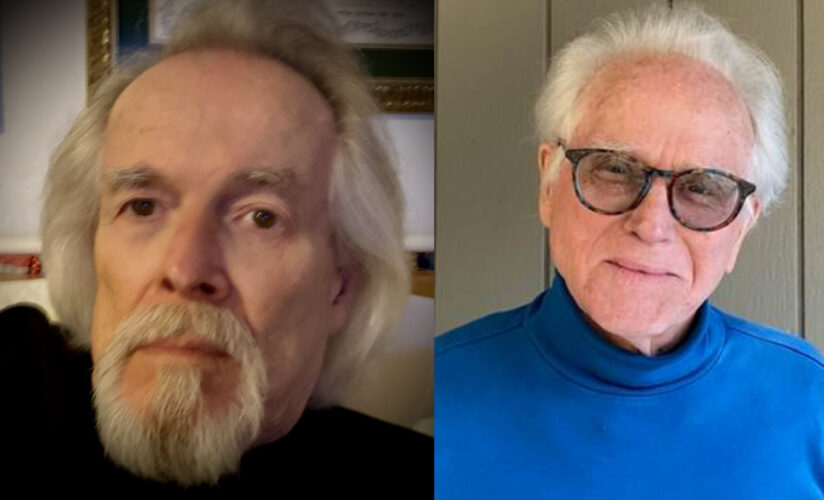
Clifton Jolley and Robert ReesReports that U.S. troops have been told the war with Iran is “all part of God’s divine plan” have ignited a debate that reaches far beyond military protocol. According to multiple complaints filed with the Military Religious Freedom Foundation, some commanders have invoked explicitly Christian-apocalyptic language, describing President Donald Trump as “anointed by Jesus” and framing military action as a fulfillment of biblical prophecy.
An example of such rhetoric is seen in the comments of John Hagee, head of Christians United for Israel, who posted a video on his YouTube channel titled “God’s Coming Operation ‘Epic Fury.'” In it, he thanked God for President Donald Trump, “whose wisdom and courage have crushed the enemies of Zion.” He added, “Today we rejoice in the prophetic scriptures of Ezekiel, revealing God’s operation fury for the enemies of Israel.”
The allegations include service members across dozens of installations being told that the conflict is tied to the Book of Revelation, that the attacks on Iran are divinely ordained, and that the war is part of an unfolding holy struggle. Mikey Weinstein, founder of the Military Religious Freedom Foundation, warns that such rhetoric represents a dangerous fusion of religious extremism and military power — one that history has shown can lead to catastrophic consequences.
The language being reported is not subtle. It echoes the medieval Crusades, when European politics and religion were framed to justify military campaigns in the Middle East as sacred missions sanctioned by God. Those wars, waged between the 11th and 13th centuries, were fueled by a potent mix of religious fervor, political ambition, and apocalyptic expectations. The result was centuries of bloodshed, mass displacement, and cultural devastation.
The parallels are unsettling. Then as now, leaders invoked divine authority to justify military action. Then as now, soldiers were told they were fighting not merely for territory or strategy, but to fulfill God’s will. And then as now, such framing risks transforming geopolitical conflict into an existential, widening and unending struggle between the forces of claimed good and accused evil.
Experts warn that casting war as a holy mandate can escalate violence by removing the moral and strategic guardrails that normally constrain military action. If a conflict is framed as divinely ordained, compromise becomes betrayal, diplomacy becomes weakness, and restraint becomes sacrilege. Any action, no matter how violent or destructive, is justified as being heaven-sanctified.
The complaints filed by U.S. troops describe commanders citing the Book of Revelation, invoking Armageddon, and portraying the president as a chosen instrument of divine will, a Christian crusader king leading righteous warriors into war. Such rhetoric and imagery undermine the constitutional principle of civilian, secular control of the military. It also risks alienating allies, inflaming adversaries, and deepening sectarian divides.
Weinstein argues that Secretary of Defense Pete Hegseth has fostered an environment in which a narrow identity — “straight, Christian, nationalist and male” — is treated as the ideal model of the American service member. The perception is corrosive. A military that appears to privilege one faith risks losing its legitimacy as well as the trust of its own diverse ranks and civilian supporters.
The Crusades offer a sobering warning about what happens when religious absolutism, Christian symbolism, and divine rhetoric merge with military objectives and power: violence becomes self-justifying and conflicts expand beyond their original scope. The United States, a pluralistic nation with global influence and unmatched military capabilities, cannot afford to repeat these patterns. To tell troops that they are fighting a holy war is to violate not only constitutional principles but the trust and dignity of those who serve.
Moreover, such rhetoric risks transforming a complex geopolitical conflict — one increasingly fraught with danger — into a civilizational one. Iran’s government has its own history of invoking religious narratives to justify military action. When both sides frame war as sacred, escalation becomes more intense, increasingly inevitable, and likely uncontrollable. Thus, the proverbial War in Heaven spills into an all too real one on earth.
Commanders invoking divine prophecy to justify military action represents a profound breach of duty. The stakes are too high for ambiguity. As Weinstein warns, “whenever you attach an extremist aspect of any religious faith to that machinery responsible for war … we end up with one thing: oceans and oceans of blood.”
Clifton Jolley is a writer, producer, and educator living in Ogden, Utah. Robert Rees has taught Humanities at UCLA, UC Santa Cruz, and as a Fulbright Professor in the Baltics. He is President of FastForward for the Planet, a Utah non-profit focused on saving Great Salt Lake.