
Guest opinion: Learning is a full-contact sport
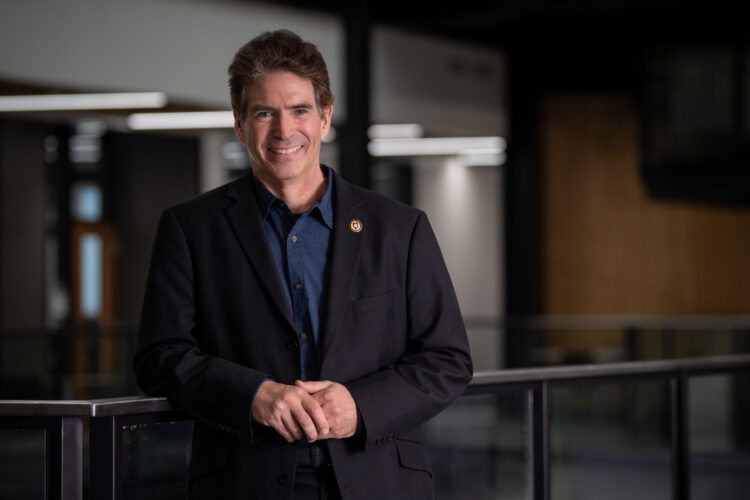
Photo supplied
Brian RagueAs a technical corporate consultant and trainer for several years, I observed the unique classroom dynamic of working professionals. Most were seeking upskilling opportunities for promotions, higher pay and, in some cases, they were simply drawn to learning a new technology. I then moved to higher education classroom instruction, where student motivations were varied and different from those already immersed in the demands of the workplace.
During both teaching assignments, there was one key common dimension of the classroom learning experience that always puzzled me: 20 to 40 (hopefully inspired) students would make the trek to the classroom, then sit quietly, facing forward with three to four student peers about an arm’s length away for the duration of class.
I instructed prior to the days of online course options and was a faculty member at Weber State University when it began its transition to online instruction. The wide variety of current classroom modalities available is still central to the point that learning is fundamentally team- and community-based. We are certainly able to gather and absorb concepts and facts on our own through individual study or AI tools, but learning happens when we understand how our knowledge affects the wider world. That process begins with collaboration in the classroom.
When I was a first grader, we were often required to take turns reading aloud to the class. The teacher would select an excerpt from a novel or a textbook and then call on one of us to recite a paragraph or two. None of us enjoyed this, and it ranked a close second in dreaded assignments to the malign oral book report. One particular day, clear as yesterday in my memory, Mrs. Abrams settled on some story about fish and chose me to read a section that had an inordinate number of occurrences of the word “salmon.” My first-grade brain could not leap over the silent “l” in that word, so my pronunciations were consistently wrong.
Aside from the fact that I grew up in a New England town where references to any type of fish are expected to be as impeccable as “cod,” the episode elicited giggles and cynical chuckles from my classmates. Was I being bullied? No. Was I being teased or mocked? Yes, possibly, but if you say “salmon” right now with the full “l” sound, it does rate as somewhat funny. My adrenaline and anxiety-soaked mind raced, but I was also simultaneously forming useful discoveries and neural connections because of this important social interaction.
Mrs. Abrams let it all play out, keeping the room controlled without calling out any students for their reactions. At the time, I thought she made me suffer, but now I recognize the learning that was occurring. We were all experiencing the same thing as a class community, and I know I learned two things. First, I learned how to correctly pronounce “salmon.” Second, I learned who my supporters and detractors were in the classroom. This second lesson helped me formulate a sense of which of my peers were prone to deride a classmate during an embarrassing moment or, at a minimum, just liked to laugh. The bottom line is I learned a lot from that brief social interaction, much more than I would have from a hypothetical simulation or response from a conciliatory AI chatbot.
We must actively think to learn, but beyond applying our minds to solving a problem, we need to periodically step outside ourselves to recognize the various traps in our thinking that might impede or derail the problem-solving process. Psychologists call this metacognitive awareness, and the involvement of our fellow human thinkers dramatically assists in honing this essential skill.
One of the new traps introduced by AI tools is the progression trap, which is the deception that we are much further along in our learning and comprehension than we actually are. In the race to be correct and efficient in our frenzied, time-starved world, we avoid the friction and struggle required of our brains for learning to take place.
We need a classroom environment in which we can make errors, and we can confront and defend our choices. Many authors and observers of human interaction have rightly claimed that “life is messy,” that disarray is inevitable and unexpected. Our classrooms, from K-12 and beyond, should reflect this real-world experience, and not be sanitized and siloed by artificial interventions or intrusions. True learning begins through and within our daily human interactions with our family, friends, cohorts and colleagues. Learning will end otherwise.
Brian Rague is the dean of the College of Engineering, Applied Science & Technology at Weber State University. Rapid technological change motivates him to continually expand learning opportunities and career pathways for students. This commentary is provided through a partnership with Weber State. The views expressed by the author do not necessarily represent the institutional values or positions of the university.
Opinion
MCCARTHY: The immigration politics of a felon’s pardon
How far will New York Gov. Kathy Hochul go to keep immigrant criminals in this country? So far, she'll even ...
Guest opinion: Learning is a full-contact sport
GARVEY: What do we know after 9/11? Little, if anything
Like most Americans who were adults on Sept. 11, 2001, my life is divided into "before" and "after" 9/11. I ...