Tips to keep deer out of your garden this summer
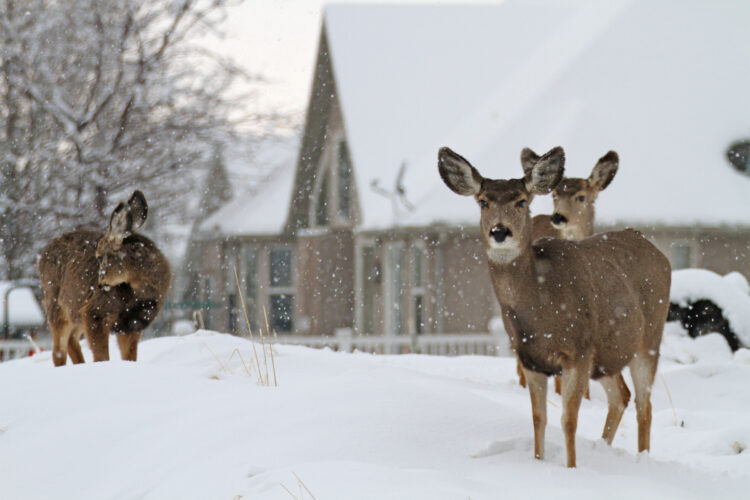
Deer in Springville after snowfall forced them out of the mountains.
SALT LAKE CITY — As the summer season approaches, residents of Utah may find wildlife, including deer, venturing into neighborhoods in search of food and water despite the abundant snowfall experienced during the past winter. Whether you’re eager to protect your garden vegetables and flowers from deer or looking for ways to assist wildlife this summer, here are some valuable insights to keep in mind.
For those aiming to safeguard their plants and minimize property damage caused by wildlife visitors, consider the following tips:
1. Constructing an 8-foot fence around your yard or garden is the most effective method and often the only reliable way to deter deer.
2. Installing motion-activated sprinklers can also prove fairly effective in keeping deer at bay.
3. Planting unpalatable vegetation along the perimeter of your garden can act as a deterrent, discouraging deer from consuming additional plants.
Residents residing in areas frequently visited by big game animals can visit the Utah Division of Wildlife Resources (DWR) website for deer-friendly landscaping ideas.
Avoid feeding wildlife
While some individuals may wish to prevent deer and other wildlife from grazing on their lawns or gardens, others may seek ways to assist hungry and thirsty animals during the summer. Although providing feed or water might seem like a compassionate gesture, it can lead to unsafe situations for both animals and humans. While feeding wildlife is generally not illegal, except in certain cities with no-feeding ordinances, it is highly discouraged for the following reasons:
1. Public safety concerns.
2. The potential spread of chronic wasting disease among deer, elk, and moose.
3. The risk of causing harm to wildlife by introducing foods that are not part of their natural diets.
“The best way you can help wildlife is by letting animals stay wild,” emphasized Dax Mangus, Big Game Coordinator at the Utah Division of Wildlife Resources. He advised refraining from approaching or attempting to feed wild animals. Emergency feeding of deer in parts of northern Utah during winter was implemented due to specific circumstances following division policies, involving trained professionals and specialized feed. Often, good intentions can inadvertently cause more harm than good to wildlife, and habituating deer, moose, or bears to human presence can be dangerous.
When to report wildlife sightings
It is essential to report certain wildlife sightings to the nearest DWR office for appropriate action. Here are a few instances when reporting is necessary:
1. Sickly, injured, or aggressively behaving deer or elk.
2. Moose found in lower-elevation areas or within city limits or heavily-populated areas, requiring relocation by the DWR.
3. Cougars displaying aggressive or threatening behavior or if they have killed something in a neighborhood or yard.
4. Bears in residential areas within the foothills or canyons, especially if they are being aggressive, rummaging through trash or fruit trees, or causing damage. Bears found in lower-elevation areas within city limits or heavily-populated areas should also be reported.
For more information on when to contact the DWR regarding common wildlife scenarios, visit their website.
By following these tips, residents can better protect their gardens from deer while ensuring the well-being and safety of both wildlife and themselves throughout the summer season.