Wildlife sightings on the rise in Utah: Here’s when to alert authorities
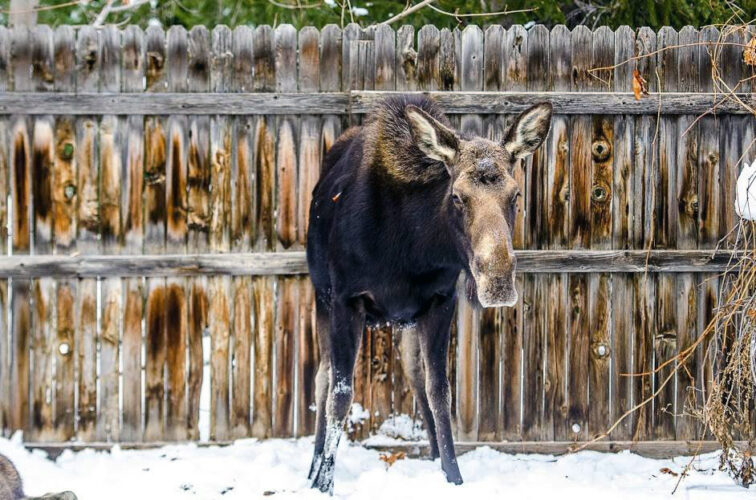
In the winter, moose can end up anywhere, including your back yard. DWR biologists shot this moose with a tranquilizer dart. It’ll be asleep soon.
As Utah’s population continues to grow, so too do encounters between residents and wildlife in urban areas. The state’s expanding communities, coupled with winter migrations, have led to increased sightings of animals like deer, moose, and cougars in local neighborhoods. But not every sighting requires a call to the Utah Division of Wildlife Resources.
Wildlife experts note that these encounters become more frequent during winter months, when snow forces deer, moose, and other large animals down from the mountains in search of food. Cougars, which primarily prey on deer, often follow them into lower elevations.
However, DWR Big Game Coordinator Dax Mangus emphasizes that this isn’t necessarily a sign of animals becoming more common in urban areas. “What we’re seeing is partly due to increased development in foothill and canyon areas,” he explained. “It’s also a result of more security cameras and doorbell systems that capture wildlife sightings that previously went unnoticed.”
When should you report a wildlife encounter?
While spotting wildlife can be exciting, Mangus advises residents to keep a safe distance to protect both themselves and the animals. “Wild animals may feel threatened if approached, which can result in aggressive behavior,” he said. “This not only endangers people but also stresses the animals, depleting their energy reserves needed for survival during the harsh winter months.”
Here’s a quick guide on when to report wildlife sightings to the DWR:
Cougars: Report if a cougar has killed an animal in your yard, is showing aggression, or repeatedly appears on your security cameras. However, a one-time sighting, especially in foothill areas, doesn’t typically require a report.
Bears: Black bears should be reported if they wander into urban areas or exhibit aggressive behavior, especially if they’re rummaging through trash or damaging property. Bears usually hibernate from November to March, so sightings are less common in winter.
Moose: Moose are frequently seen in foothills, but if they enter densely populated areas, DWR should be notified so the animals can be relocated. These large animals can become aggressive, particularly around dogs.
Deer: Only report if a deer is acting aggressively, especially during breeding season in November. Dead deer found on roads or in neighborhoods can be reported to the DWR for removal.
Bobcats & Birds of Prey: Bobcats rarely cause issues but should be reported if they attack pets or livestock. Birds of prey like hawks and eagles seen by the roadside often just need time to recover after eating roadkill. Report them only if they are injured or in danger of being hit by a vehicle.
Turkeys: While generally harmless, turkeys can become nuisances, especially when fed by residents. Report instances where they are causing property damage, so the DWR can relocate them.
Avoid feeding wildlife: It’s not just for their safety
Feeding wildlife, though not illegal in most cities, can have serious consequences. Mangus warns that providing food can attract animals to residential areas, increasing the risk of vehicle collisions and potentially drawing predators like cougars. “Wild animals may return to areas where they were fed, leading to more conflicts with humans,” he added.
Feeding deer, elk, or moose can also spread diseases like chronic wasting disease and disrupt their natural diets, especially during winter months when their digestive systems are adapted to specific foods.
Keeping the community safe
If you are ever injured by a wild animal, seek immediate medical attention and report the incident to the DWR. For non-emergency wildlife sightings, the DWR encourages residents to visit the Wild Aware Utah website for safety tips and more information on preventing conflicts.
With wildlife becoming more visible in urban settings, the DWR remains committed to helping residents coexist safely with Utah’s diverse animal population. For guidance on specific situations or to report an encounter, visit the DWR website or call your nearest DWR office.
For additional resources on wildlife safety, visit the Wild Aware Utah website.
News
Gunnison Valley Hospital expands governing board to include more community representation
GUNNISON — Gunnison Valley Hospital is expanding its Governing Board to give more communities in the hospital's ...
Manti-La Sal National Forest lifts Stage 1 fire restrictions
Manti-La Sal National Forest lifts Stage 1 fire restrictions PRICE — Visitors to the Manti-La Sal ...