Apply beginning Dec. 16 for Utah’s 2026 spring limited-entry turkey hunts
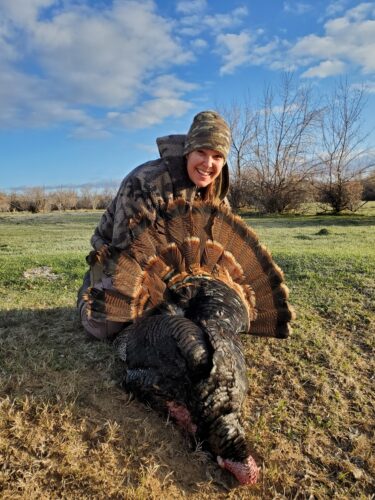
Thanksgiving is a time centered around all things turkey. From cute home decor to deliciously prepared main dishes, turkeys are a big focal point of the holiday — if you like the idea of harvesting your own locally sourced turkey.
SALT LAKE CITY — For Utahns who enjoy a holiday filled with turkey, Thanksgiving may also be the perfect time to start planning next year’s spring hunt. The Utah Division of Wildlife Resources has announced that applications for the 2026 limited-entry spring turkey season will open at 8 p.m. on Tuesday, Dec. 16.
Hunters can apply online, by visiting or calling any DWR regional office, or by using the new hunt-drawing helpline at 855-UTDRAWS (855-883-7297). All applications must be submitted by 11 p.m. on Tuesday, Dec. 30. However, those applying by phone through a DWR office must submit by 5 p.m. the same day. The withdrawal deadline is also Dec. 30 at 11 p.m.
Drawing results will be available by Jan. 8, and notifications will be sent via email. Results can also be accessed online or by calling the hunt-drawing hotline.
This year, applicants will notice a redesigned online system for the draw. The updated platform includes new features aimed at making the application process easier and more user-friendly.
The 2026 limited-entry spring turkey hunt will take place April 11-30, with the following number of permits available:
- Northern Utah: 500
- Central Utah: 600
- Northeastern Utah: 347
- Southeastern Utah: 250
- Southern Utah: 542
Additional spring opportunities
Hunters who are not drawn for a limited-entry permit will still have plenty of opportunity to participate in Utah’s spring turkey season. The general statewide hunt runs May 4-31, and, unlike the limited-entry hunt, general permits are unlimited — though each hunter may only purchase one. These permits will go on sale at 8 a.m. on March 10 and will be available online or over the counter.
Utah offers both spring hunts, which are restricted to male turkeys, and a fall management hunt designed to address nuisance turkey populations. The fall hunt allows hunters to harvest beardless or either-sex turkeys and focuses mostly on private land where depredation concerns are common.
“Because the fall hunt is specifically designed to eliminate conflicts with landowners, turkey hunting in the fall is administered primarily to alleviate these conflicts, and secondarily to provide more hunting opportunities,” said Heather Talley, DWR upland game coordinator. “This is why the fall hunt encompasses mostly or entirely private lands.”
Fall turkey hunting boundaries shift each year to target problem areas. Up to three fall permits are available per hunter — including up to two beardless permits and one either-sex permit. The 2025-26 fall hunt began Oct. 1 and continues through Feb. 28 in select regions. Permits must be obtained directly from a DWR office.
More details about upcoming turkey seasons are available in the 2025-26 Utah Upland Game and Turkey Guidebook, found online or at DWR offices and license vendors.
Utah’s turkey population: A long and winding history
Utah is currently home to an estimated 30,000-35,000 wild turkeys, a population that has experienced its share of ups and downs.
“Turkey populations have fluctuated in recent years, due to drought conditions for multiple years and then the severe winter conditions in 2022-23,” Talley explained. “We hope to receive more precipitation this winter and spring to provide optimal brood-rearing circumstances next year.”
Two turkey subspecies live in Utah — the Rio Grande and the Merriam’s — and the birds often hybridize where their ranges overlap. While turkeys have roots in Utah’s ancient past, with petroglyphs, pictographs, feathered blankets and bones offering clues to their historical presence, populations vanished by the mid-1800s.
After a failed reintroduction attempt in the 1920s, wild turkeys didn’t return until the 1950s. Biologists with the state’s then-Department of Fish and Game released Merriam’s turkeys from Colorado and Arizona into southern Utah, successfully establishing new populations. Later transplants and trapping efforts — particularly beginning in 1989 — expanded turkey numbers statewide, using both Rio Grande and Merriam’s birds from multiple western and midwestern states.
Today, thanks to decades of careful management and transplant programs, turkey hunting remains a vibrant tradition for Utah outdoorsmen and women.
For more information on turkey hunting opportunities or permit applications, visit the DWR website or contact the nearest regional office.