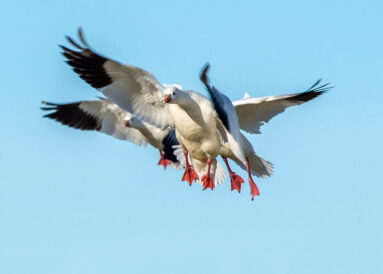
Wings over Delta: Snow Goose Festival showcases spectacular winter migration
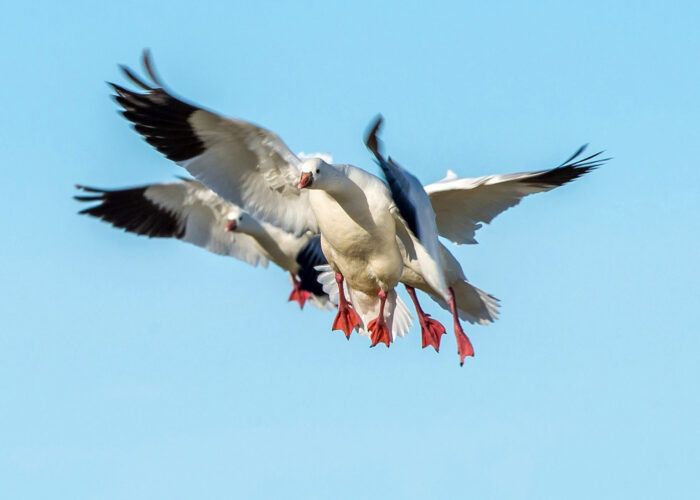
You can see thousands of geese at the annual Snow Goose Festival.
Utah bird enthusiasts and families looking for a unique winter outing will have two opportunities this month to see thousands of waterfowl and other migratory birds in their natural habitat, thanks to upcoming viewing events hosted by the Utah Division of Wildlife Resources.
The DWR is partnering with local organizations to offer free, guided bird-viewing experiences in Delta and Kanab, giving participants the chance to observe snow geese, ducks and other waterbirds while learning from wildlife biologists.
Delta Snow Goose Festival
One of the highlights of the season is the Delta Snow Goose Festival, hosted by the Delta Chamber of Commerce, which will take place Feb. 20-21 in Delta. As part of the festival, the DWR will host a free snow goose viewing event at Gunnison Bend Reservoir, located west of Delta.
In past years, as many as 20,000 geese — primarily snow geese — have gathered at the reservoir during the festival. In winter, snow geese often appear bright white, accented by black wing tips that become especially striking when the birds take flight.
DWR biologists will be on site both Friday and Saturday to help visitors locate the geese and share information about their migration and behavior.
“The timing of where you’ll see the geese depends on the time of day,” said Adam Kavalunas, DWR Southern Region outreach manager. “Early in the morning, you can watch them feeding in nearby fields. Then, typically between 9 and 10:30 a.m., they take off and fly to the reservoir.”
That mid-morning flight is often the most dramatic moment of the day.
“Seeing those thousands of geese in flight makes for incredible photos,” Kavalunas said. “Watching and hearing the geese can take your breath away. It’s a great family activity, and we encourage people to come out and experience it.”
After landing on the reservoir, the geese usually remain there for several hours before returning to the surrounding fields between 4 and 6 p.m. If visitors arrive after the birds have left the water, DWR biologists can help direct them to the fields where the geese are feeding.
Waterbird viewing in Kanab
A second waterbird viewing event will be held Saturday, Feb. 21, from 10 a.m. to 1 p.m. at Jackson Flat Reservoir in Kanab. During the event, DWR biologists will be available to answer questions and help identify the various species present.
Ducks are the most commonly seen waterbirds in Utah, with more than 20 species appearing across the state throughout the year. At Jackson Flat Reservoir, visitors may see a mix of dabbling ducks, diving ducks and fish-eating ducks.
Common dabbling duck species include mallards, northern pintails, gadwalls, northern shovelers, cinnamon teal, green-winged teal and American wigeons. Diving ducks such as redheads, canvasbacks, lesser scaup, ruddy ducks, ring-necked ducks, common goldeneye and buffleheads may also be present.
Piscivorous ducks, which primarily eat fish, are less common in Utah but may include hooded mergansers and common mergansers.
Other species that could be spotted at the reservoir include double-crested cormorants, great blue herons, American coots, pied-billed grebes, Canada geese, snow geese and even bald eagles.
“In southern Utah, people are most likely to see mallards, American wigeons, northern shovelers, cinnamon teal, northern pintails and redhead ducks,” Kavalunas said. “It’s also possible to see trumpeter swans on occasion. Learning how to identify these birds makes the experience even more rewarding.”
Planning your visit
Both viewing events are free to attend, but participants are encouraged to register in advance on Eventbrite. Events are weather dependent, and registrants will be notified if cancellations are necessary.
The DWR also recommends a few tips to ensure the best experience:
Participants should bring binoculars or a spotting scope to get a closer look at the birds, although some scopes will be available on site. Visitors are reminded to respect private property and avoid trespassing while viewing wildlife. Dressing in warm, layered clothing is advised, as winter conditions can be cold and unpredictable.
Birders are also encouraged to bring a smartphone and download the eBird app, which can help identify species and allows users to participate in the Utah Birding Slam. Those interested in completing a bird slam should register in advance on the Utah Birding Slam website.
With thousands of birds moving through southern Utah during the winter migration, these events offer a rare chance to witness an impressive natural spectacle while learning more about the state’s diverse wildlife.