Commentary: Walking across Utah to defend the future of public lands
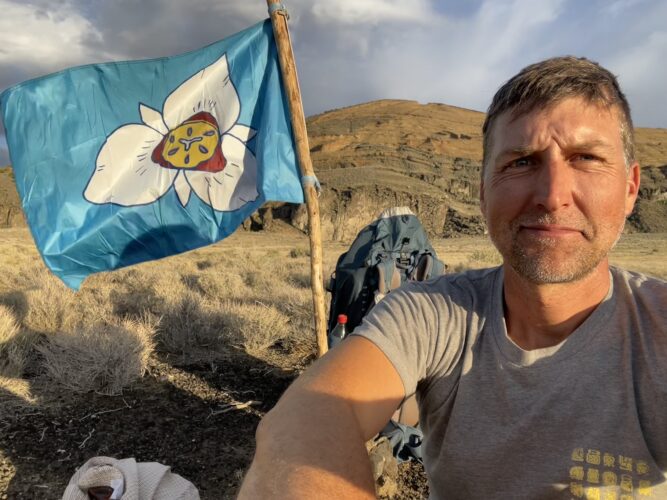
English Brooks from Ephraim, Utah, walked across utah last month for public lands.
We owe future generations open spaces, uncompromised horizons, and the full company of living, breathing creation. That future is only possible through the ongoing conservation of our public lands.
Since May 8, I’ve been walking across Utah to help build greater public support and commitment to protecting our public lands — to remind myself and others of what we have, and why it’s worth fighting to protect and care for. While managing these lands has never been easy, we are now facing a uniquely intense period of pressure on, and threats to, the places we all share in common.
Since 2012, Utah’s Governor’s Office and Attorney General’s Office have pursued costly legal and public relations campaigns aimed at claiming and transferring 18.5 million acres of federally managed public lands into state control. The effort has been widely condemned as unconstitutional and contrary to the interests of most Utahns. Representatives of the Ute Indian Tribe have called it an “existential threat” to the tribe and its lands.
When it comes to conservation, Utah’s Legislature and Governor’s Office have given the public reason for serious concern on two fronts:
- Utah politicians have worked to maintain a partisan supermajority, making it harder for the full range of public opinion on these issues to be heard.
- More than a third of Utah lawmakers have known financial ties to property and real estate development — a meaningful conflict of interest when it comes to decisions about public lands.
These and similar efforts over the past year by Sen. Mike Lee and Rep. Celeste Maloy have been widely criticized by groups ranging from conservation organizations to hunters and ranchers. There is a broad and growing coalition supporting the continued federal protection of Utah’s public lands, along with a recognition of the need to defend them against ongoing attempts to transfer, sell off, privatize, hastily develop, or otherwise exploit them for short-term private gain.
Short-sighted extractive uses and boom-and-bust development ventures have characterized settler land use in the West for more than a century. Speculation about building massive, polluting, and water-intensive AI data centers in the Great Basin desert is only the latest and perhaps most alarming example of this longstanding pattern of waste and short-sightedness.
Even when politicians lack the vision and integrity to ensure the protection of these lands and waters, the public has repeatedly stood up in support of those protections. Utahns deserve better leadership and greater accountability. Our lands and waters deserve better.
In this election year, we have opportunities across several congressional and local races to demand that those who seek to represent us make — and honor — public commitments to protecting our shared natural heritage.
Beyond simply opposing what we do not want, we must also work toward what we do want — what we envision and hope to create. Any proposed future for our public lands should first consider the interests of:
- Native communities that, for centuries, managed these lands for the common benefit of all and may well do so again.
- Future generations of Utahns and Americans who will inherit what we leave behind.
- The larger biotic community, including its habitats, migration corridors, and wild places that no climate-compromised future can afford to lose.
In the meantime, throughout the remainder of May, I and others walking with me will continue our journey across the state as an expression of commitment to protecting the integrity and future of public lands throughout Utah and the wider region.
This walk is in partnership with United by Nature, a culture-first movement reminding us that public lands conservation is worthwhile and achievable for every American, and with Stewardship Utah, which works to protect Utah’s land, air, and water through elections, policy, and democratic engagement.
I’m writing this from Scipio, having started about two weeks ago at the Colorado border and continuing toward Nevada in the coming days. This walk is both a personal and public expression of appreciation for these lands, for the many creatures with whom we share them, and for the future we hold in common.
It is for the lands we have, for the future of the lands we want, and for more clearly articulating what we expect from those elected and appointed to steward this public trust.
English Brooks is a teacher, father, and sixth-generation Utahn from Ephraim in Sanpete County who is walking across Utah this month.