
Utah faces Record-Low Snowpack as officials urge water conservation
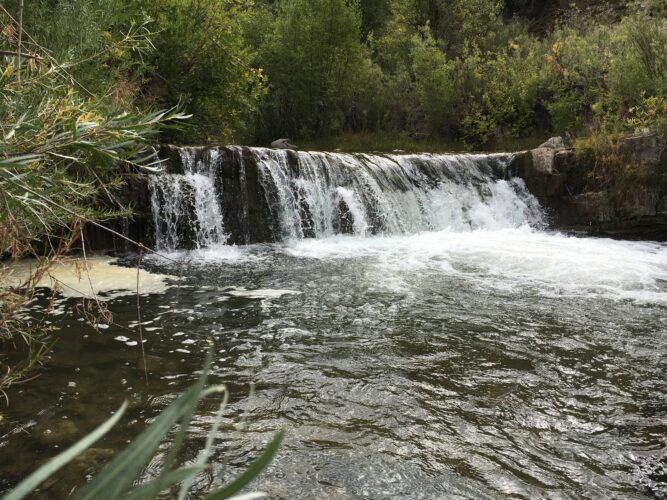
Courtesy Central Utah Water Conservancy District
The sixth water waterfall is pictured in Diamond Fork Canyon.
SALT LAKE CITY — Utah is heading into the warmer months under increasingly dry conditions, as state officials report the lowest snowpack on record and warn that drought conditions are likely to intensify.
According to the Utah Division of Water Resources, this year’s snowpack peaked on March 9 at just 8.4 inches–about half of what Utah typically sees by early April and nearly three weeks earlier than normal. With forecasts indicating that snowmelt will outpace any additional snowfall, water managers are preparing for a challenging spring and summer.
“This is a concerning situation,” said Laura Haskell, drought coordinator for the division. “We are urging our communities and local water providers to review drought contingency plans. These plans will provide clarity and actions to assist with slowing the impacts of drought.”
Those concerns are compounded by record-setting temperatures. This past winter was the warmest ever recorded in Utah, averaging 2.2 degrees Fahrenheit above normal, with Salt Lake City surpassing its previous record by more than 7 degrees.
Data from the Natural Resources Conservation Service supports the troubling outlook. As of early March, 30% of Utah’s SNOTEL monitoring sites reported their worst or second-worst snowpack levels on record.
Despite the poor snowpack, reservoir storage across the state currently sits at about 68% capacity–slightly above average for this time of year. However, that figure marks a noticeable drop from the 80% recorded at the same time last year, signaling that carryover supplies may be stretched thinner as demand increases through the summer months.
Statewide, conditions remain dry, with 98% of Utah currently classified in some level of drought.
Officials say water conservation will be essential in the coming months as the state leans more heavily on existing reservoir supplies. The Utah Department of Natural Resources continues to promote programs aimed at helping residents and agricultural producers reduce water use and improve efficiency.
Among those efforts are the Agricultural Water Optimization Program, which supports farmers in implementing water-saving practices, and the Slow the Flow campaign, which provides residents with tips and incentives to conserve water at home.
Water managers emphasize that early preparation and public participation will be key to mitigating the impacts of another dry year.
“Every Utah resident can play a role,” Haskell said. “The more we conserve now, the better prepared we will be for the months ahead.”
News
Utah faces Record-Low Snowpack as officials urge water conservation

Crystal Festival brings sparkle, science, and family fun to Mt. Pleasant
Young artist chamber players return to Spring City for special Thursday performance
SPRING CITY — Music lovers in Sanpete County will have a unique midweek opportunity to enjoy an ...