
Provo City Center Temple true to historic architecture, design
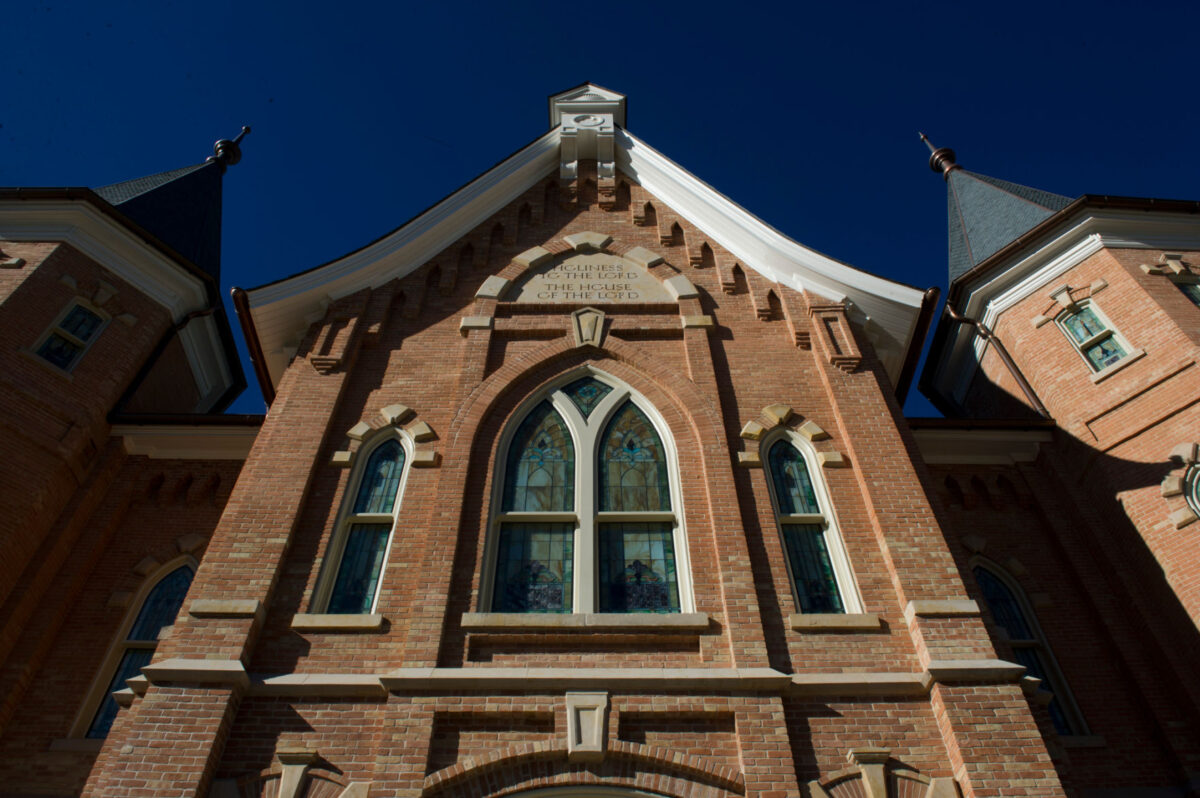
The exterior of the Provo City Center Temple on Thursday, Nov. 12, 2015.
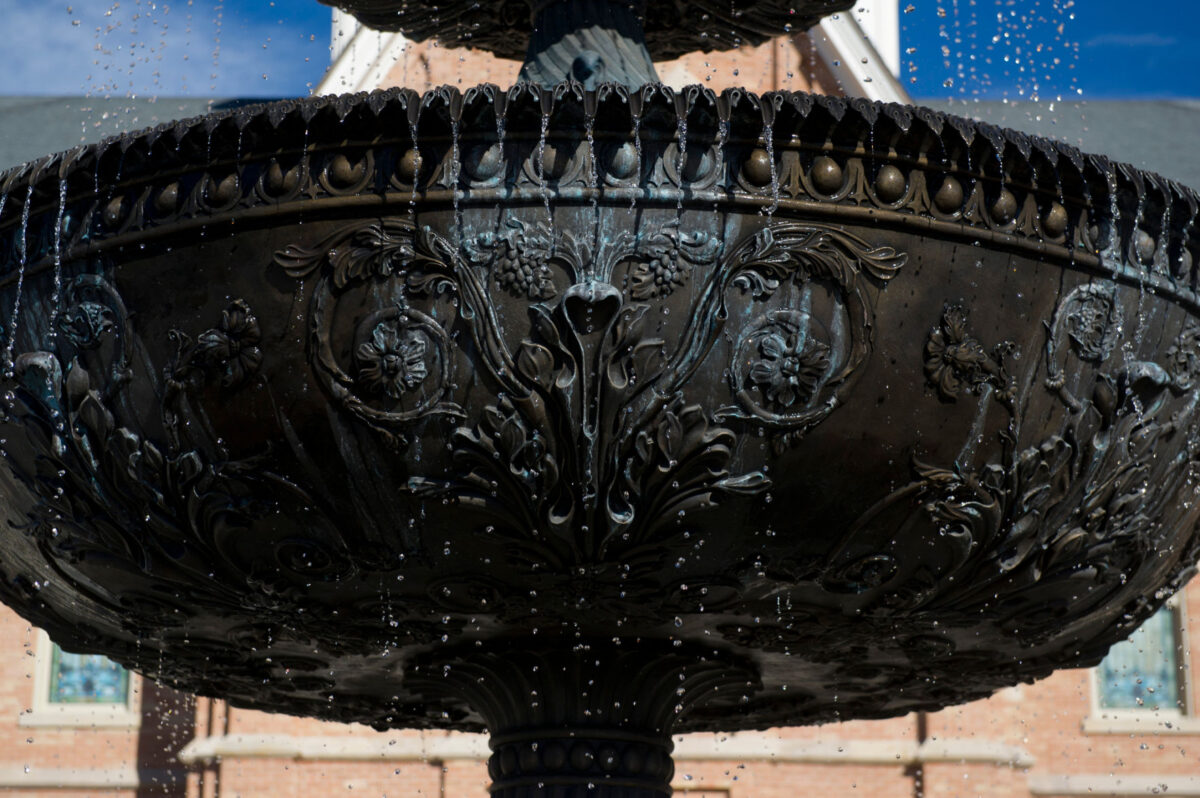
The fountain at the Provo City Center Temple on Thursday, Nov. 12, 2015.
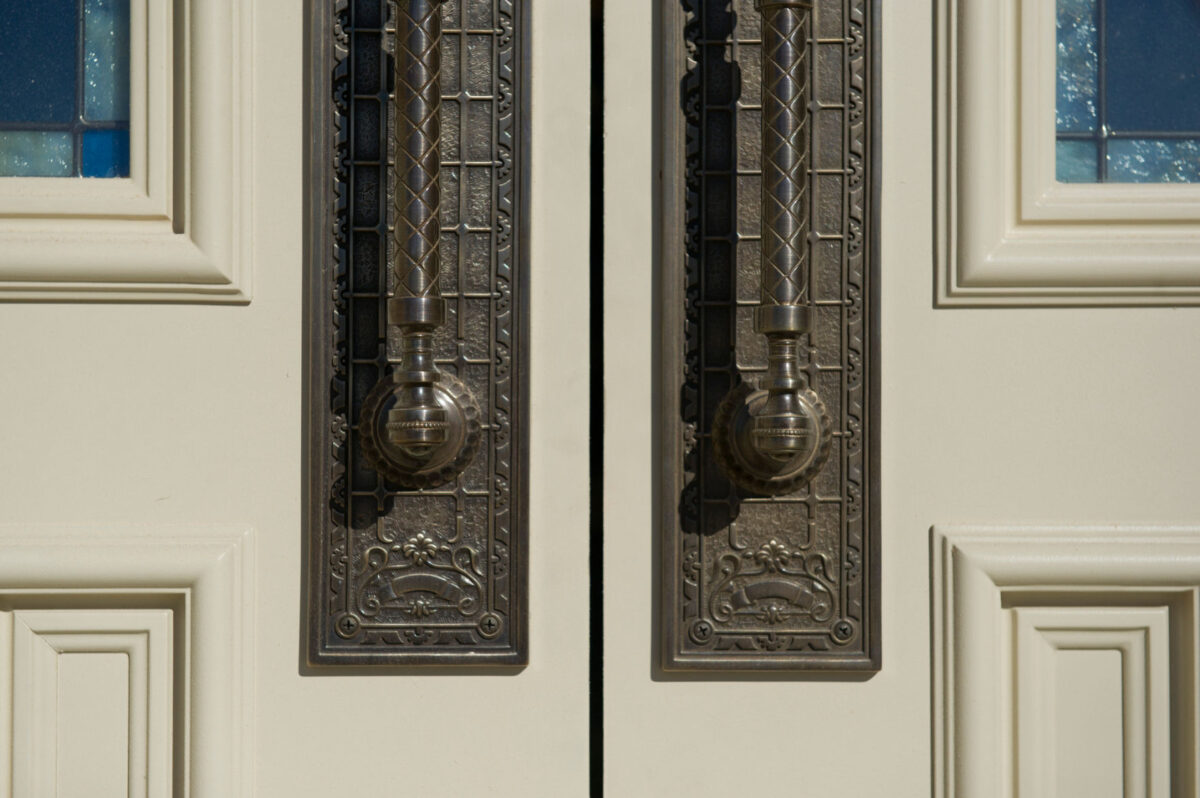
Door handles on the Provo City Center Temple on Thursday, Nov. 12, 2015.
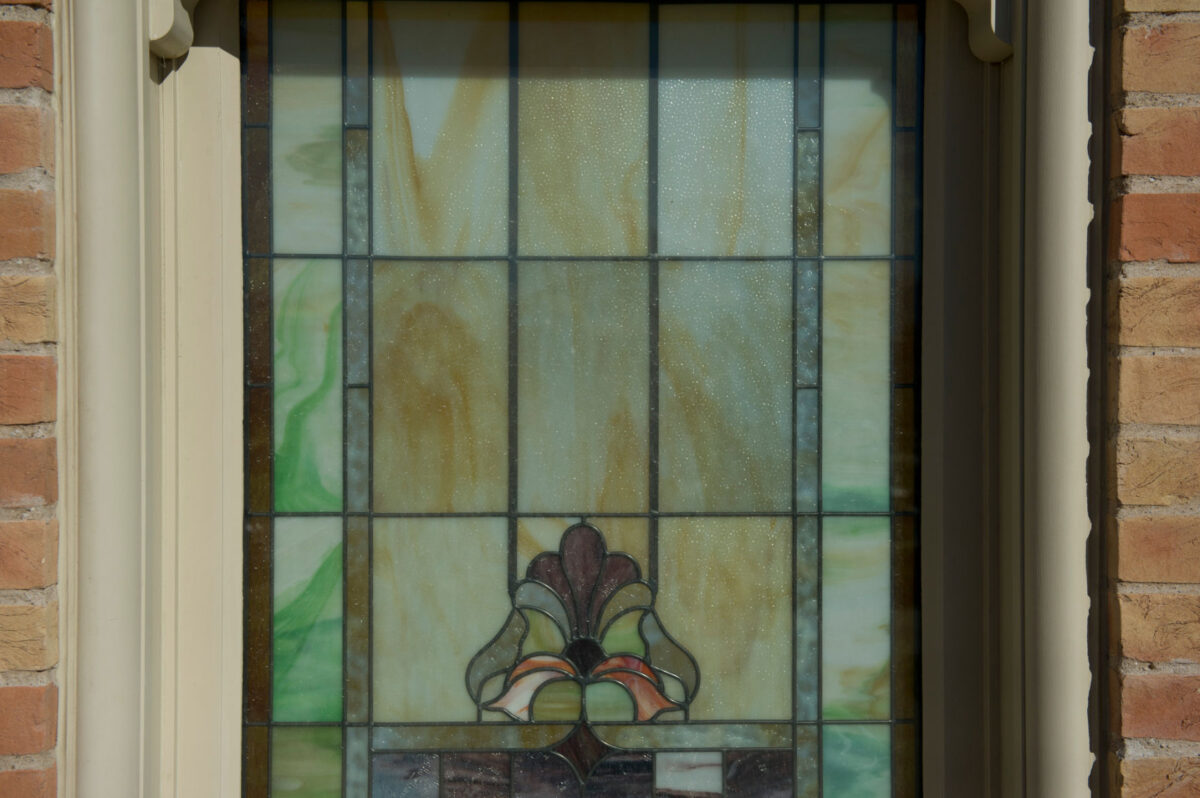
An art glass window at the Provo City Center Temple on Thursday, Nov. 12, 2015.
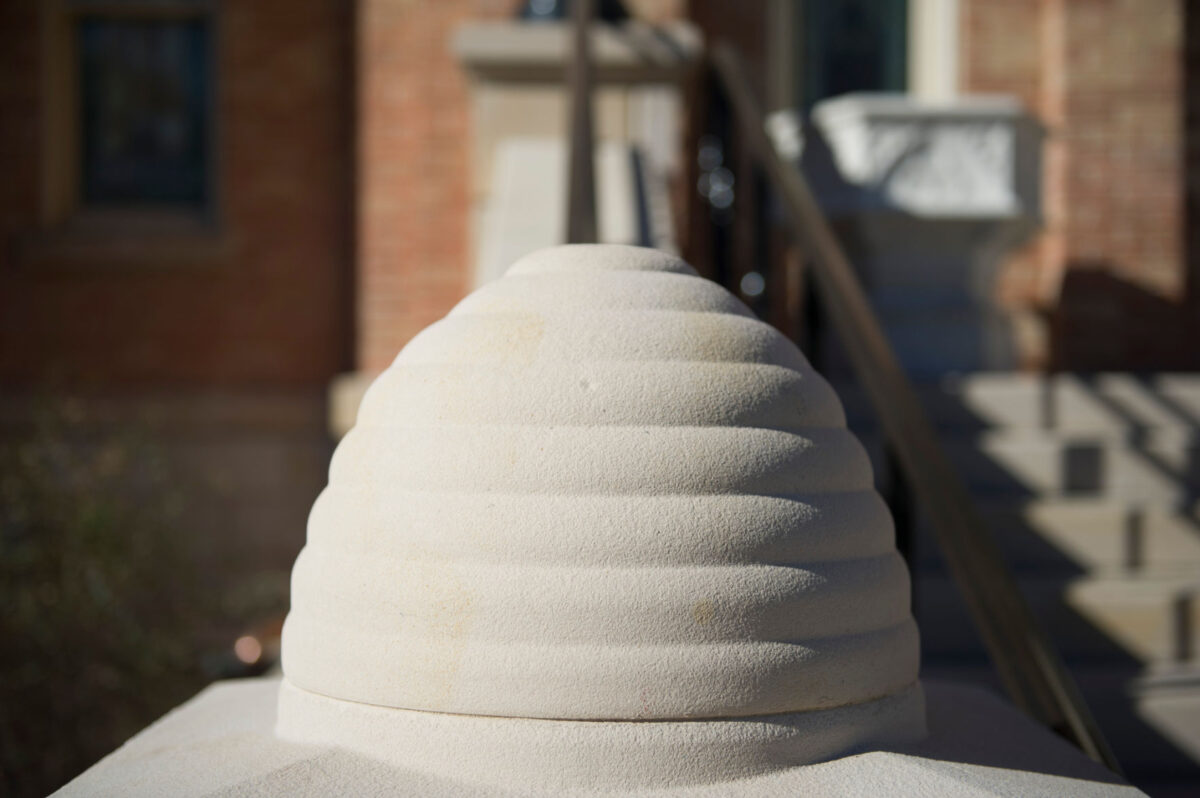
A beehive-shaped accent outside the Provo City Center Temple on Thursday, Nov. 12, 2015.
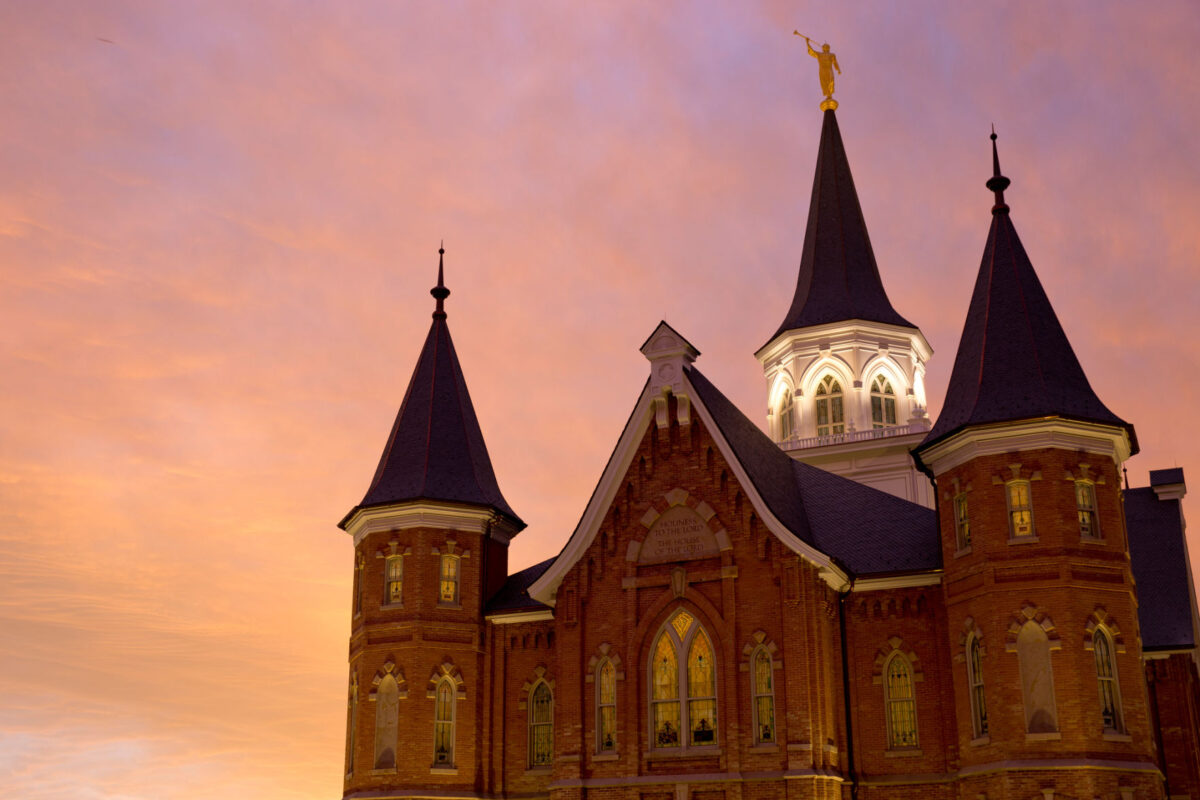
The Church of Jesus Christ of Latter-day Saints' Provo City Center Temple is seen at sunset.
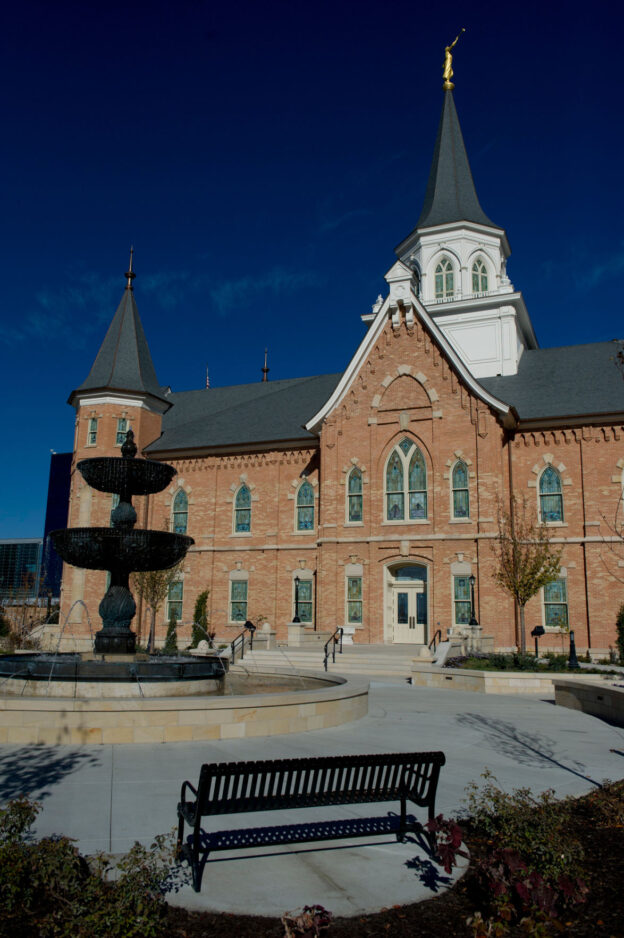
The fountain and surrounding area at the Provo City Center Temple on Thursday, Nov. 12, 2015.
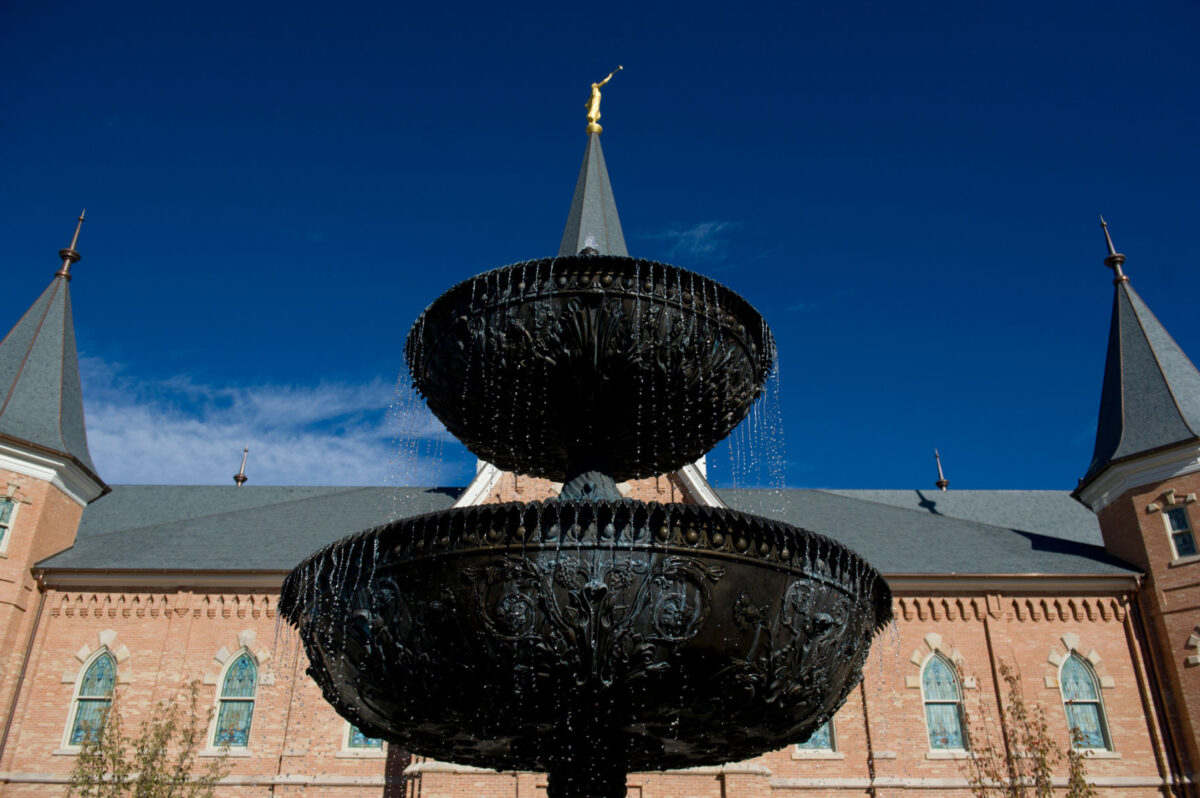
The fountain at the Provo City Center Temple on Thursday, Nov. 12, 2015.
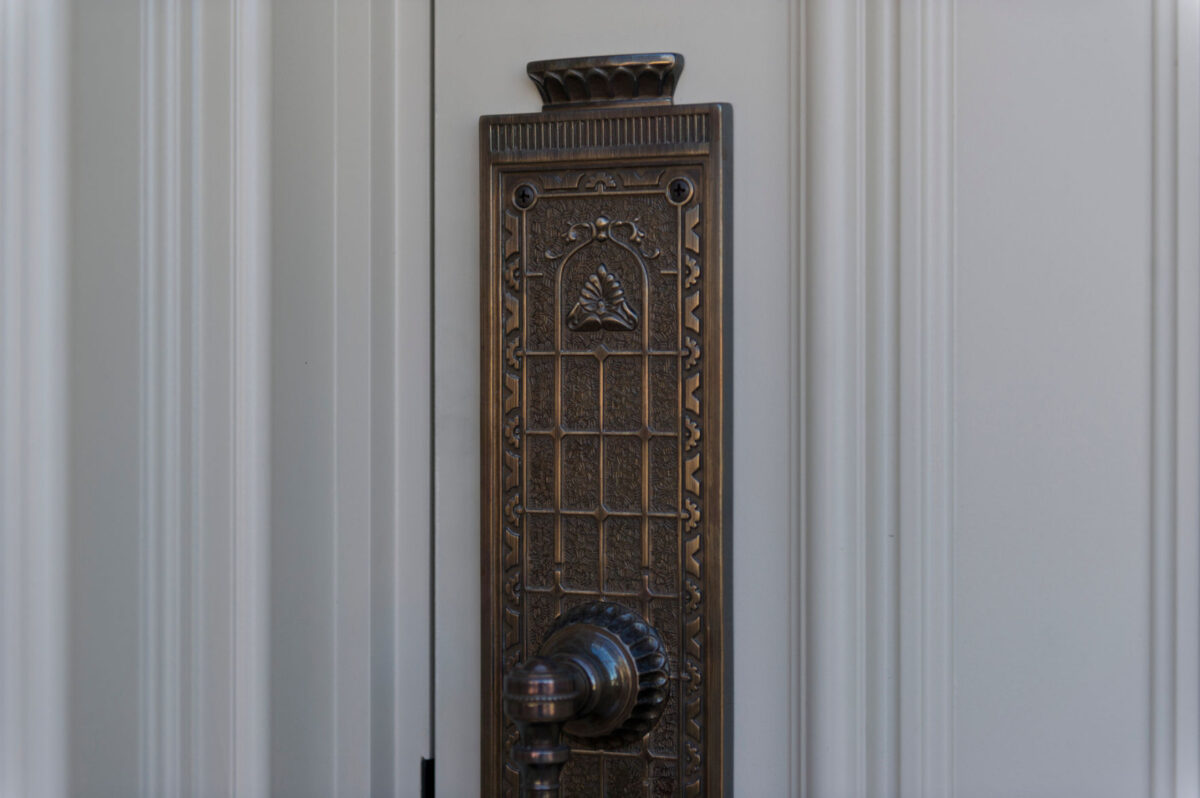
A door handle at the Provo City Center Temple on Thursday, Nov. 12, 2015.
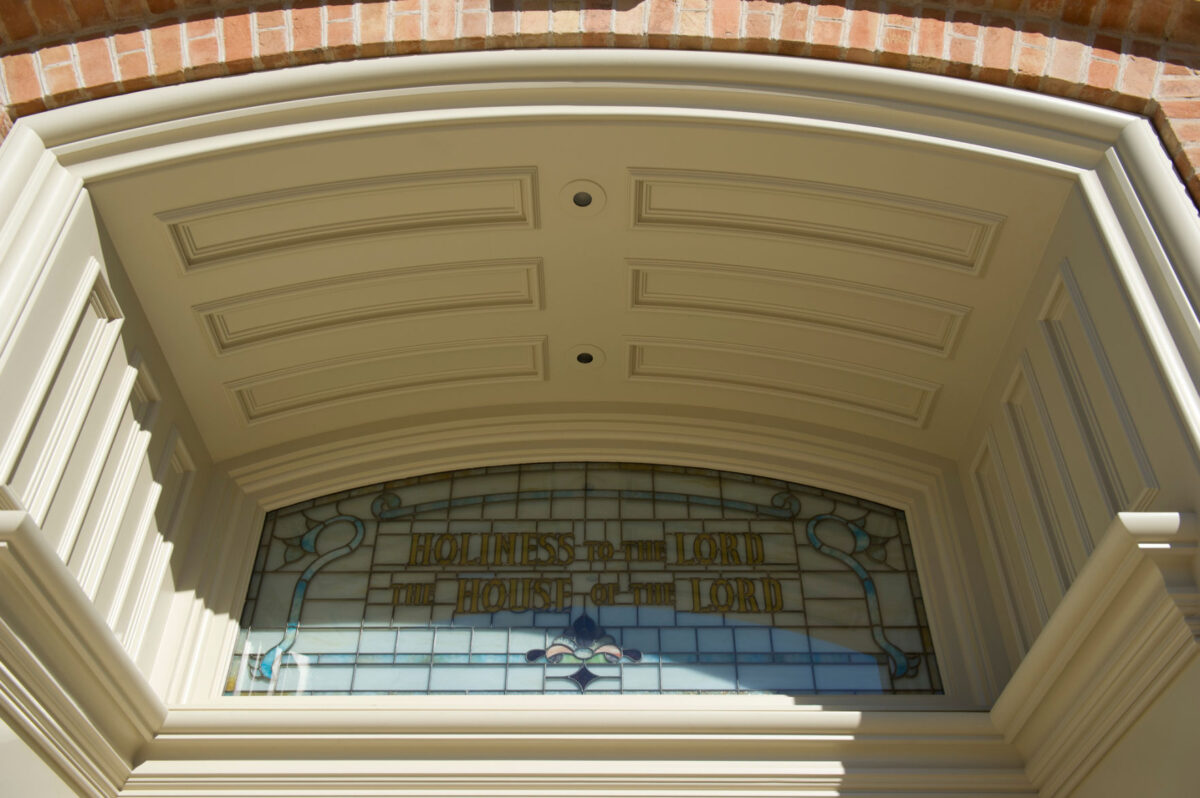
A stained glass window at the Provo City Center Temple on Thursday, Nov. 12, 2015.
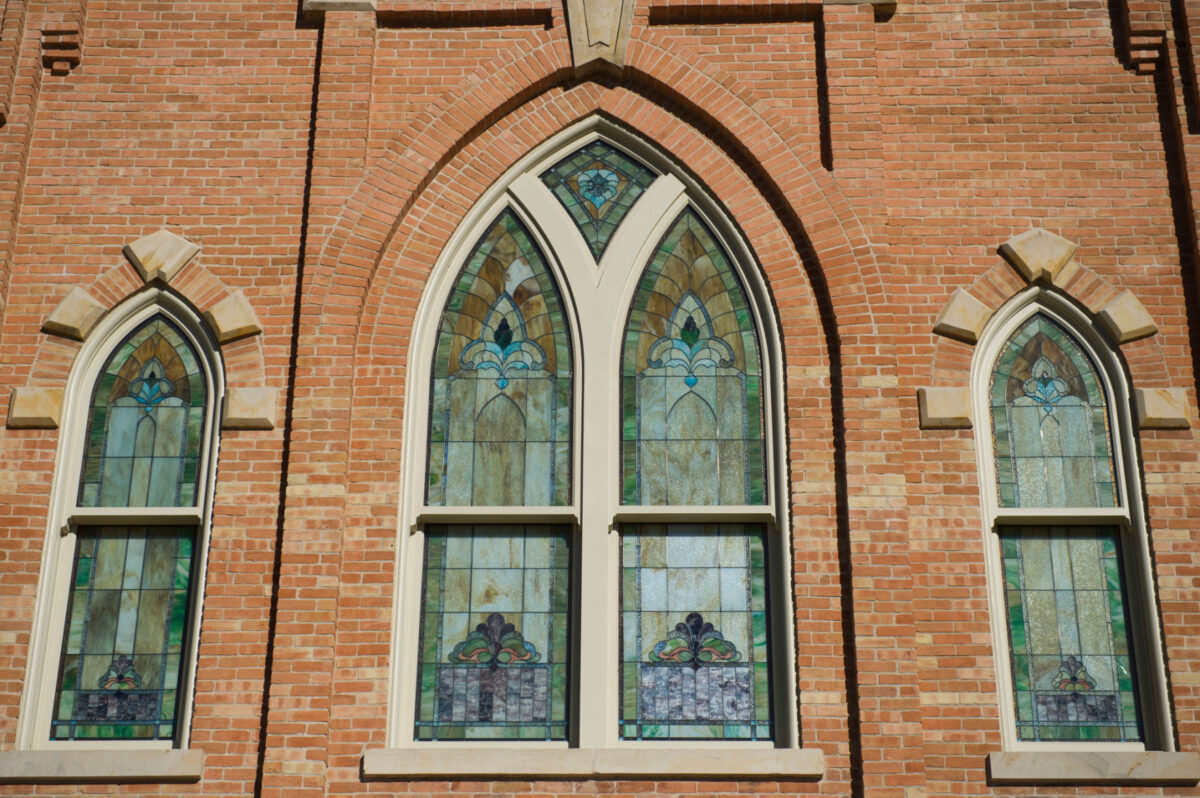
Art glass windows at the Provo City Center Temple on Thursday, Nov. 12, 2015.
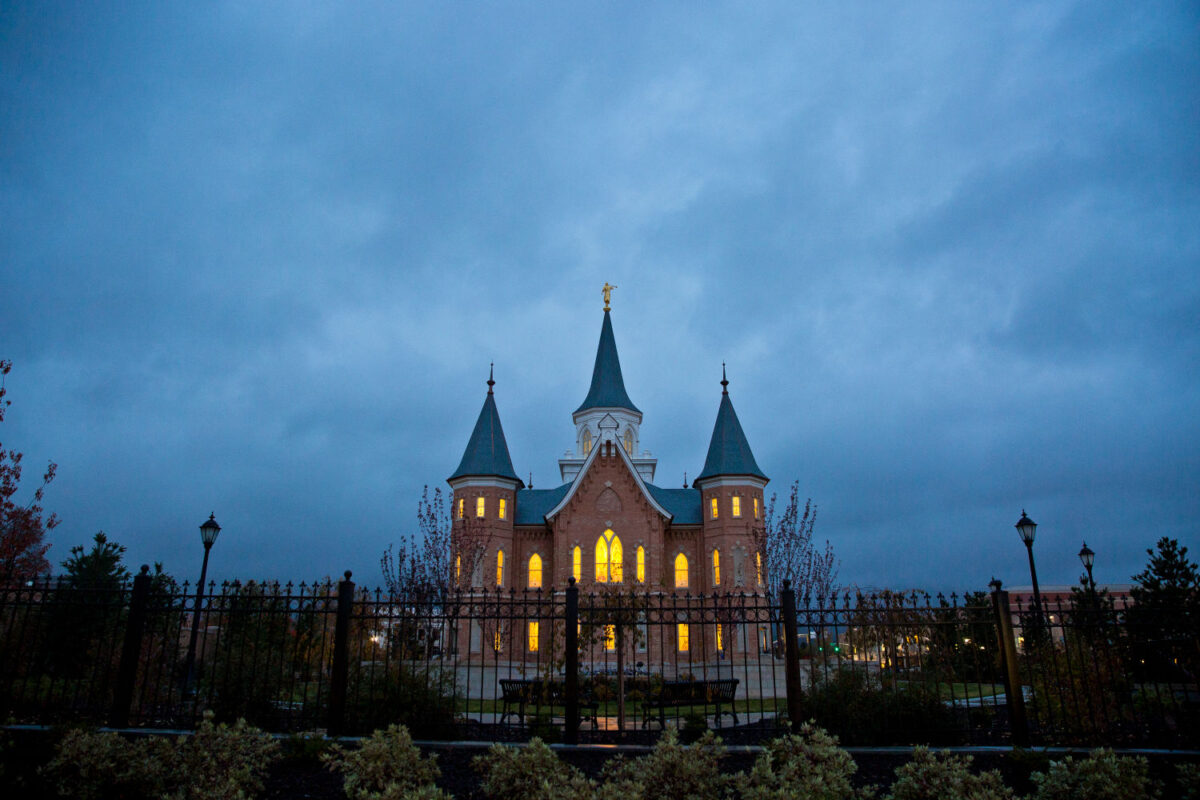
The Provo City Center Temple is seen on Nov. 10, 2015.
The Provo of 2016 is much different than the Provo of 1883, but in some ways they are much the same.
Provo in 1883, like today, was a hotbed of activity and recognized throughout the territory as one of the places to visit or live. New and impressive buildings were going up and businesses were thriving.
A great percentage of the residents who settled Provo and the surrounding valley were pioneers or the children of pioneers. Most families emigrated from the British Isles and western Europe.
The influence of the Presbyterian Church and the Church of England was brought with them, particularly in much of the architectural designs of church buildings and meetinghouses.
Eastlake styling was a significant influence on the Provo Tabernacle and was reflected even on the exteriors of homes in the area, like in the Maeser neighborhood east of the tabernacle that can still be seen today.
Charles Eastlake was an English architect who combined old English and Gothic design elements in his architecture. The style was named after him and was used extensively in the late 1800s. Eastlake also designed furniture and was the Keeper of the National Gallery in London from 1878-1898.
William Harrison Folsom, a popular LDS architect, was called to be the designer of the Utah Stake Tabernacle. Folsom’s designs carried the Presbyterian and Eastlake influence.
In 1947, the Daughters of Utah Pioneers compiled a book of histories titled “Heart Throbs of the West.” In it are reflections of Folsom’s designs for the new tabernacle.
The description reads, “Designed to resemble an English Presbyterian meeting house such as they had known before coming to America, the new Presbyterian church in Salt Lake City may have influenced its design. The corner towers at Provo resembling the large tower of the new church. Another possible source for some design elements was the Catholic Basilica of Saint Louis that Folsom knew from his visit to New Orleans in 1849.”
The book continues, “The resemblance of the towers and the corners and the center of the façade of Saint Louis to those of Provo was quite striking. Although the plan for the Provo building has more in common with the new LDS Assembly Hall in Salt Lake City. Gothic Revival elements appeared in the painted windows and steep roofs, while the interior of the tabernacle was in the tradition of the New England architecture more like that of the St. George Tabernacle.
“The woodwork of the rostrum was a truly remarkable piece of craftsmanship and design, making a variety of Victorian and Greek Revival elements in an elaborate composition of curved, horizontal, vertical, and diagonal lines,” the history continued. “Although somewhat lacking in unity between interior and exterior, the tabernacle demonstrated both the originality of Folsom’s skills and the breadth of his eclecticism.”
When Folsom’s beloved Provo Tabernacle burned in 2010, historical curators like Emily Utt, historic sites curator for the LDS Church History Department, were devastated yet hopeful something could be done.
“The tabernacle had been a meeting place for a decade before it was dedicated,” Utt said. “It was used weekly. No other building in Provo has had that amount of use.”
Utt said she was caught off guard and was elated with President Thomas S. Monson’s announcement the building would be saved and preserved as a new LDS temple.
Significant to Utt and other historians are the carefully chosen words Monson used — preservation and restoration.
That preservation and restoration has happened — in finite detail.
Utt said that during the cleanup stages her team siphoned through the rubble hoping to find emblems of the old tabernacle to help them as they worked through the restoration process.
“Where many saw rubble, we saw hundreds of small, significant details,” Utt said. “The Provo Tabernacle is (now) one of the best-documented buildings in the church.”
Residents’ curiosity has peaked since the groundbreaking in 2012 as to what the inside and outside would look like.
While some answers were being held close to the vest prior to the temple open house, Utt said to think Victorian. Consider the landscape and gardens, the outside pavilion, the fountain, the restored original brick, the center spire, the stained glass windows, all reflecting the era of the 1890s. The original tabernacle was started in 1883 and dedicated in 1898.
Utt encouraged people to study the era, to look at the 1893 Chicago World’s Fair Columbian Exposition. It bridges time from then to now. Items we use today were introduced then, like dishwashers, fluorescent lights, postcards and commemorative stamps. Our taste buds were introduced to Cracker Jacks, Shredded Wheat, Wrigley’s Juicy Fruit Gum and Cream of Wheat.
Utt said the temple features rich woods and colors, ad it did when the tabernacle was first built.
“You’ll see details,” Utt said. “My job is to make sure we are as consistent with the 1890s as possible.”
Roger Jackson, with FFKR Architects, is considered one of the finest historical architects in the world.
“We are thrilled with what you will see,” he said. “This is well beyond the abilities of all of us. It is truly a gem of the church.”
Utt said Folsom’s original building could have been as welcome in the richest neighborhoods of New York, Chicago or St. Louis.
While the bricks were handmade, the accouterments were ordered from the finest catalogs of Europe.
“This will be a beautiful building. It will serve the saints for many years,” Utt said. “We want people to feel like their building is back. Even the spiral staircases will be available for patron use. The floor plan is consistent with other temples, but the finishings and detailing are wholly Provo’s.”
Of course, the Provo City Center Temple has a few modern things like elevators, and slate instead of wood shingles on the roof, but that is to be expected.
“You’ll feel like you’re going back in time but with modern conveniences,” Utt said. “Most people who go through this building won’t notice what we’ve done, but they will be washed over by the beauty of it.”
The pavilion just south of the main temple entrance is in keeping with the Victorian styling of the temple.
The 5,290-square-foot, two-story pavilion will serve as a waiting area for non-temple patrons and a place for wedding parties to take pictures. It connects to the underground parking via elevator.
As for the gardens and surrounding grounds, according to Utt, the Provo City Center Temple has more extensive grounds and less surface parking than any other LDS temple.
When it comes to landscaping, both temple patrons and the community get more than just the lush flower gardens, trees and grass that have been planted at the site.
The 17-foot, bronze, four-tiered Victorian fountain with ornamental nozzles graces the grounds near 100 South. One advantage of the fountain is those visiting that part of the grounds are more likely to enjoy the sounds of the water lapping and pooling than the sounds of motorists driving by.
The finial at the top of the fountain is replicated from a stair newel post from the tabernacle’s interior banister that led to the pulpit and stand.
Scalloped shingles matching the original 1800s design were used for the temple’s roof. The top of the fence posts feature beehives.
According to LDS Church descriptions, “The entire temple grounds will be beautifully landscaped and will be open to the public following the temple’s operations schedule, consistent with all LDS temples. The grounds closest to the temple will have a taller fence and gates, whereas the grounds both north and south of the temple fence will have lower perimeter fencing and are not gated.”
Public gardens with benches, shrubs, trees and grass will be open 24 hours a day, seven days a week on the north end of the property, similar to the old tabernacle park.
“This is an urban temple,” said Gary McGinn, Provo’s community development director. “They are going to landscape the heck out of it.”
The interior floors feature the typical rooms found in all LDS temples, including the baptistry, dressing rooms and lockers, offices and a bride’s dressing room on the lower levels. The above-ground levels include a chapel, instruction rooms, offices, lobbies and five rooms where marriages will be performed.
Following a historical design perspective, Utt said there is no white paint in the building.
“The Victorian era was all about color,” she said.
The tabernacle building featured oak and walnut woods, wallpaper and decorative stencil painting. That same Victorian styling is featured in the new temple. The upper floors of the new temple are in a pioneer Gothic style featuring a number of arches.
According to Richard O. Cowan, author of “Provo’s Two Temples,” stenciling patterns from the original tabernacle are featured in the Bride’s Room. There are stained glass skylights above.
Original print wallpaper from the 1800s found during the tabernacle fire has been reproduced for certain walls in the temple, Cowan noted.
Windows throughout the exterior and interior of the temple are paired in threes, with a larger window in the middle and two smaller windows on each side. According to Cowan, those window pairings are repeated throughout many of the rooms in the temple and are patterned after the original windows.
Florals such as the columbine and lotus are used in the craftsmanship and art glass, continuing with the original theme for the tabernacle.
Many interior features survived the fire, including wood moldings, newel posts and balustrades, which allowed for reproduction of the beautiful woodwork found in the pioneer tabernacle. Upon entering the new temple, its similarity to the historic tabernacle will be evident, according to Cowan.
Murals depicting the phases of life are in the two instruction rooms. Patrons might recognize Mt. Timpanogos and Utah Lake in one of the murals.
Everything is perfect to the time and true to the tabernacle. Like the 1880s, even the door hinges are custom made, Utt said.
“Architecture is art that everyone experiences because we use buildings every day — whether we go inside of them or just see them from the outside,” said J. Cory Jensen, architectural historian and national register coordinator for the State of Utah. “Historic buildings add so much to a city’s character. If you think of any great city anywhere in the world, it is typically the architecture that comes to mind first. I wish more of our cities would understand that. I think Provo City has in this case.”
As preparations began for the open house and dedication, requests for tickets came from all parts of the world. The interest in the burnt-out historical tabernacle-turned-LDS temple has several groups wanting to get a peek inside.