
The rise and fall of the Mormon mercantile kingdom of ZCMI
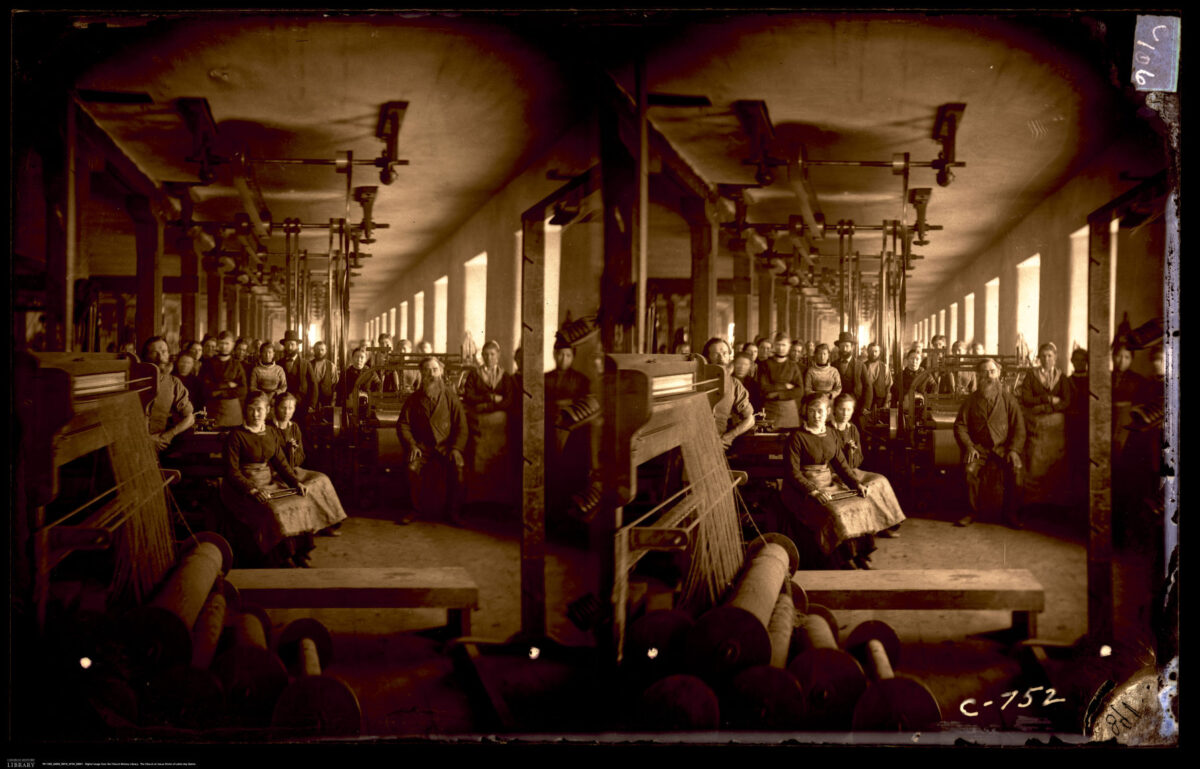
Workers at the Provo Cooperative Woolen Factory made much of the fabric that was sold at ZCMI and used to make ZCMI-brand clothing.
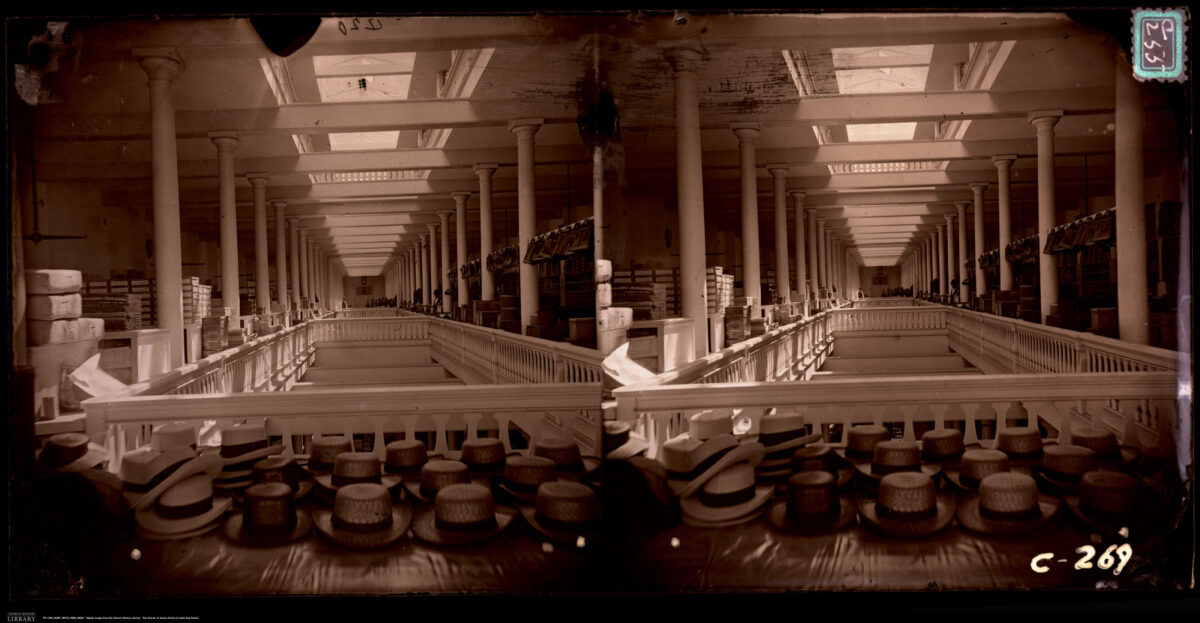
Interior view of the ZCMI building from the upper floor. Brigham Young insisted on using large skylights which were large enough to provide light to the floors below.
Most LDS women over 50 might remember eating lunch at the Tiffin Room at ZCMI. For many young Utah girls (and boys) having their first Tiffin room meal was almost a rite of passage, along with a first Gold and Green Ball and dating when you turn 16.
Zion’s Co-operative Mercantile Institution was the largest department store in the Intermountain West at one time. Members of the LDS Church who shopped there financially helped build the ZCMI kingdom.
ZCMI opened for business on March 1, 1869.
“ZCMI was a wholesale and retail merchandise operation founded by Brigham Young based in Salt Lake City (with additional branches for distribution in Provo, Ogden, Logan, and Soda Springs, Idaho), said “ZCMI, as a wholesaler, collected goods made in the Utah territory and imported other goods from the East and sold them to the retail outlets.”
Thompson said the “cooperative” nature of the organization came in the form of the 150-plus independent stores that bought their retail inventory from ZCMI. These stores, created and operated by local communities and LDS wards, were financially independent of the parent ZCMI. ZCMI became one of the biggest wholesale/retail organizations in the West.”
ZCMI was created by Brigham Young for four main reasons: first, to stop the price gouging by “gentile” merchants who were selling goods at outrageous prices to the Saints in the early Utah Territory in the 1850s and 1860s. Second, it was created to provide goods at fair and uniform prices to rural communities. Third, ZCMI’s purpose was to encourage and promote the local manufacture and consumption of those goods in order to obtain economic self-sufficiency in the Utah territory and be independent of the national market. Finally, and most importantly, it was seen as a preparatory step in fostering economic equality among the Saints so that there was “no poor among them” so that they could live the Law of Consecration and Stewardship that the Saints had failed to live previously in the 1830s and 1850s, Thompson said.
“Brigham Young was a champion of ‘home manufacture’ hoping that everything that the Saints needed could be created in Utah by Utahns,” Thompson said. “Shortly after ZCMI was established, it was making its own line of shoes, boots, overalls, coats, men’s pants, vests, shirts, and undershirts (most of the cloth was supplied by the Provo Cooperative Woolen Factory). Furniture, food, and livestock were also produced and sold through ZCMI.”
Products that could not be produced in Utah were imported from the East. It should be mentioned that ZCMI was viewed as a monopoly by the “gentile” merchants (many of whom were forced out of business), but several of them focused their marketing to the mining and other non-Mormon communities and were very successful such as the Walker Brothers and the Auerbachs.
The cooperative stores were set up by local communities or wards (the Tenth Ward in Salt Lake was the first such to sponsor a store) and though they received goods from ZCMI, their finances and operations were kept separate. As a member of the cooperative, a store would carry a sign inscribed with “Holiness to the Lord, Zion’s Co-operative Mercantile Institution” to let consumers know their affiliation.
Over the years stores were founded throughout the west including several in Salt Lake, throughout Utah, Wyoming, Idaho, and, surprisingly, even in Deadwood, South Dakota,” Thompson said.
In the 1970s, ’80s and ’90s ZCMI became a higher end department store and catered to a wealthier clientele.
There are several reasons ZCMI closed.
Beginning in the early to mid-1990s, the national retail industry was going through a period of transition with the proliferation of big-box stores, the invention of internet shopping, and the preference for specialty store and catalog shopping.
“The introduction of Dillard’s into the Utah market also impacted their business,” Thompson said. “ZCMI had had a bit of a monopoly for many years on the middle class market filling the merchandise gap between JCPenney and Nordstrom’s. When Dillard’s built two huge stores at South Towne Mall and Provo Towne Centre in the mid-1990s they lured many of ZCMI’s customers away with great sales and brands not available at ZCMI.”
In an address given at the October 1999 General Conference, President Gordon B. Hinckley hinted that ZCMI was nearing its end when he indicated that the church was pulling out of businesses not “central to its mission.”
Later that month, it was announced that ZCMI would be taken over by the St. Louis-based May Company. ZCMI was not alone: during this period iconic department stores in San Francisco and Los Angeles crumbled including I. Magnin, The Emporium, Bullock’s, and The Broadway (incidentally, Weinstock’s, which had stores at Crossroads Plaza and Fashion Place Mall, was part of the company that owned The Broadway).
The May Company retained the ZCMI name for two years before rebranding them as Meier and Frank stores. A few years later, the May Company was bought out by Federated Department Stores and all of the former ZCMI stores became part of Macy’s.