DWR research center one of a kind
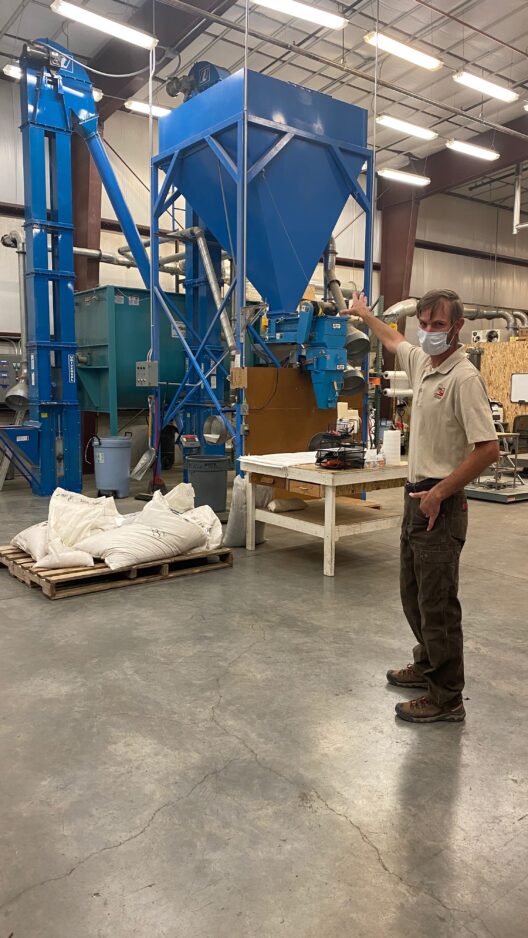
Kevin Gunnell, project leader at the Great Basin Research Center and Seed Warehouse explains the process of mixing batches of seed for individual projects
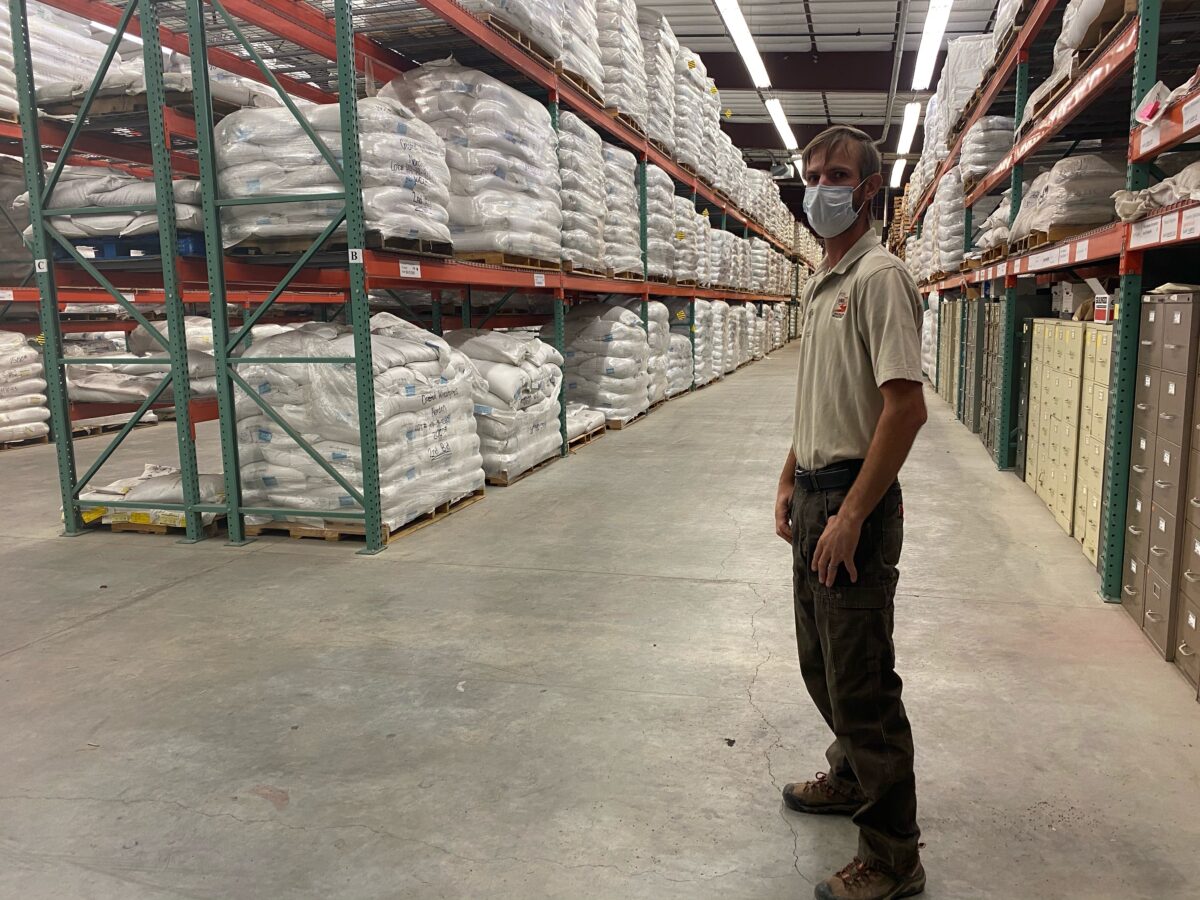
Kevin Gunnell, project leader at the Great Basin Research Center and Seed Warehouse explains the operation of the warehouse.
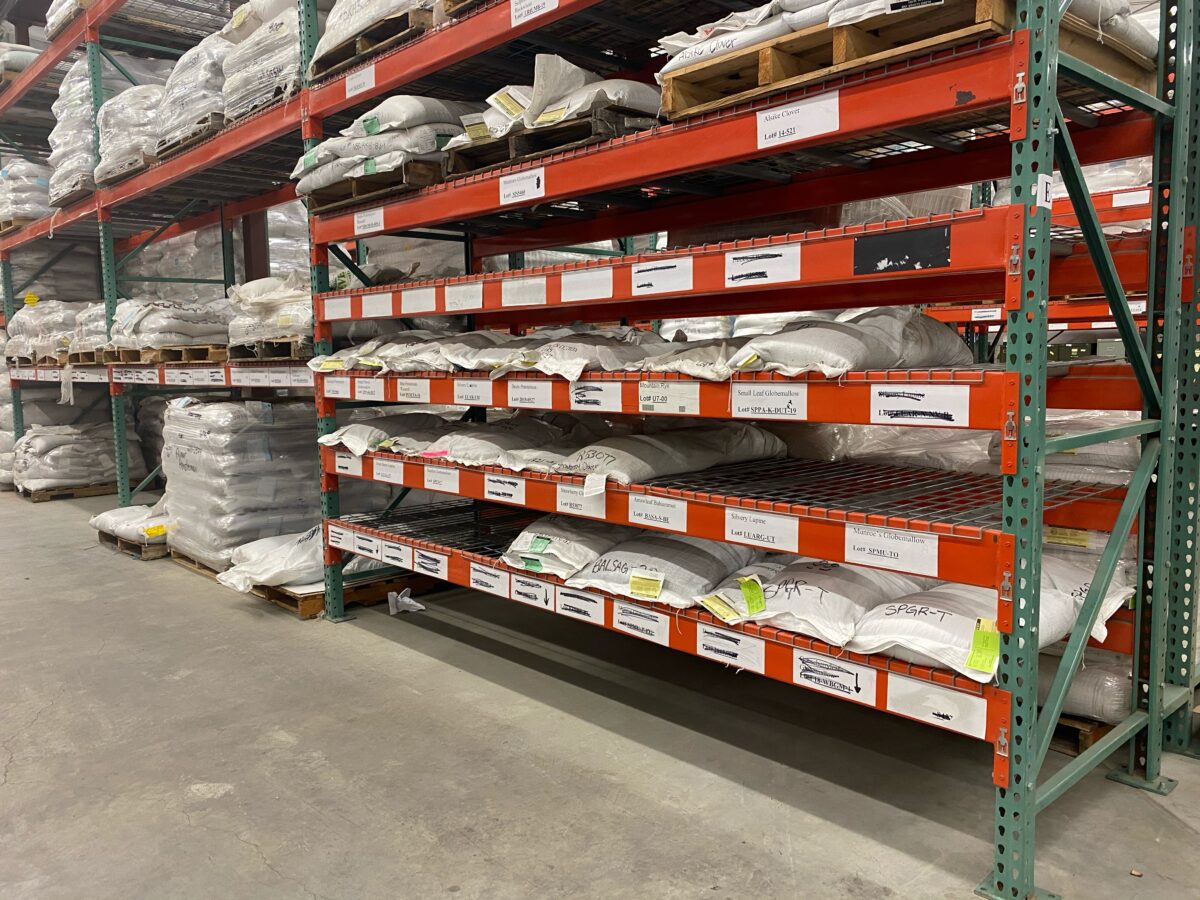
The "Million Dollar Seed Rack" holds seed varieties that cost the DWR between $20 and $100 a pound. Other seed in the warehouse runs between less that a dollar to around five dollars a pound.
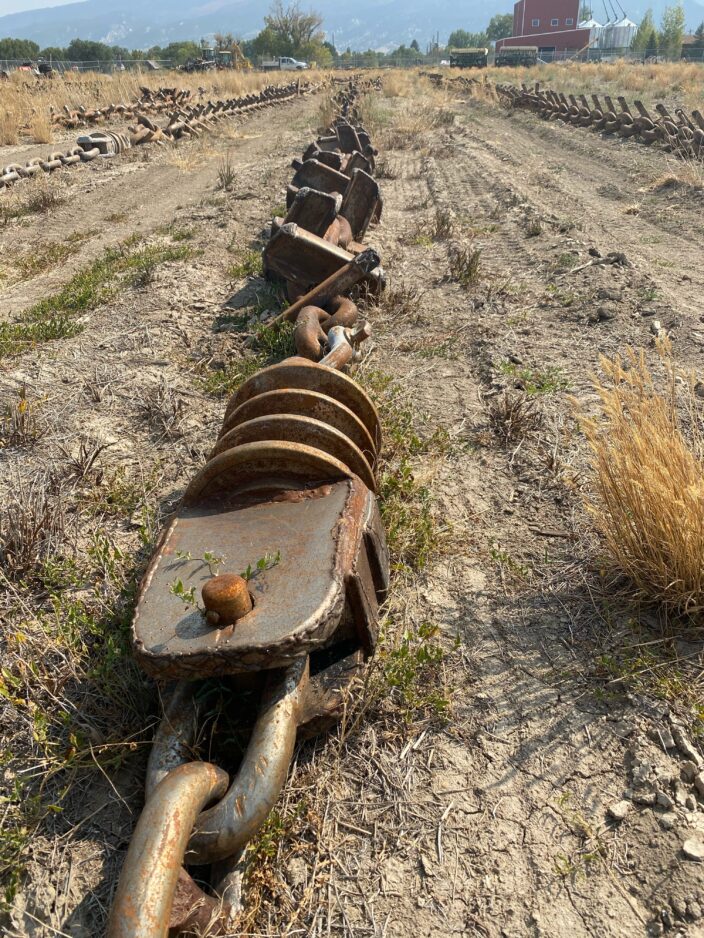
A large anchor chain with cross bars on it that rotate on giant swivels as it is pulled between two bulldozers. As the chain turns it helps bury some of the seed to increase chances of it sprouting. Each ling weighs about 100 pounds.
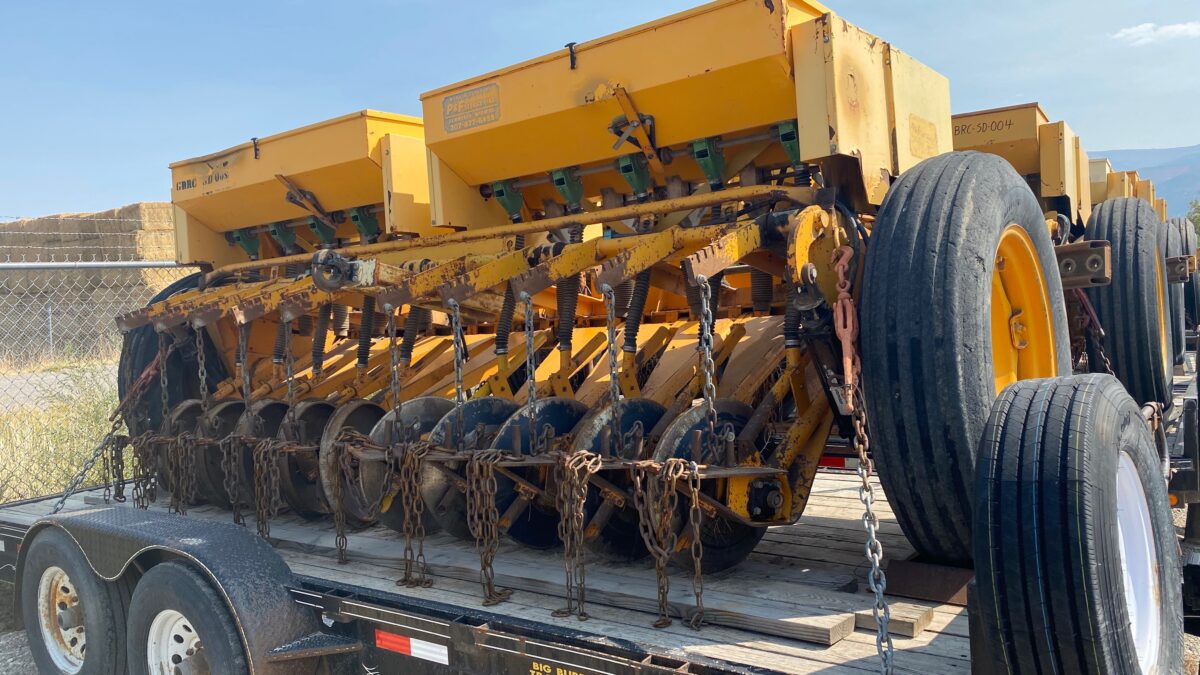
A rangeland drill, which was described as an agricultural drill on steroids. They are beefed up to take on rocks and terrain in rangeland areas.
EDITOR’S NOTE: This article is the second in a three-part series that looks at the efforts that are going into minimizing the damage caused by wildland fires in our area, what it takes to begin the process of restoring the land after a major fire, and where those resources come from.
Many may not know that Sanpete County and its innovative businesses were on the leading edge of range-restoration technology. The same businesses have helped shape western range management and the way it is used to repair fire damage and to create improved wildlife habitat at the same time.
EPHRAIM–Tucked back on an Ephraim side street on the far west side of town is an inconspicuous brown building. The front has a patch of sage brush, which makes it blend in to the rest of Sanpete’s scenery. The only sign that it is different from others in the area is the greenhouse near the road. Passersby may be surprised to know how important its contents really are.
The Great Basin Research Center and Seed Warehouse, operated by the Utah Division of Wildlife Resources was constructed in 2004 and in 2010 it was expanded to its current size. The building is temperature controlled. A cool night air exchange system is used, where cooler air is sucked in during the night and then shut things down during the day. “Even during the heat of the summer we usually keep it around 70 degrees,” said Kevin Gunnell, project leader at the research center.
The main warehouse can hold roughly 1.2 million pounds of seed while the refrigerated section can hold another 150,000 pounds. Depending on the year, they look to collect seed from 100-150 different species and varieties. The facility plays a vital role, especially in excessively hot, dry summers like we have had this year.
The warehouse provides seed for mainly two types of projects. One that is important in years like this is fire restoration, or stabilization of soil in burn spots left by wildland fires. It is the primary supplier of seed for both federal and state projects in Utah.
“For proactive work we have around 800,000 pounds of seed that we are anticipating to mix. We just got our fire needs and the estimate is somewhere around another 1 million pounds for fires this year,” said Gunnell. “So the total this year will be in the area of 1.8 to 2 million pounds that will get mixed through the facility.
“The fires rely on our “workhorse” species, which are perennial grasses,” Gunnell said.
The proactive work Gunnell talked about is a series of projects the DWR is involved in to create wildlife habitat on both public and private land. Through these projects the DWR works with federal, state, and private stake holders.
Some may wonder why the DWR, which focuses on Utah’s wildlife, would have such a large investment in a project that produces seed. “When you think about wildlife, habitat is a big part of that,” said Gunnell.
“One of the benefits of the watershed restoration is that they are mandated to focus almost exclusively on stabilization. What the state can do is say we can fund a higher diversity mix,” said Gunnell. “We as a wildlife agency want to see sagebrush and shrubs out on the landscape–and we can pay to put that in to their restoration mixes to help improve wildlife habitat.”
“So it’s a benefit to the land management agencies because they are receiving that extra funding and seed, and it’s a benefit to us because we are getting our seed out there during the restoration process.”
“We’re a unique entity in the western United States,” Gunnell said. “Aside from the BLM no one else has a facility such as this … Colorado has a small warehouse which does thousands of acres verses our hundreds of thousands of acres.”
Another key mission of the DWR research center is habitat research. “We want to see how we can be better and more successful in our seeding and restoration projects. A big part of what we do is development of native species for seed production in order to fill our warehouse,” Gunnell said.
“Most of our native species are wildly collected,” he said. “If you can produce it in a crop field it is usually cheaper that collecting it in a wildland setting … we have a lot of perennial grasses which are farm produced.”
As an example of why this work is needed, the warehouse has a set of shelves they call the “Million Dollar Rack” because they are species they can’t get in mass-quantities. Seed from those species are harder to come by. For some of that seed the DWR pays anywhere from $20-$100 a pound. In contrast, the seed housed on large pallets runs from below a dollar to five dollars a pound.
“That is where some of our research lies, in trying to develop sources that we can produce agronomically that we can get it back in higher quantities and lower prices.”
“Seed is brought in as individual species in bulk and we custom mix for every project. We don’t have a “standard” mix. We try to tailor it to where it is being placed and what the objectives are for that project.”
Areas are not always reseed with what was originally growing in an area. “A lot of the places that are seeded were originally cheatgrass grass and we don’t necessarily want to put cheatgrass back there,” Gunnell said. Cheatgrass is a major fuel for wildland fires and holds little value to wildlife and it competes with other species which are more beneficial.
Instead, they create a “recipe” in the front office, which is then given to warehouse workers who pull seed from the racks. The seed is then ran through a two-phase machine which then mixes the seed and sends it to a bagger.
“We have the option of bagging in around 50 pound bags or filling large totes of up to 1,000 to 2,000 pounds. Most of the seed is going out in bulk totes because it will be applied by (helicopter or airplane).
Some of the most widely-collected seed is sagebrush.
“Sagebrush has historically been thought of as a weed in many eyes. For wildlife though, especially wintering mule deer and elk and pronghorn it is crucial habitat,” said Gunnell. “And then when you take in to account things such as the sage grouse, which is a potentially listed threatened or endangered species it begins (to be) a very big topic.”
Sagebrush habitats are actually considered one of the most threatened habitats in the world, due to issues such as habitat fragmentation from roads and development. Also, sagebrush doesn’t reestablish readily and it may become harder to reestablish it. Gunnell said that the DWR hasn’t “been overly successful at getting sagebrush to reestablish, especially at lower elevations.”
Gunnell said that sagebrush appears to be a species that localized sourcing likely matters, so getting a good source that is adaptive to the site that you are planting it on is a struggle. It’s episodic in the way it grows, so the weather in a particular year can have a big impact on how successfully it can be reestablished. It may only work one in five years.
Also adding to the problem of establishing sagebrush habitat is the sensitivity of the seed.
It is collected in November, but it needs to be planted about the same time of the year, so it needs to be stored at least a year in order to have it in place to reseed–but the seed only has a shelf life of about six months in an uncontrolled environment. Because of that, sagebrush seed must be kept in a special part of the warehouse that is cooled to a temperature of around 34 degrees and dehumidified it down to about 3-5% humidity.