Willow Fuels Project protects Ephraim Canyon ecosystem
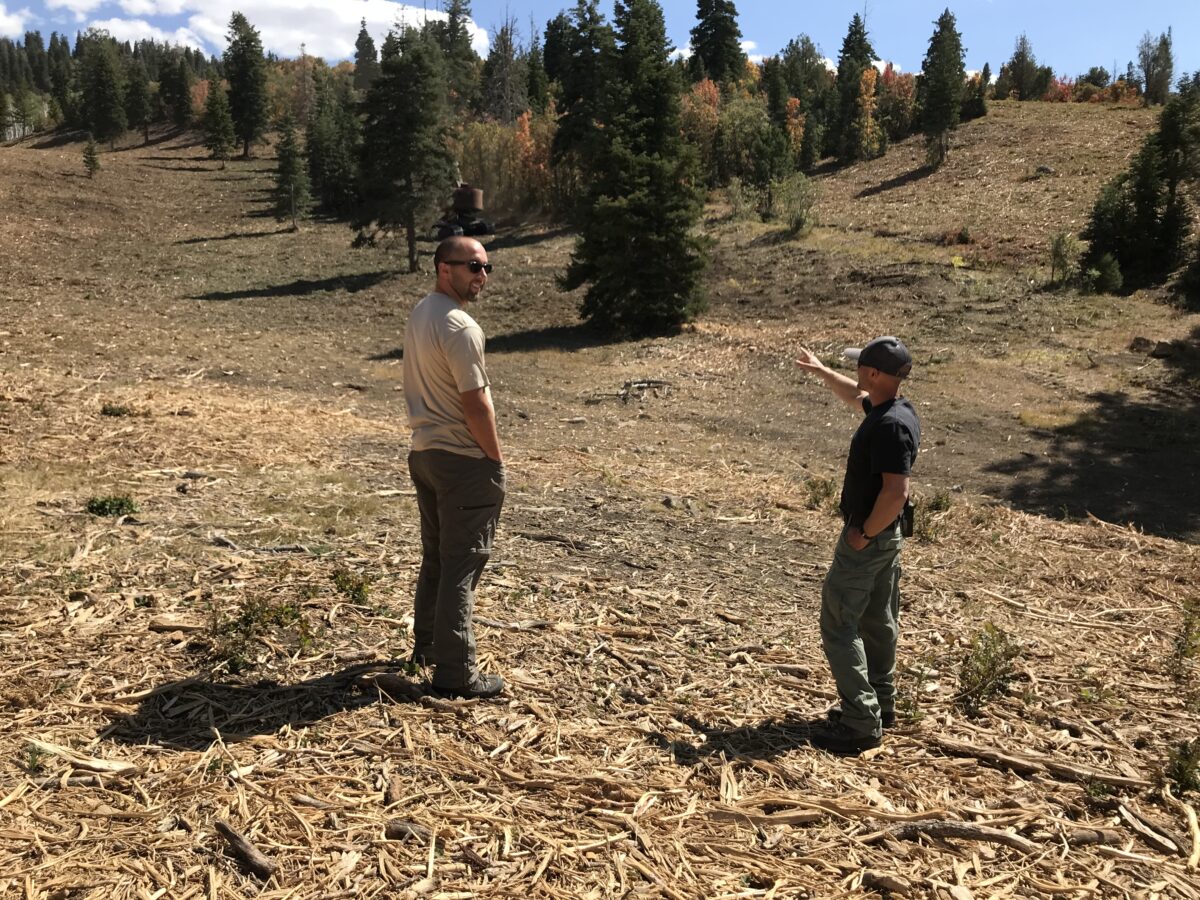
Robby Edgel, DNR Habitat Restoration Biologist (L) and Nels Rasmussen, Forest Service North Zone Fuels AFMO (R) examine the ongoing work of the Willow Fuels Project in Ephraim Canyon.
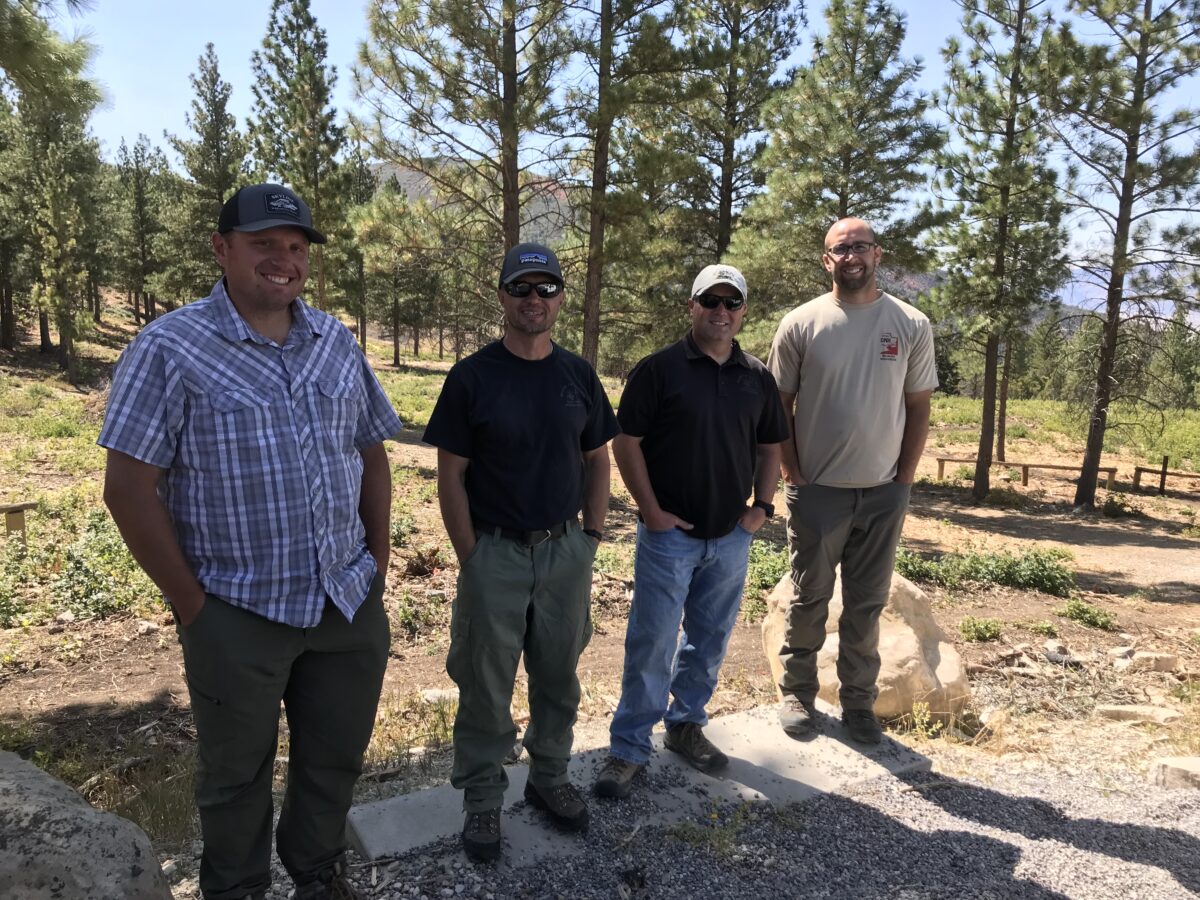
Representatives from several agencies showcase the results of the 2019 Watershed Restoration Initiative in Ephraim Canyon. Left to right:Mat Christensen-Wildland Urban Interface Coordinator for Forestry, Fire and State Lands; Nels Rasmussen-Forest Service North Zone Fuels AMFO; Russ Bigelow- Forest Service Fuels Specialist; Robby Edgel- Department of Natural Resources Habitat Restoration Biologist
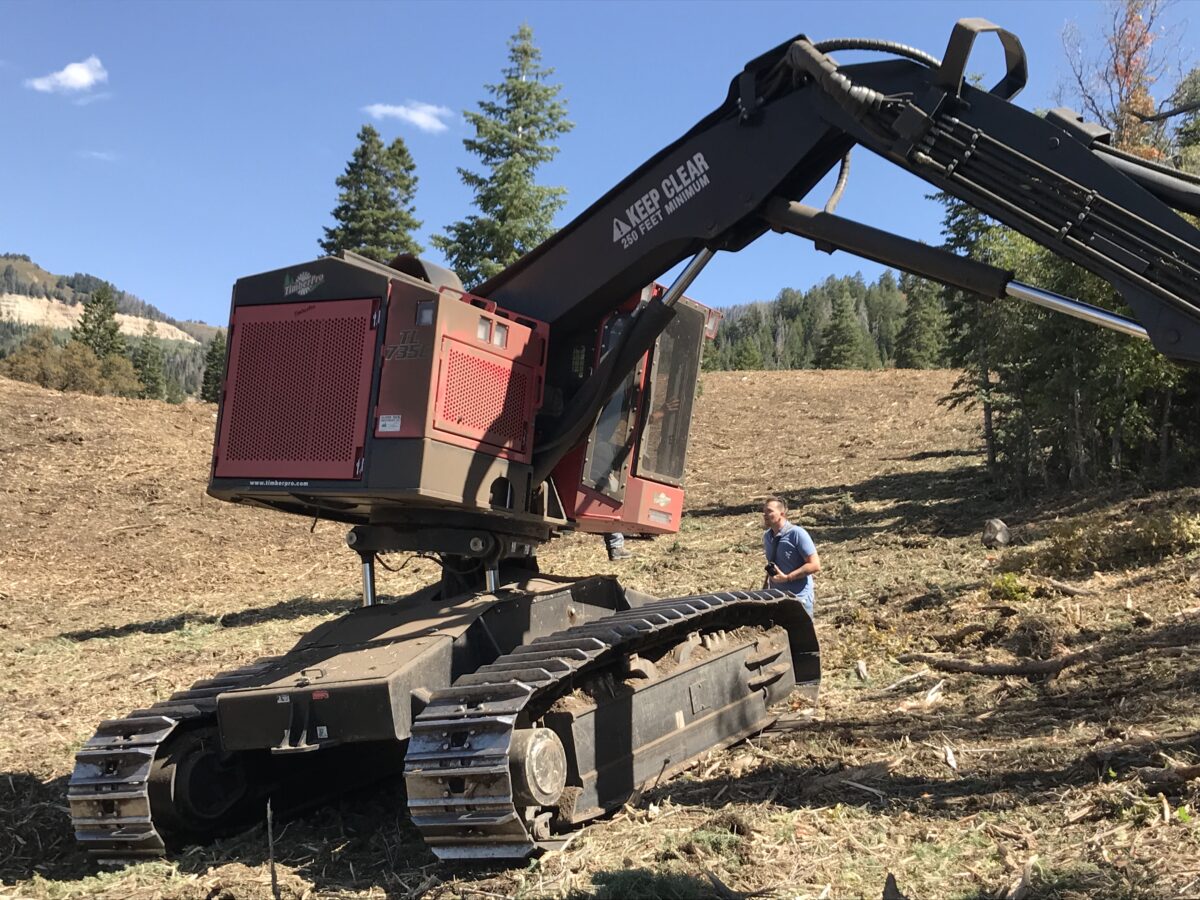
A bull hog works on the Willow Fuels Project to mechanically reduce fuel hazard in Ephraim Canyon.
EDITOR’S NOTE: This article is the first in a three-part series that looks at the efforts that are going into minimizing the damage caused by wildland fires in our area, what it takes to begin the process of restoring the land after a major fire, and where those resources come from.
Many may not know that Sanpete County and its innovative businesses were on the leading edge of range-restoration technology. The same businesses have helped shape western range management and the way it is used to repair fire damage and to create improved wildlife habitat at the same time.
EPHRAIM CANYON — Under normal conditions wildland fires occur naturally to balance the eco system. They clear underbrush, removes diseased and overgrown trees, and restores wildlife habitat in densely forested areas.
However, in today’s world, wildland fire is largely suppressed since it creates a multitude of hazards, from bad air quality at the very least to destruction of property and loss of life. Because of this, for over a hundred years we have put fires out, allowing unnatural amounts of woody debris and vegetation to pile up and trees to get larger and older.
The resulting unnatural and catastrophic fires burn larger and hotter than they would in a healthy forest system that has more frequent, smaller burns. These days one only needs to look at national news to realize the magnitude of destruction that this unnatural buildup of fuels is causing.
In order to remedy the current condition created by the suppression of naturally occurring wildland fire, the Utah Division of Wildlife Resources has partnered with the U.S. Forest Service and the Department of Forestry, Fire and State Land to do a “landscape project” to reduce fuels and increase the health of the watershed in Ephraim Canyon.
In August of 2017 the United States Intermountain Region of the Forest Service approved a proposal known as the “Willow Fuels Project”. The area of the proposed treatment is located approximately two air miles Southeast of Ephraim, on the Manti-La Sal National Forest.
The project area encompasses 16,984 acres within two watersheds–Ephraim Creek and Dry Canyon. The project is designed to “reduce the probability of a high severity wildfire that is difficult to control; and reduce the negative consequences of a fire on the soil and vegetation resources…” in the Manti LaSal National Forest Sanpete Ranger District.
The decision to undertake the long-term project in the Manti-LaSal National Forest was not taken lightly. Multiple aspects of the project’s impact on watershed, cultural or archaeological sites, wetlands habitat, migratory bird patterns and recreation areas were studied as part of the Willow Fuels Project Environmental Assessment.
The resulting decision has led to an interagency effort to accomplish what nature would ordinarily do. A USDA Forest Service report specifies the goals of the project as follows:
· Reduce fine fuel loading (< 3 inches diameter) to less than 5 tons per acre.
· Reduce the overall size of a probable stand-replacing fire.
· Increase the probability that fire suppression forces would control a wildfire before it reached private property.
· Increase the amount of aspen in the watershed as a means of lowering fuel loading.
Aspen trees are considered a critical part of the watershed. Aspens are fire resistant and crucial to wildlife since their underground root system sends off shoots which are part of the diet of deer, elk and even moose in the Ephraim Canyon.
Since plants will not grow under conifers such as pines, the removal of large stands of conifers allows the understory of smaller plants to flourish, thus supporting wildlife. Research by Brigham Young University professor Sam St. Claire supports this restoration initiative.
The benefit of this huge undertaking is multi-level. In addition to the primary objective of mitigating catastrophic wildfire occurrences, it benefits wildlife by increasing food sources for raptors, deer, elk and moose, and supports multiple levels of habitat for non-game species.
Livestock range is restored, and stream restoration and a sustainable eco system occurs with fewer trees using water, resulting in more water available for irrigation and culinary use. More open areas will be available to campers, snow sports and mountain bike trails. The potential for developing a timber industry is also considerable.
The challenge lies in the implementation of the processes that will achieve these goals. The Utah Watershed Restoration Initiative (WRI) is administered by the Utah Department of Natural Resources through funding from the Utah State Legislature and is essential to make this all happen. This program helps to bring all the components and partners together to treat entire landscapes across multiple landowners and agencies.
Through the administration of the WRI program, funds are pulled together from multiple agencies like The Bureau of Land Management, The United States Forest Service, The Department of Forestry, Fire and State Lands and the Utah Division of Wildlife Resources and even private concerns such as sportsman groups. These funds are then funneled through WRI to fund the highest priority projects each year.
This project was planned and implemented by several individuals and across several agencies. Robby Edgel, Department of Natural Resources’ Habitat Restoration Biologist, Forest Service North Zone Fuels AFMO Nels Rasmussen, Forest Service Forest Fuels Specialist Russ Bigelow and Mat Christensen, Wildland Urban Interface Coordinator for Forestry, Fire and State Lands worked in tandem to plan and present this proposal to the WRI program.
A decision was made to fund the project due to the high value of reducing fire risk, and improving wildlife habitat and the overall health of the Ephraim Canyon watershed.
Phase one of the project focused on areas of greatest concern where public and private infrastructure exist. The Willow phase, treating 6,000 acres, is now being implemented strategically to develop potential logging industry. The process of reducing the fuel load to control wildland fire is being achieved with prescribed burning or by mechanical means.
While controlled burning is the less expensive of the two options, the risks associated with having a fire get out of control need to be mitigated first through mechanical means. Use of chain saw crews is done on steep terrain that large equipment can’t reach.
Four equipment operators and a fuels technician work together to coordinate the treatment of one area at a time. Bull hogs take down large swaths of conifer and the masticators that follow reduce the trees to chips.
With fuels reduced to healthy levels or fire breaks created around an area, it is safe to use prescribed burning in the steep terrain. This process opens the forest and allows the growth of ground covering that will feed grazing wildlife. Open spaces create a line of sight for raptors who feed on rodents.
Much of the mechanical processes are done by contractors, which adds cost to the project. In addition to heavy equipment operators that run bull hogs and masticators, some of the fuel reduction work is now being done by logging companies that are under contract to remove logs from the sites being treated when there is interest. These companies are paying for the logs that they remove, thereby offsetting the cost of other contracted work.
Work will continue in Ephraim Canyon until the snow is too deep for equipment to operate. But even then “jackpot burning” of slash piles in the winter and spring can clean up botanical debris. The Utah POD (Potential Operational Delineations), which includes Manti, Fish Lake and Dixie, applies strategic wildfire risk planning in a collaborative effort.
Crews who can no longer operate equipment in the Ephraim Canyon in the winter will be deployed to work on a project such as Fishlake National Forest or Indianola, where the lower elevation creates more favorable conditions.
When spring arrives, seeding that took place in the fall on lower elevation areas will begin to germinate, and soon healthy vegetation will grow in areas that looked disturbed. Nels Rasmussen, North Zone Fuels AMFO, reminds us “It takes a few years to get back”. And while Huntington and Emery County are still dealing with the aftereffects of the 2012 Seeley Fire, Ephraim Canyon will be well situated to endure wildland fire with minimal environmental impact due to the combined efforts of The U.S. Forest Service, The Utah Department of Wildlife Resources and the Utah Department of Forestry, Fire and State Lands.
With this project The Utah Forest Service has effectively created a model that will hopefully be adopted within other areas of the intermountain west. “Utah will be the vanguard” of this method states Edgel, while reminding us that we need to be good stewards of the land.